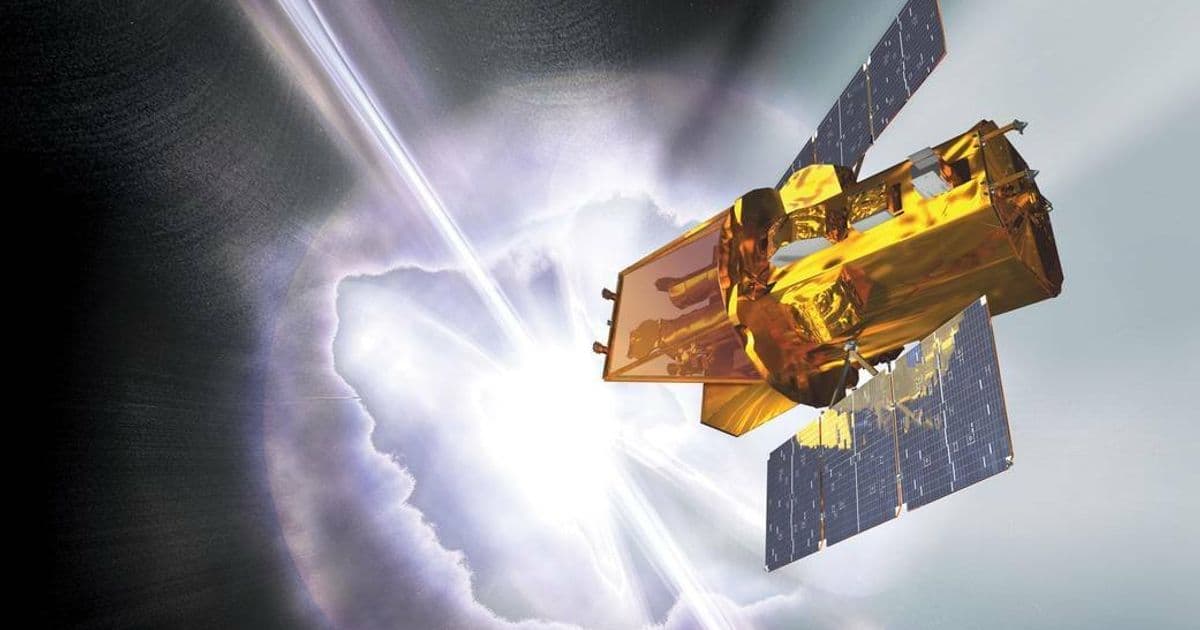
NASA has suspended most science operations on the Swift observatory to extend its orbital life until a planned summer 2026 reboost mission can rescue the 21-year-old spacecraft from atmospheric re-entry.
NASA has suspended most science operations on its Swift observatory to extend its orbital life until a planned summer 2026 reboost mission can rescue the 21-year-old spacecraft from atmospheric re-entry.
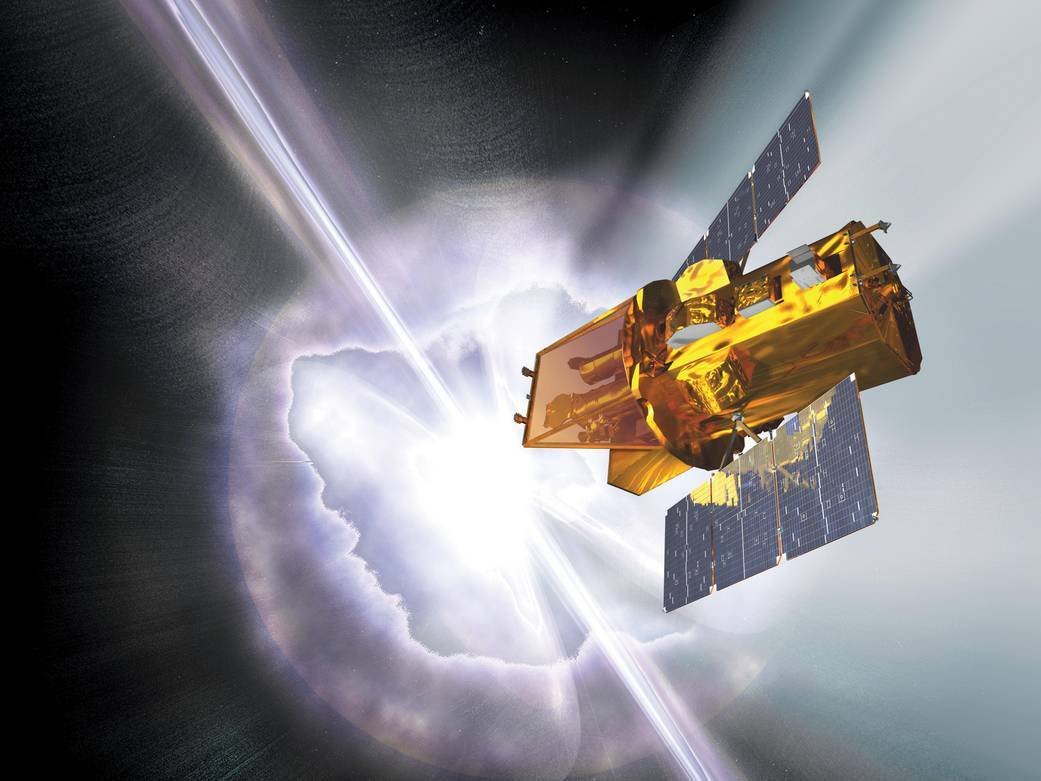
The Swift spacecraft, which has been detecting gamma-ray bursts and other cosmic phenomena since its 2004 launch, has now dropped below 250 miles (400 kilometers) in altitude. To maximize the chances of a successful reboost mission, NASA has made the difficult decision to halt most of Swift's scientific observations.
"Normally, Swift quickly turns to view its targets – especially the fleeting, almost daily explosions called gamma-ray bursts – with multiple telescopes," explained S. Bradley Cenko, principal investigator at NASA's Goddard Space Flight Center. While the Burst Alert Telescope will continue to detect gamma-ray bursts, the spacecraft will no longer slew to observe targets with its other telescopes.
The decision to pause science operations is a strategic move to reduce atmospheric drag. By stopping the slewing maneuvers and leaving the spacecraft in an orientation that minimizes atmospheric drag, NASA hopes to slow the rate of orbital decay until the reboost mission can be launched.
The Reboost Mission Timeline
The reboost mission has been contracted to Katalyst Space Technologies, which was awarded the contract in 2025. Initially, the expectation was for an orbit boost in spring 2026, but the timeline has since been adjusted to June 2026. Katalyst has confirmed it will use an air-dropped Pegasus XL rocket as the launch vehicle for the mission.
This rescue operation is particularly urgent because Swift is expected to re-enter Earth's atmosphere in 2026 unless successfully reboosted. The spacecraft's science payload remains operational, but without intervention, the data flow will cease as the observatory burns up during re-entry.
Swift's Remarkable Legacy
Swift has far exceeded both its prime mission duration of two years and its expected orbital life of seven years. The observatory was originally designed to operate at an altitude of 373 miles (600 km), but has now dropped significantly below this original altitude.
Despite its age, Swift continues to provide valuable scientific data. The spacecraft has faced several challenges in recent years, including falling into safe mode multiple times due to reaction wheel problems and gyroscope issues. The team has successfully recovered the spacecraft each time, and in 2022, discussions were underway about potentially continuing observations into the 2030s.
However, the expansion of Earth's atmosphere during periods of increased solar activity has accelerated the orbital decay, making the reboost mission necessary sooner than anticipated.
Why This Matters
The Swift observatory has been instrumental in detecting and studying gamma-ray bursts – the most powerful explosions in the universe. These observations have provided crucial insights into the death of massive stars, the formation of black holes, and the evolution of galaxies.
By successfully reboosting Swift, NASA not only saves a valuable scientific instrument but also demonstrates a useful capability for extending the life of aging spacecraft. This could have implications for future missions and the management of orbital assets as space becomes increasingly congested.
"We anticipate the reboost mission to launch in the summer, so we're transitioning operations now to give it the best margin we possibly can," Cenko said, highlighting the careful planning involved in this delicate operation.
The coming months will be critical for Swift's future. If the reboost mission succeeds, this veteran observatory could continue its groundbreaking scientific work for years to come. If it fails, one of NASA's most productive space telescopes will meet its end, marking the conclusion of an era in gamma-ray astronomy.
Comments
Please log in or register to join the discussion