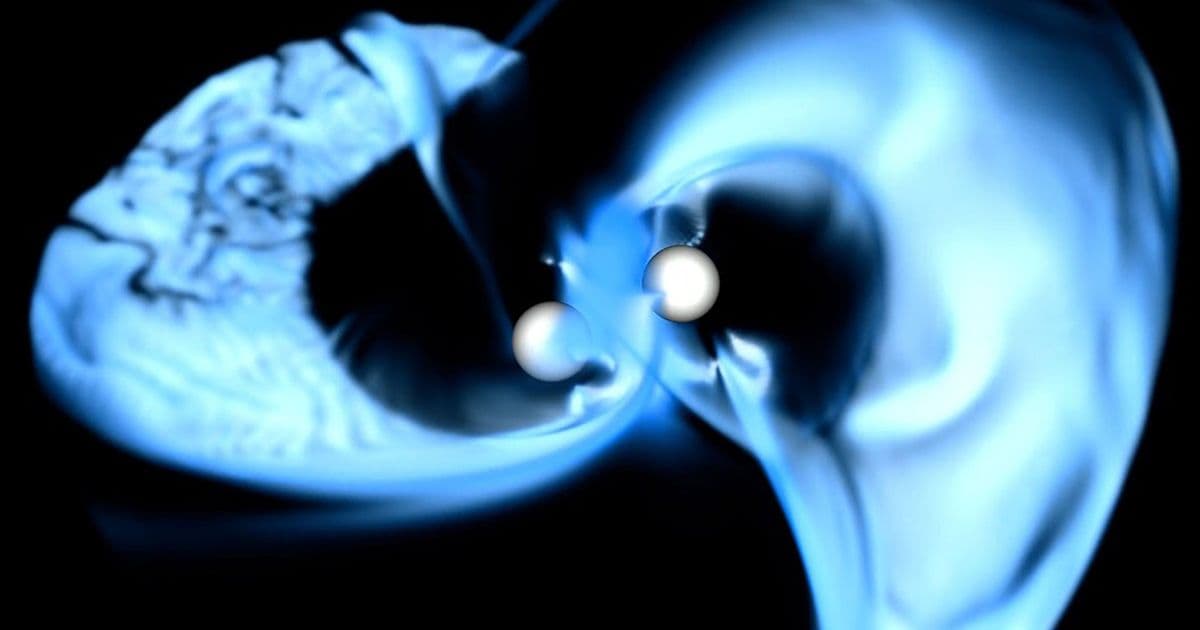
NASA's supercomputer simulations show how magnetic fields interact in the final milliseconds before neutron stars collide, potentially explaining gamma-ray bursts and offering new ways to observe these cosmic events.
NASA scientists have used supercomputer simulations to uncover the complex magnetic field interactions that occur in the final milliseconds before neutron star mergers, providing new insights into one of the universe's most powerful explosions.
Using NASA's Pleiades supercomputer, researchers ran more than 100 simulations to study how different magnetic field configurations affect electromagnetic wave behavior in systems of two orbiting neutron stars, each with 1.4 times the mass of our Sun. The simulations focused on the last 7.7 milliseconds before the stars collide, capturing the dramatic physics that occurs during this critical period.
The Power of Neutron Star Magnetic Fields
The magnetic fields generated by orbiting neutron stars are extraordinarily powerful. According to the research, these fields can be up to 10 trillion times stronger than a typical refrigerator magnet. This immense magnetic strength plays a crucial role in the physics of neutron star mergers.
The simulations revealed that during the final moments before collision, magnetic field lines undergo intense interactions. They connect, break, and reconnect in complex patterns, creating conditions that transform particles into radiation and vice versa. This process is fundamental to understanding how gamma-ray bursts are produced during neutron star mergers.
Gamma-Ray Production and Escape
One of the most significant findings from the simulations concerns gamma-ray behavior. The research showed that the highest-energy gamma-rays produced during these interactions cannot escape the system. Instead, they are quickly converted back into particles by the intense magnetic fields. However, gamma-rays at lower energies can escape the merging system.
These lower-energy gamma-rays may later produce X-rays, creating a potential observational signature that astronomers can target. This discovery opens up new possibilities for detecting neutron star mergers before they fully occur, as these escaping lower-energy emissions could serve as early warning signals.
Implications for Future Observations
The research has important implications for future astronomical observations. By understanding which types of radiation can escape the merging system, scientists can better target their observations with existing and upcoming observatories. This could allow astronomers to observe neutron star mergers in their final moments before the actual collision occurs.
The findings, published in The Astrophysical Journal through NASA, represent a significant advance in our understanding of neutron star mergers and the extreme physics involved in these cosmic events. The simulations provide a detailed picture of the magnetic field dynamics that drive some of the most energetic phenomena in the universe.
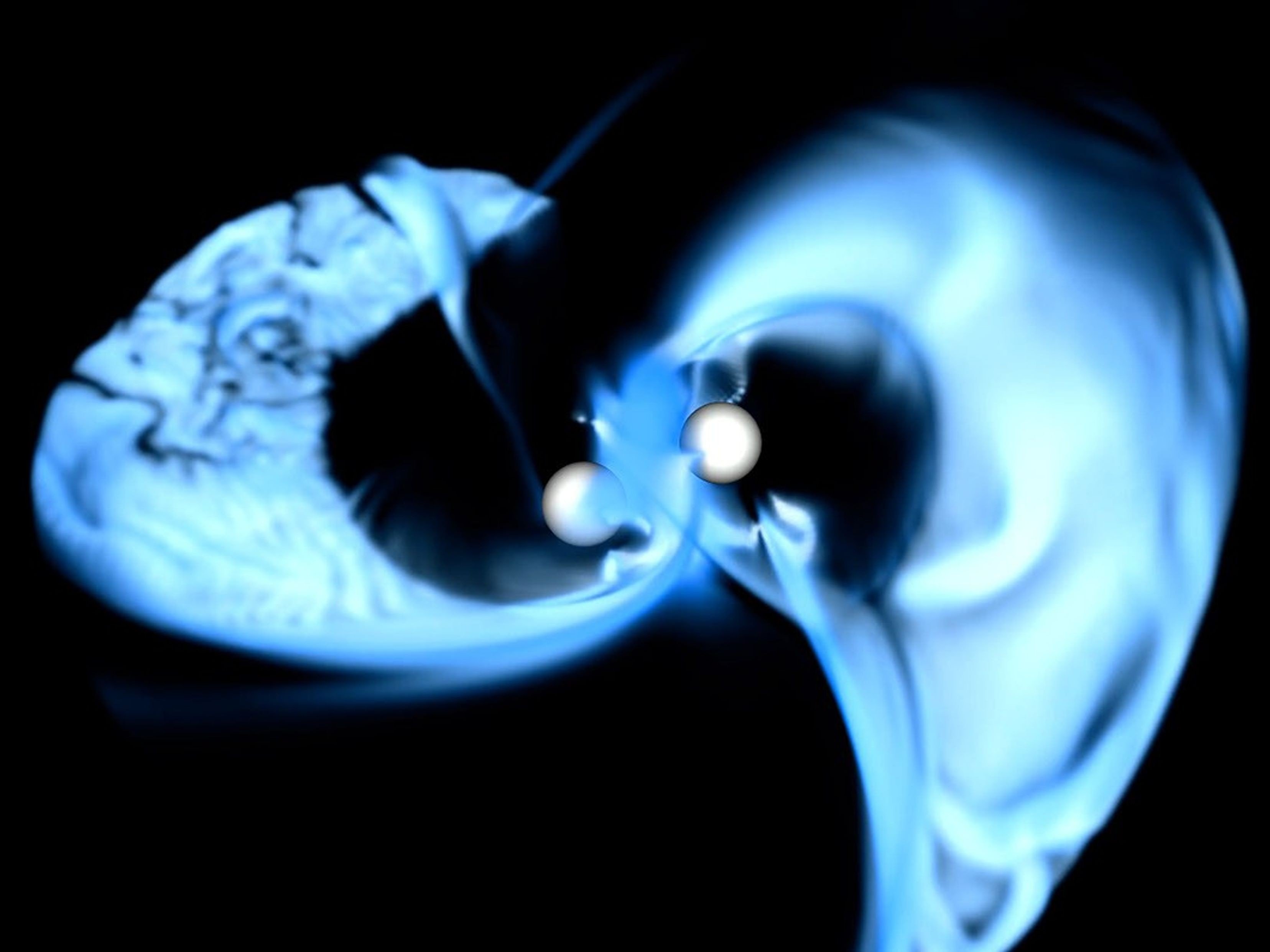
Visualization of neutron star merger simulation showing magnetic field interactions in the final milliseconds before collision
Comments
Please log in or register to join the discussion