
Chomsky's 1967 critique of intellectual complicity in state power finds renewed relevance in today's landscape of algorithmic disinformation and institutional distrust.
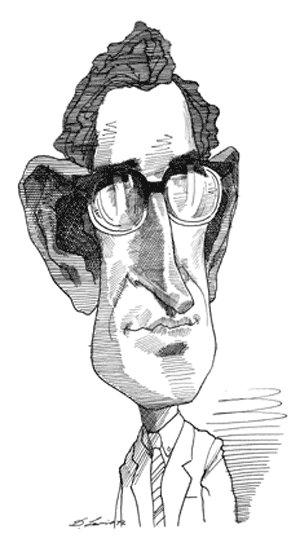
Twenty years after Dwight Macdonald's initial inquiry into public responsibility for state atrocities, Noam Chomsky's 1967 essay 'The Responsibility of Intellectuals' reframed the question for academia. His central thesis—that intellectuals possess unique power to expose state falsehoods yet frequently fail this moral duty—was forged in the crucible of Vietnam War propaganda but echoes with surprising clarity in today's information ecosystem.
Chomsky dissected institutionalized deception through stark examples: Heidegger's philosophical justification of Nazi ideology, historian Arthur Schlesinger's admission of lying about Bay of Pigs preparations, and systemic government misinformation about Vietnam. These weren't isolated incidents but manifestations of what he termed the 'national interest' fallacy—where elites manufacture consent through controlled narratives. The intellectual's privilege of 'leisure, facilities, and training' carries, Chomsky argued, proportionate responsibility to pierce ideological veils.
Contemporary parallels emerge when examining modern knowledge production. Tech intellectuals designing recommendation algorithms that optimize engagement over truth, economists rationalizing wealth inequality through neoliberal frameworks, and journalists normalizing political falsehoods through 'both-sidesism' all face versions of Chomsky's dilemma. The 2020s have witnessed academic complicity in corporate-funded climate denial studies, tech leaders downplaying social media's societal harms, and policy experts legitimizing military interventions under humanitarian guises—all while public trust in institutions erodes.
Counterarguments merit consideration. Some contend Chomsky underestimates structural constraints: junior academics face career peril for challenging orthodoxies, media outlets operate under corporate ownership, and the information overload of digital society makes truth-seeking more complex than in 1967. Others note that defining 'intellectual' proves increasingly problematic when expertise fragments across specialized domains. The rise of substack scholars and citizen journalism further complicates traditional power dynamics.
Yet Chomsky's framework retains diagnostic power. His distinction between 'truth-telling' and 'scholarly detachment' illuminates current debates about academic neutrality during democratic backsliding. The essay's emphasis on analyzing 'motives and hidden intentions' anticipates critique of Silicon Valley's 'move fast and break things' ethos. Most fundamentally, Chomsky challenges the comfortable fiction that knowledge production exists separate from power structures—a notion contradicted by modern think tank influence and algorithmically amplified disinformation.
As government documents from the Pentagon Papers to Snowden leaks continue revealing institutional deception, Chomsky's call for intellectual vigilance gains urgency. His essay remains less a period piece than a mirror reflecting academia's ongoing struggle to reconcile privilege with moral accountability—a tension sharpened by generative AI's emergence as a new frontier for truth manipulation. The responsibility persists; only the mechanisms of evasion evolve.
Comments
Please log in or register to join the discussion