
Japanese telecommunications giant NTT has developed a revolutionary four-core multicore optical fiber (MCF) that quadruples data capacity while maintaining the same physical dimensions as conventional single-core fibers. This breakthrough innovation enables existing undersea cable infrastructure to handle four times the traffic without requiring costly physical replacements or system overhauls.
Nippon Telegraph and Telephone (NTT), Japan's telecommunications powerhouse, has announced a significant breakthrough in optical fiber technology with the development of a four-core multicore optical fiber (MCF) that delivers four times the capacity of conventional fibers while maintaining identical physical dimensions. This innovation addresses one of the telecommunications industry's most pressing challenges: increasing data transfer capacity without the prohibitive costs and logistical complexities of replacing existing infrastructure.
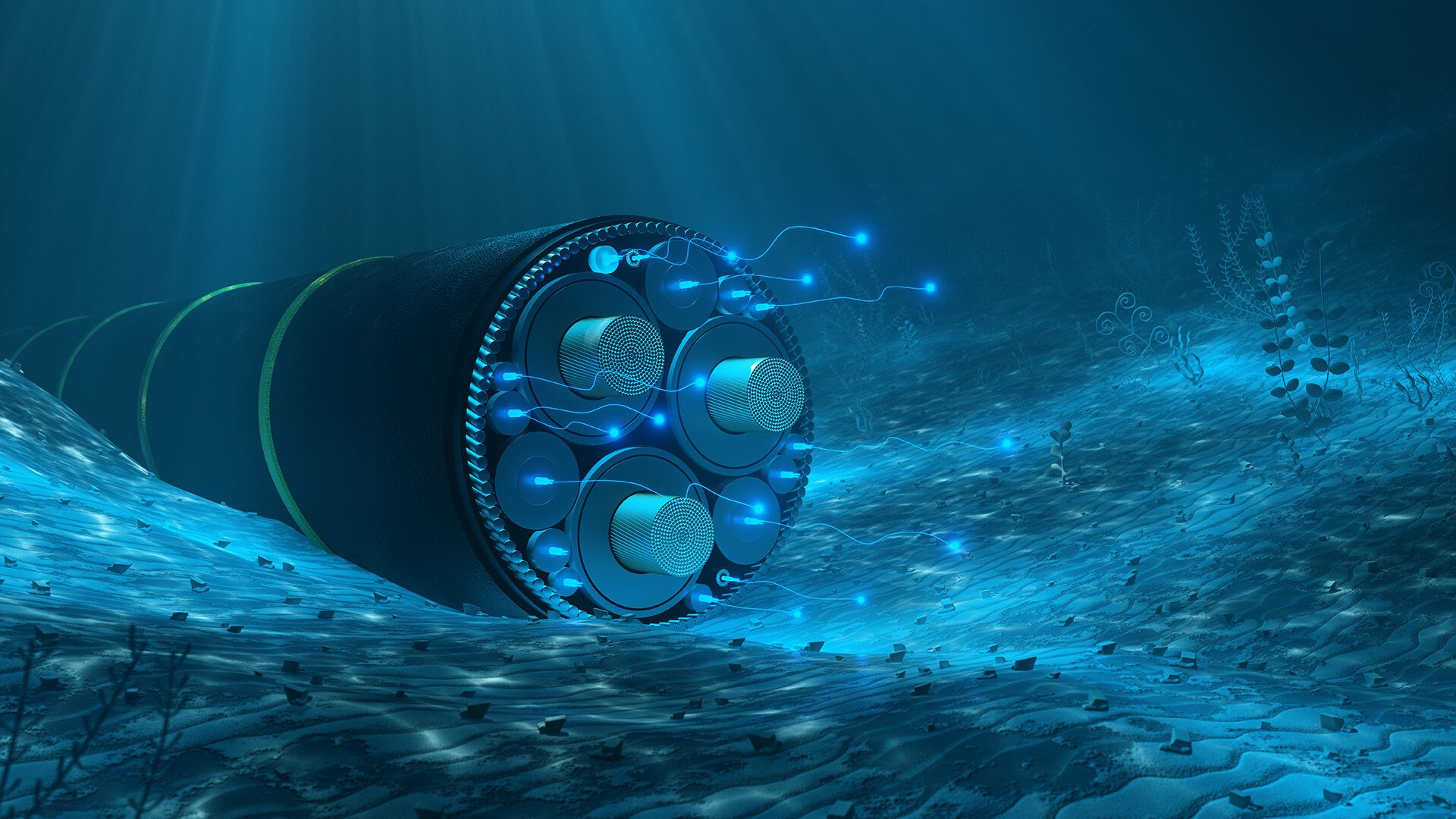
The technical achievement centers on NTT's ability to integrate four independent optical cores within a single fiber cable that retains the same diameter as traditional single-core fibers. This dimensional compatibility is critical for seamless integration with existing global telecommunications infrastructure, including undersea cable-laying vessels, terrestrial interconnects, and terminal equipment racks.
Technical Architecture and Implementation
The MCF technology represents a fundamental shift in optical fiber design. While conventional fibers contain a single glass core surrounded by cladding, NTT's innovation incorporates four distinct cores within the same cross-sectional area. This design enables spatial multiplexing, a technique that allows four independent optical signals to propagate simultaneously through the same physical cable.
"The key innovation is maintaining the same outer diameter while quadrupling the internal capacity," explained NTT's engineering team. "This approach preserves compatibility with existing deployment hardware while dramatically increasing throughput."
For undersea cable systems, which typically bundle 48 individual fibers, this technology could increase total core capacity from 48 to an impressive 192 cores per cable run. This represents a 400% capacity increase without requiring any changes to cable-laying vessels or海底 installation equipment.
To facilitate integration, NTT has developed specialized supporting components:
- Submarine joint box: Enables connection between conventional terrestrial fiber optic cables and four-core undersea cables
- MCF cable terminal: Critical interface for connecting the multicore fiber to existing transmission equipment designed for single-core cables
- Factory joint box: Allows cable layers to connect two MCF cables directly on the seabed
These components address the practical challenges of deploying the new technology within existing telecommunications infrastructure ecosystems.
Market Implications and Deployment Timeline
The development comes as global demand for data transfer capacity continues to accelerate exponentially. The proliferation of 5G networks, increasingly sophisticated AI models, and cloud computing services has created unprecedented demand for high-bandwidth data transmission. Traditional approaches to meeting this demand—laying additional physical cables—present significant economic and logistical challenges.
"Telecommunications companies face a capacity crunch," noted industry analyst Sarah Chen. "Laying new undersea cables costs hundreds of millions of dollars per route and takes years to deploy. NTT's approach offers a way to quadruple existing capacity with minimal infrastructure changes, potentially reducing deployment timelines and costs by 60-70%."
The technology is expected to begin commercial deployment in 2029, giving telecommunications providers approximately five years to prepare their networks for integration. This timeline positions NTT's innovation to address near-term capacity constraints while longer-term infrastructure projects continue development.
The timing coincides with significant expansion in undersea cable infrastructure. Despite geopolitical risks and potential cable cut vulnerabilities, multiple technology companies continue investing in new undersea connections. Meta, for instance, is reportedly developing new subsea cable routes designed to avoid regions with high geopolitical tensions, including northern Europe, the Middle East, and the Strait of Malacca.
"This technology could fundamentally change the economics of undersea cable upgrades," said telecommunications infrastructure expert Dr. Michael Torres. "Instead of complete cable replacement, providers can now essentially quadruple the capacity of existing routes with minimal physical modifications. This approach is particularly valuable for upgrading high-traffic routes where new cable installation faces regulatory or environmental obstacles."
Broader Industry Context
NTT's innovation reflects a broader trend in telecommunications toward maximizing existing infrastructure rather than complete replacement. The approach aligns with industry efforts to reduce the environmental impact of network expansion while meeting growing capacity demands.
The development also highlights Japan's continued leadership in telecommunications technology. NTT has previously contributed significant innovations to optical communication standards, and this multicore fiber advancement represents another substantial contribution to global telecommunications infrastructure.
As telecommunications providers evaluate the technology, key considerations will include the cost premium of multicore fiber compared to conventional fiber, the long-term reliability of multiple cores within a single cable, and the complexity of network management systems designed to handle spatially multiplexed signals.
Despite these considerations, the potential benefits appear substantial. For existing undersea cable routes facing capacity constraints, the technology offers a path to quadruple throughput without the need for complete system replacement. For new projects, it could potentially reduce the number of individual cables required, simplifying installation and reducing costs.
The global telecommunications industry will be watching closely as NTT moves from laboratory demonstration to commercial deployment. If successful, the four-core multicore fiber could become a standard component in next-generation telecommunications infrastructure, setting the stage for further innovations in optical communication technology.
Comments
Please log in or register to join the discussion