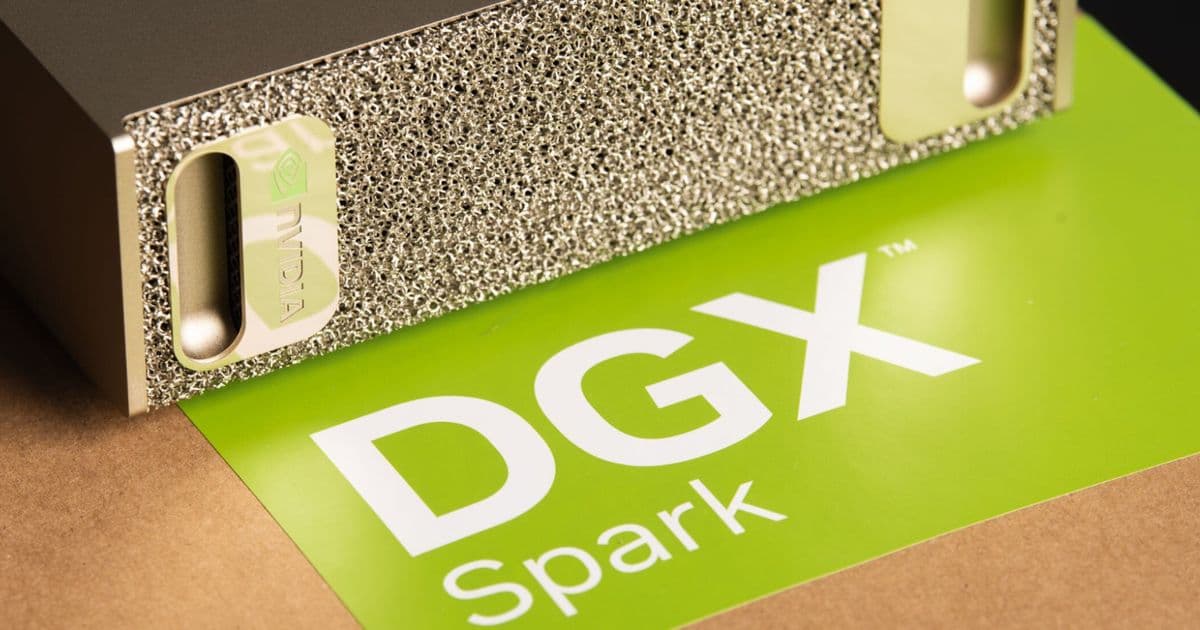
Nvidia's DGX Spark leverages a 3nm GB10 Arm-GPU superchip with 128GB unified memory and CUDA ecosystem support, outperforming AMD's Ryzen AI Max+ 395 in AI workloads while commanding premium pricing.
The race for local AI supremacy intensifies as Nvidia releases its DGX Spark workstation, featuring the groundbreaking GB10 superchip. This compact system challenges AMD's Ryzen AI Max+ 395 and Apple's M-series by combining massive unified memory with Nvidia's CUDA ecosystem—addressing critical bottlenecks in large language model inference and fine-tuning that plague conventional systems.
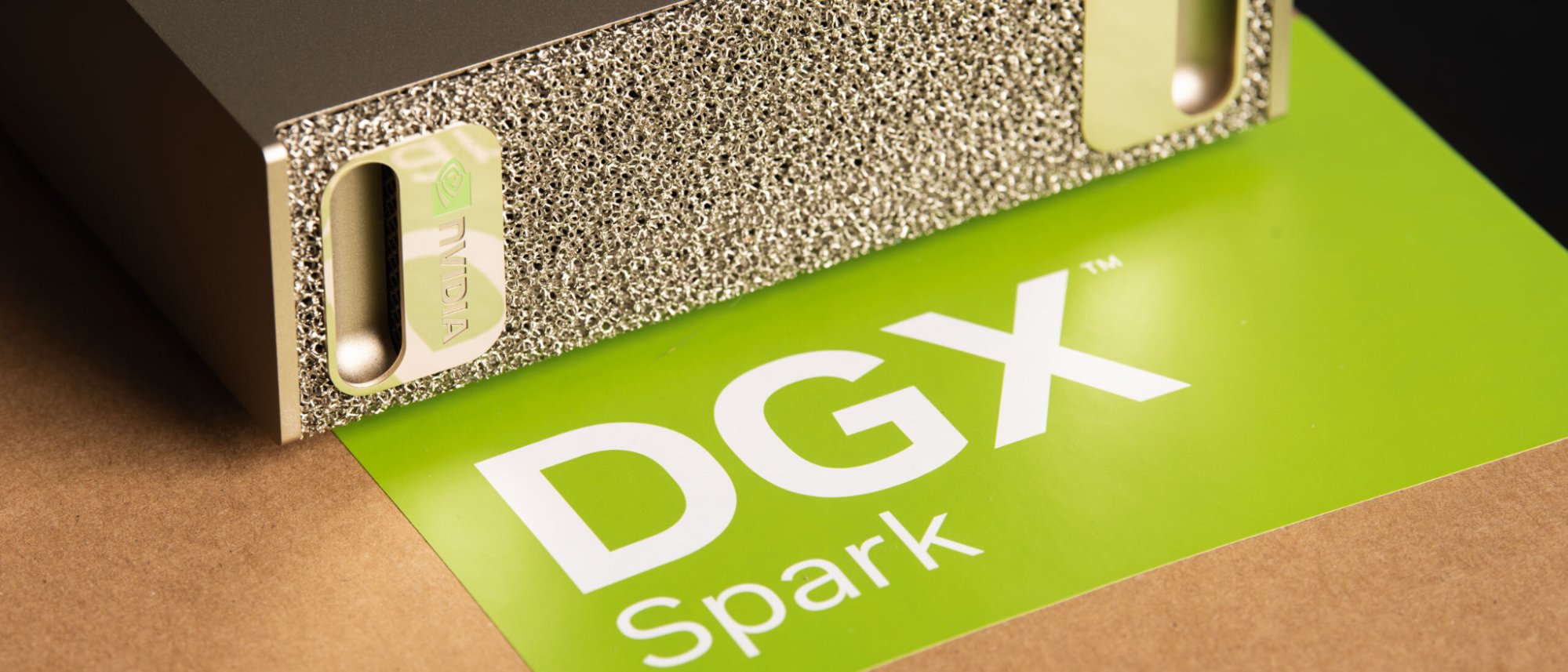
Technical Architecture Breakdown
At its core, the GB10 integrates a MediaTek-designed Arm CPU complex and Blackwell GPU on a single package using TSMC's 3nm-class process node. Both components communicate via Nvidia's NVLink-C2C interconnect, enabling coherent memory access across the entire 128GB LPDDR5X pool at 750GB/s bandwidth. This unified architecture eliminates the VRAM limitations of discrete GPUs—where even the flagship RTX 5090 tops out at 32GB—while outperforming AMD's Ryzen AI Max+ 395 in memory-intensive tasks.
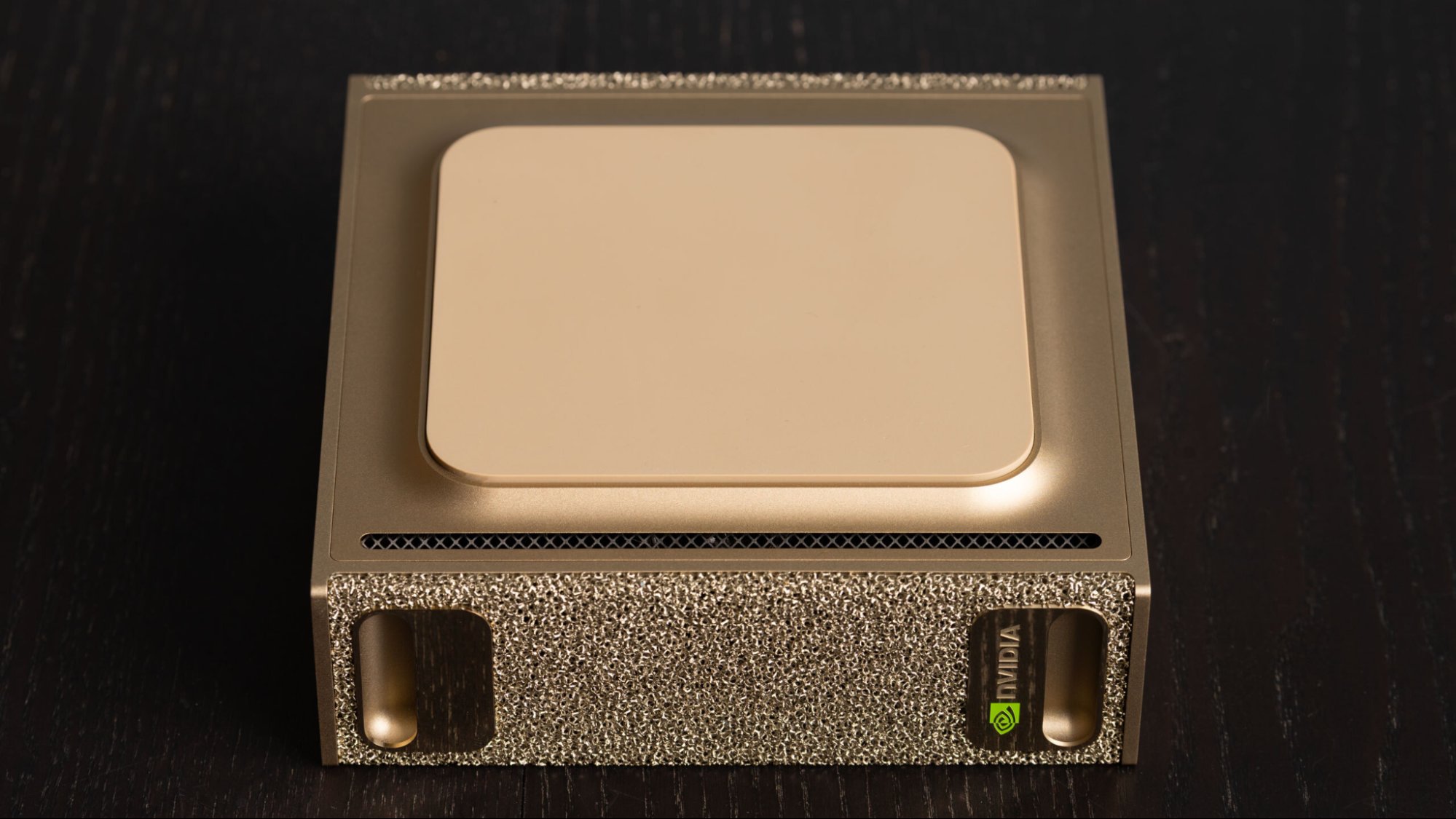
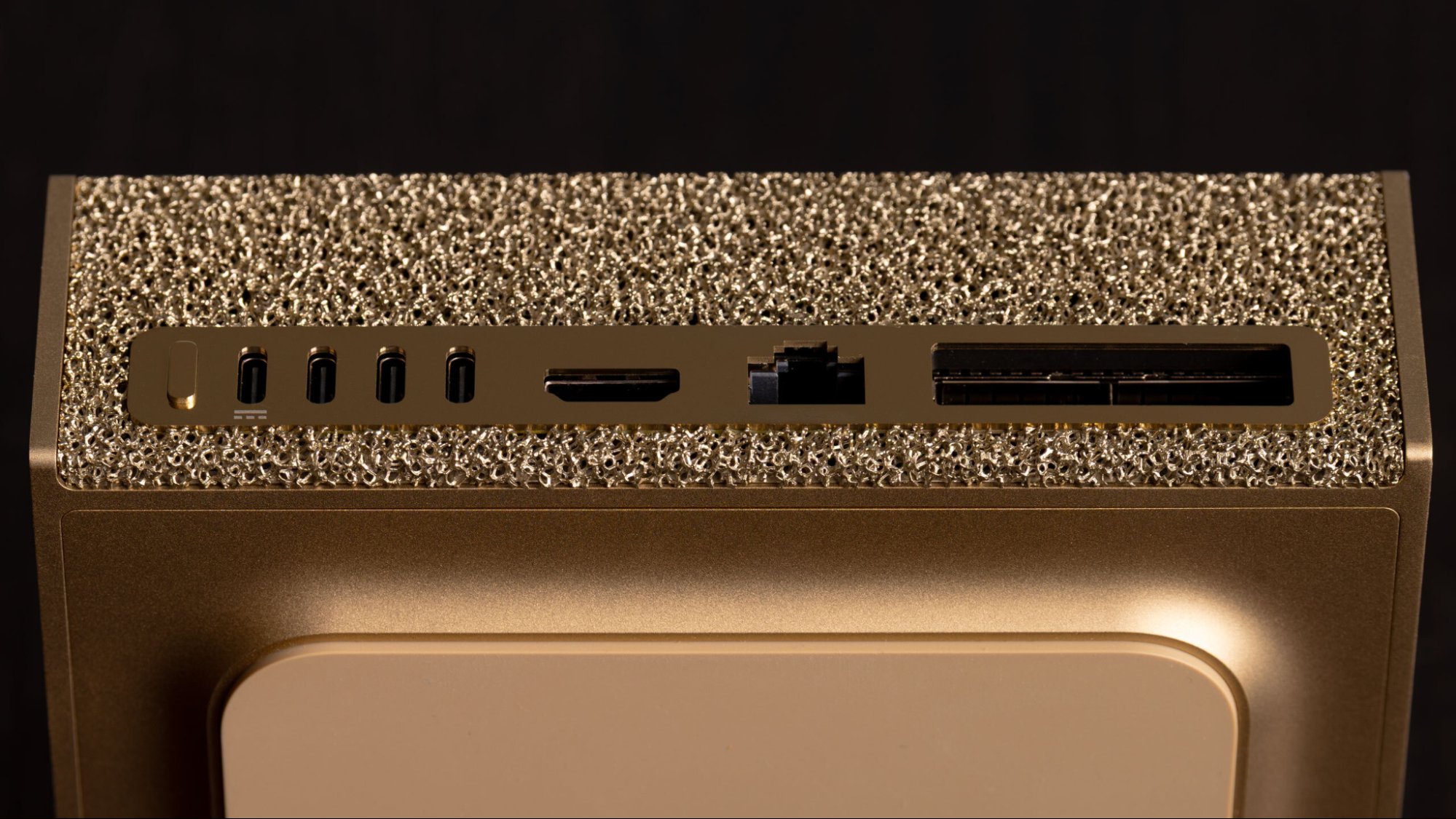
The 1.1-liter chassis (150×150×50.5mm) houses sophisticated thermal management beneath its metallic foam panels. 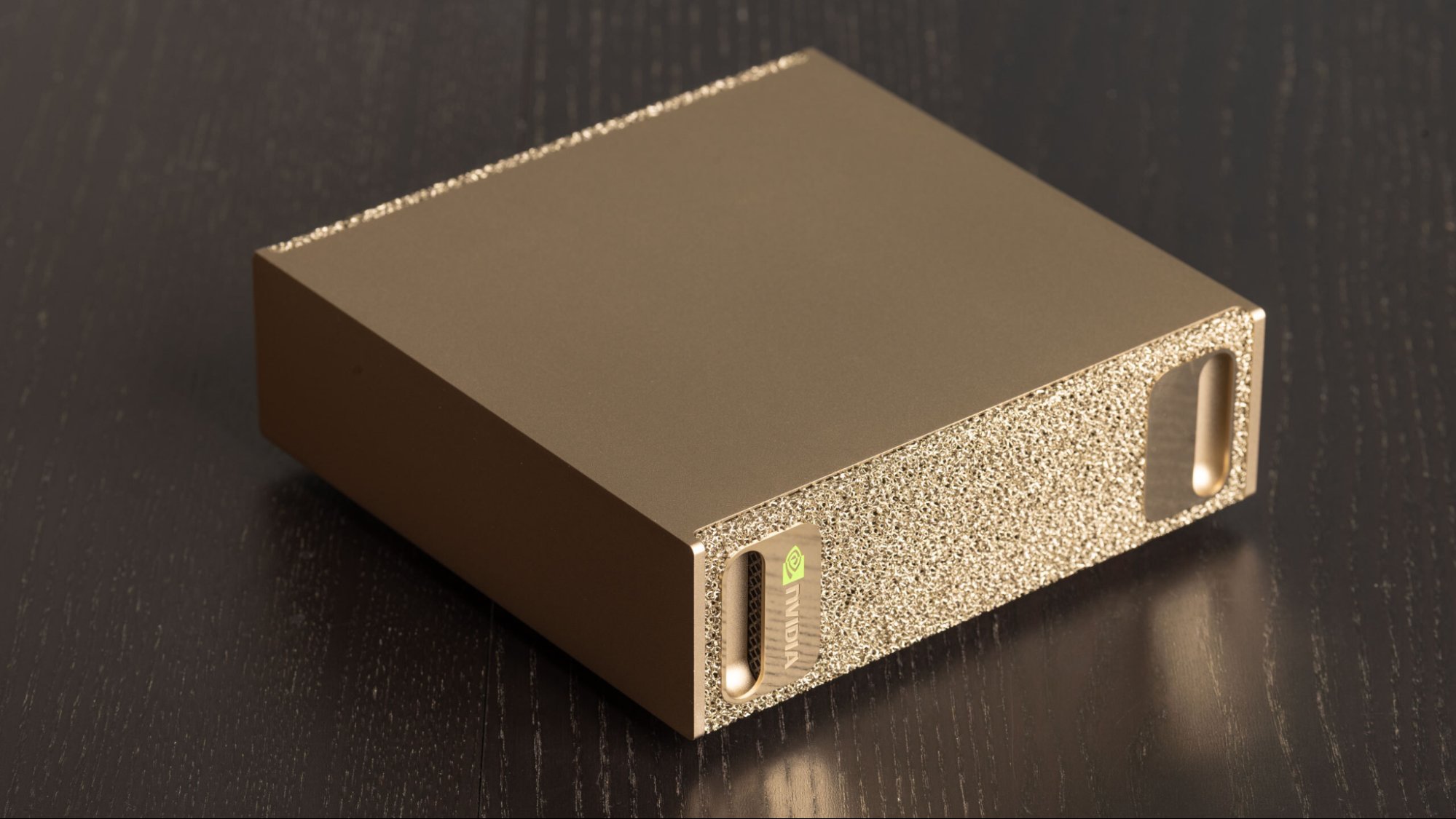 Front air intakes disguised as rack handles feed a dual-fan cooling system capable of dissipating the GB10's 120W TDP during sustained AI workloads. Storage comes via a user-replaceable 4TB M.2 2242 SSD, while connectivity includes:
- Three USB-C 20Gbps ports with DisplayPort alt-mode
- HDMI 2.1a output
- 10Gb Ethernet
- Dual QSFP ports for ConnectX-7 NICs (200Gbps)
The latter enables NCCL-based clustering—two Sparks can directly interconnect for distributed computing experiments without traditional networking overhead.
Market Positioning and Ecosystem Advantages
Priced starting at $4,500, the Spark targets developers needing CUDA compatibility unavailable on Apple Silicon or AMD platforms. This positions it between consumer devices and enterprise monsters like the $8,500 RTX Pro 6000 Blackwell (96GB VRAM). Key competitive differentiators:
| System | Memory | AI Ecosystem | Target Workloads | Price |
|---|---|---|---|---|
| DGX Spark | 128GB | CUDA/NCCL | LLM inference/fine-tuning | $4,500+ |
| Ryzen AI 395 | 128GB | ROCm | Medium-scale AI | $2,000+ |
| RTX Pro 6000 | 96GB | CUDA | Professional workloads | $8,500+ |
| Apple M3 Max | 128GB | Core ML | Mobile dev/light AI | $3,500+ |
Nvidia leverages its software moat through DGX OS—a customized Ubuntu 24.04 LTS distribution with preconfigured AI frameworks (PyTorch, TensorFlow) and the Nvidia Sync utility. This enables seamless SSH access from Windows/macOS systems, turning any device into an AI terminal. Developers can run Ollama for private chat interfaces or ComfyUI for generative AI workflows remotely.
Supply Chain Context
The GB10 represents Nvidia's first consumer-facing Blackwell chip, fabricated on TSMC's N3E node. While yields reportedly exceed 80%, production scalability remains constrained by TSMC's 3nm capacity allocation—currently dominated by Apple and Intel. System partners (Dell, HP, Lenovo) receive partially assembled GB10 modules for final integration, easing manufacturing complexity.
Analyst Perspective
The Spark solves three critical local AI problems: unified memory scale, CUDA compatibility, and cluster-ready networking. However, its value diminishes for users not leveraging these premium features—gaming performance lags behind discrete GPUs, and Windows support remains absent. For AI developers, the Spark delivers 1.8x faster Llama3-70B inference than AMD's Ryzen AI Max+ 395 at similar power, justifying its premium for CUDA-dependent workflows. As open models proliferate, this architecture previews Nvidia's strategy to dominate edge AI infrastructure.

Comments
Please log in or register to join the discussion