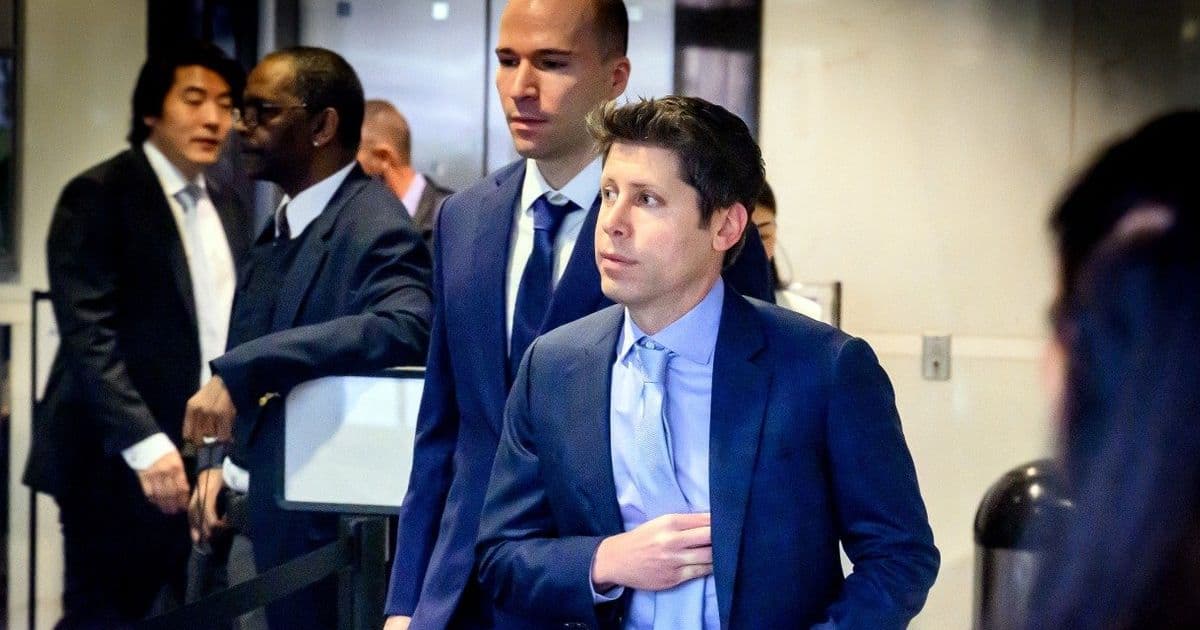
According to Wall Street Journal sources, OpenAI CEO Sam Altman discussed spinning out the company's robotics and consumer hardware divisions in late 2025 to accelerate their growth, though the proposal was ultimately rejected. The plan would have created separate entities similar to how Alphabet manages its diverse portfolio of companies.
In a move that could have significantly reshaped OpenAI's organizational structure, sources familiar with the matter have revealed that CEO Sam Altman discussed spinning out the company's robotics and consumer hardware divisions in late 2025. The Wall Street Journal, citing people familiar with the internal discussions, reports that the proposal aimed to give these specialized divisions more autonomy and room to grow outside of OpenAI's primary AI research and development focus.
The discussions reportedly considered an Alphabet-like structure for OpenAI's expanding portfolio of products, where robotics and consumer hardware would operate as separate entities with their own leadership and strategic direction. This organizational model would mirror how Google restructured into Alphabet in 2015, allowing its various ventures to operate with greater independence while still benefiting from shared resources and oversight.
OpenAI's robotics division has been developing several ambitious projects, including advanced AI-powered systems for physical interaction with the world. Meanwhile, the consumer hardware team has reportedly been working on integrating OpenAI's technologies into physical products, potentially including devices that leverage the company's advanced AI models in novel ways. By spinning out these divisions, OpenAI might have hoped to accelerate development cycles and attract specialized talent with deeper domain expertise in robotics and hardware engineering.
The rejection of this proposal raises questions about OpenAI's strategic priorities and how the company is balancing its core AI research mission with its expanding commercial interests. OpenAI has faced increasing pressure to monetize its technologies while maintaining its commitment to AI safety and alignment research. The company has already formed significant partnerships with major financial institutions, including raising $4 billion+ at a $10 billion pre-money valuation for The Deployment Company, a joint venture aimed at helping businesses adopt OpenAI tools.
Industry observers note that OpenAI's structure has evolved significantly since its founding as a nonprofit research organization. The company now operates with a complex dual mission of advancing AI technology while ensuring its safety and beneficial use. This balancing act has become increasingly challenging as OpenAI's commercial ambitions have expanded through products like ChatGPT, DALL-E, and enterprise AI solutions.
The rejection of the spin-out plan may reflect concerns about potential fragmentation of OpenAI's brand and resources. Alternatively, it could indicate that leadership believes tighter integration between AI research and hardware development offers strategic advantages. OpenAI has invested heavily in developing multimodal AI systems that can process and interact with both digital and physical environments, suggesting that maintaining close connections between software and hardware teams may be a deliberate choice.
Community sentiment around this potential restructuring appears mixed. Some AI researchers and entrepreneurs argue that specialized divisions would benefit from focused leadership and faster decision-making processes. Others worry that separating hardware development from core AI research could create misalignment between the technologies being developed and their underlying capabilities.
The timing of these discussions is notable, coming during a period of intense competition in the AI space. Competitors like Anthropic have also been forming joint ventures with major financial institutions, including a $1.5 billion partnership with Blackstone, Goldman Sachs, and Hellman & Friedman. Meanwhile, specialized AI companies like Sierra, which sells AI customer service agents, have achieved significant valuations, raising $950 million at a $15.8 billion post-money valuation.
OpenAI's approach to organizational structure may continue to evolve as the company navigates the complex intersection of cutting-edge AI research, commercial applications, and physical-world integration. The reported discussions about spinning out robotics and hardware divisions, even if ultimately rejected, suggest that leadership is actively considering different models for managing the company's diverse portfolio of technologies and initiatives.
As AI becomes increasingly integrated into both digital and physical environments, how organizations structure their research and development efforts may become a critical factor in determining which companies can successfully translate theoretical advances into practical applications. OpenAI's strategic choices in this area could have significant implications for the future development of AI-powered robotics and consumer technologies.
Comments
Please log in or register to join the discussion