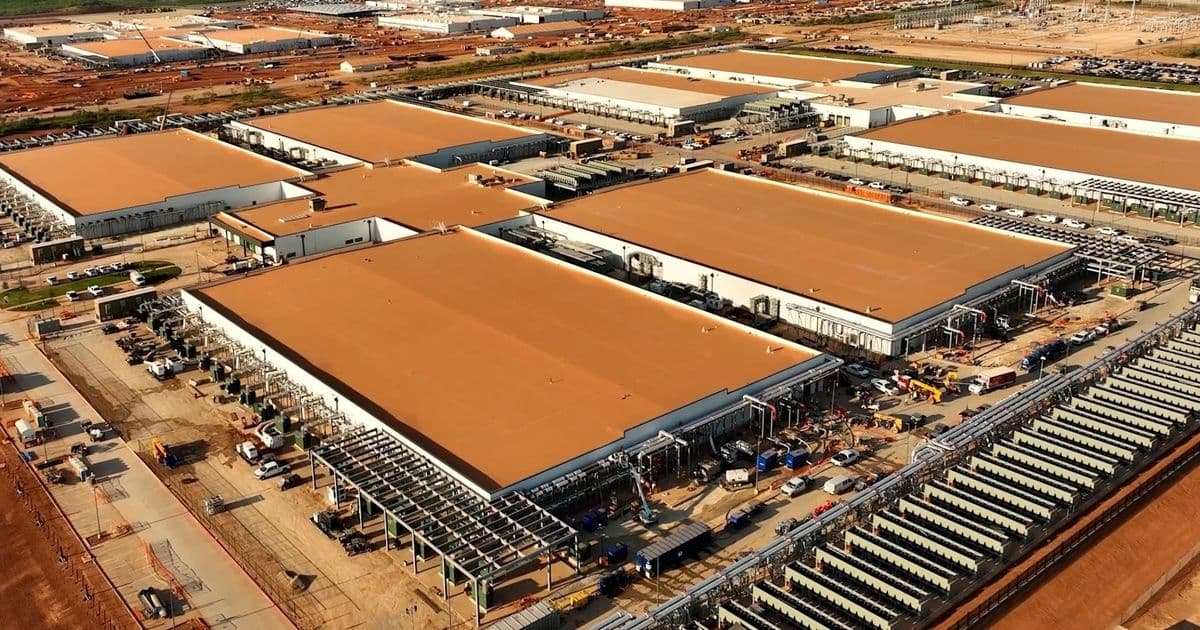
OpenAI has announced a 'Stargate Community' plan for each of its AI data center sites, committing to fund the incremental power generation and grid upgrades required by its operations. The company aims to ensure its massive 10GW AI infrastructure expansion does not increase local electricity prices, addressing growing concerns about the energy and environmental impact of large-scale AI deployments.
OpenAI has formalized a policy to directly fund the energy infrastructure required for its Stargate AI data centers, pledging that its operations will not increase electricity costs for local communities. This commitment, announced in a press release, comes in response to political pressure and growing public scrutiny over the resource demands of the AI industry's rapid buildout.

The announcement frames the initiative as "paying our own way," echoing rhetoric from the Trump administration. Every Stargate site will have a locally tailored community plan, driven by input from local stakeholders. The core financial commitment is to fund "the incremental generation and grid upgrades our load requires," a significant departure from the typical model where large industrial loads can strain existing grids and potentially lead to rate increases for other consumers.
Technical and Operational Commitments
The Stargate project, a $500 billion initiative backed by SoftBank, Oracle, and MGX, is targeting 10GW of U.S. AI infrastructure by 2029. OpenAI states it is already "well beyond halfway" in terms of planned capacity, with sites coming online in Texas, New Mexico, Wisconsin, and Michigan. The energy commitment involves several specific technical approaches:
Dedicated Power and Storage: OpenAI will fund new power generation and energy storage systems specifically for its campuses. This could include on-site solar farms, battery storage installations, or direct investments in new natural gas or nuclear generation capacity tied to the data center's load.
Grid Upgrade Funding: The company will finance necessary transmission and distribution upgrades to handle the concentrated, high-density power draw of AI compute clusters. This includes substation upgrades, new transmission lines, and advanced grid management technologies to maintain stability.
Flexible Load Management: To reduce stress on the grid during peak demand periods, OpenAI plans to develop "flexible loads." This involves designing data centers that can dynamically reduce their power consumption in response to grid signals, a technique known as demand response. For AI workloads, this could mean scheduling non-urgent training jobs during off-peak hours or using on-site storage to smooth consumption.
Water and Cooling Innovations: Beyond energy, the commitment includes minimizing water use through advanced cooling designs. Traditional data centers can use millions of gallons of water daily for cooling. OpenAI claims its designs will "drastically reduce" this consumption, though specific efficiency metrics (e.g., Water Usage Effectiveness - WUE) were not disclosed.
Market and Supply Chain Context
The Stargate project is a cornerstone of OpenAI's roadmap toward Artificial General Intelligence (AGI), requiring unprecedented computational scale. The 10GW target is equivalent to the power consumption of roughly 7-8 million average U.S. homes. This scale places immense pressure on regional power grids, which were not designed for such concentrated, high-growth industrial loads.
The commitment to fund infrastructure aligns with a broader industry trend. Microsoft, for example, has made similar pledges for its data center expansions, including direct investments in nuclear power. This represents a shift in the economics of hyperscale computing, where the cost of power infrastructure is increasingly being internalized by the cloud and AI providers rather than socialized across ratepayers.
The supply chain for this buildout is heavily reliant on key partners. Nvidia provides the GPU accelerators, Arm contributes CPU architectures, and Oracle and Microsoft offer cloud and enterprise integration. The financial backing from SoftBank and MGX underscores the global capital flowing into this sector.
Implementation and Challenges
While the commitment is significant, implementation will be complex. Each Stargate site requires coordination with local utilities, which operate under regulated frameworks. Funding grid upgrades involves navigating lengthy permitting processes and technical standards. The "flexible loads" concept is technically challenging for AI workloads; training large language models is often a continuous, weeks-long process that cannot be easily paused without significant efficiency losses.
The success of these community plans will depend on the specifics of each local agreement. OpenAI's statement emphasizes collaboration, but the actual impact on energy prices will be determined by the scale of the dedicated infrastructure versus the load's effect on the broader grid.
The Stargate project's progress is a key metric for the AI industry's capacity growth. As sites come online, the effectiveness of OpenAI's community-funded model will be closely watched by competitors, regulators, and communities hosting these massive facilities. The outcome will influence how future AI infrastructure projects are planned and financed globally.
For more details on the Stargate project, visit the OpenAI Stargate announcement page and for industry analysis on AI energy demands, see the International Energy Agency's report on electricity demand from data centers.
Comments
Please log in or register to join the discussion