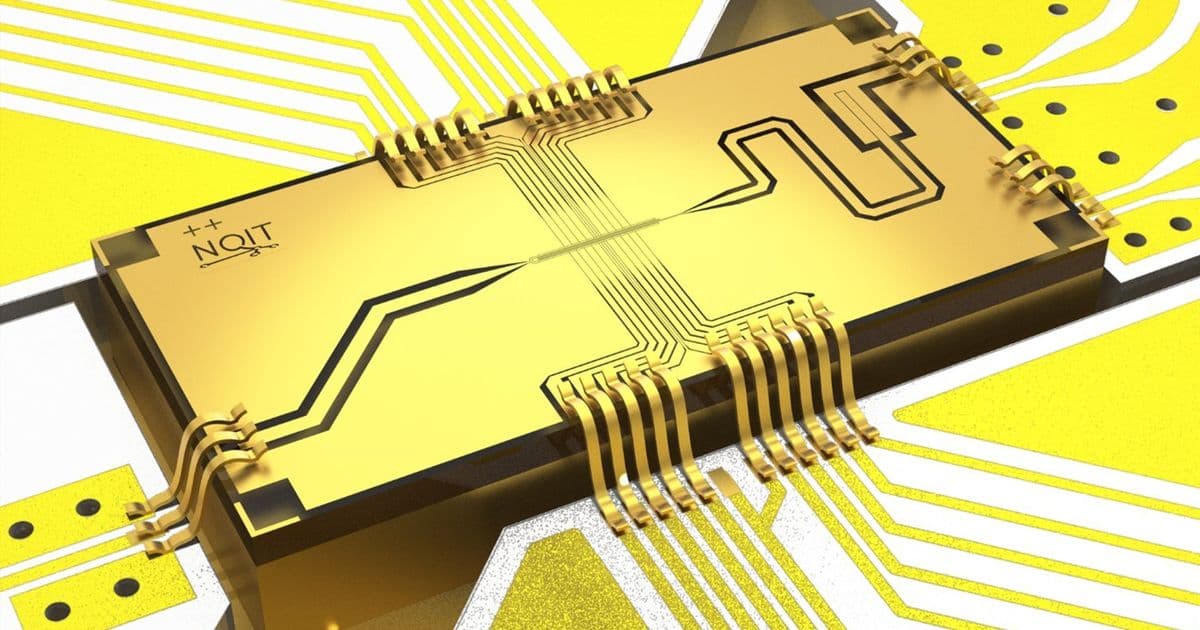
Researchers at the University of Oxford have shattered the world record for qubit operation accuracy, achieving error rates low enough to enable practical quantum error correction. This breakthrough reduces the overhead for fault-tolerant systems, potentially accelerating scalable quantum computers that solve real-world problems.
In a landmark advancement for quantum computing, physicists at the University of Oxford have set a new world record for qubit operation accuracy, pushing error rates below the critical threshold needed for viable quantum error correction. Their achievement, detailed in a recent announcement, marks a significant stride toward fault-tolerant quantum computers capable of revolutionizing fields like drug discovery, cryptography, and complex system optimization.
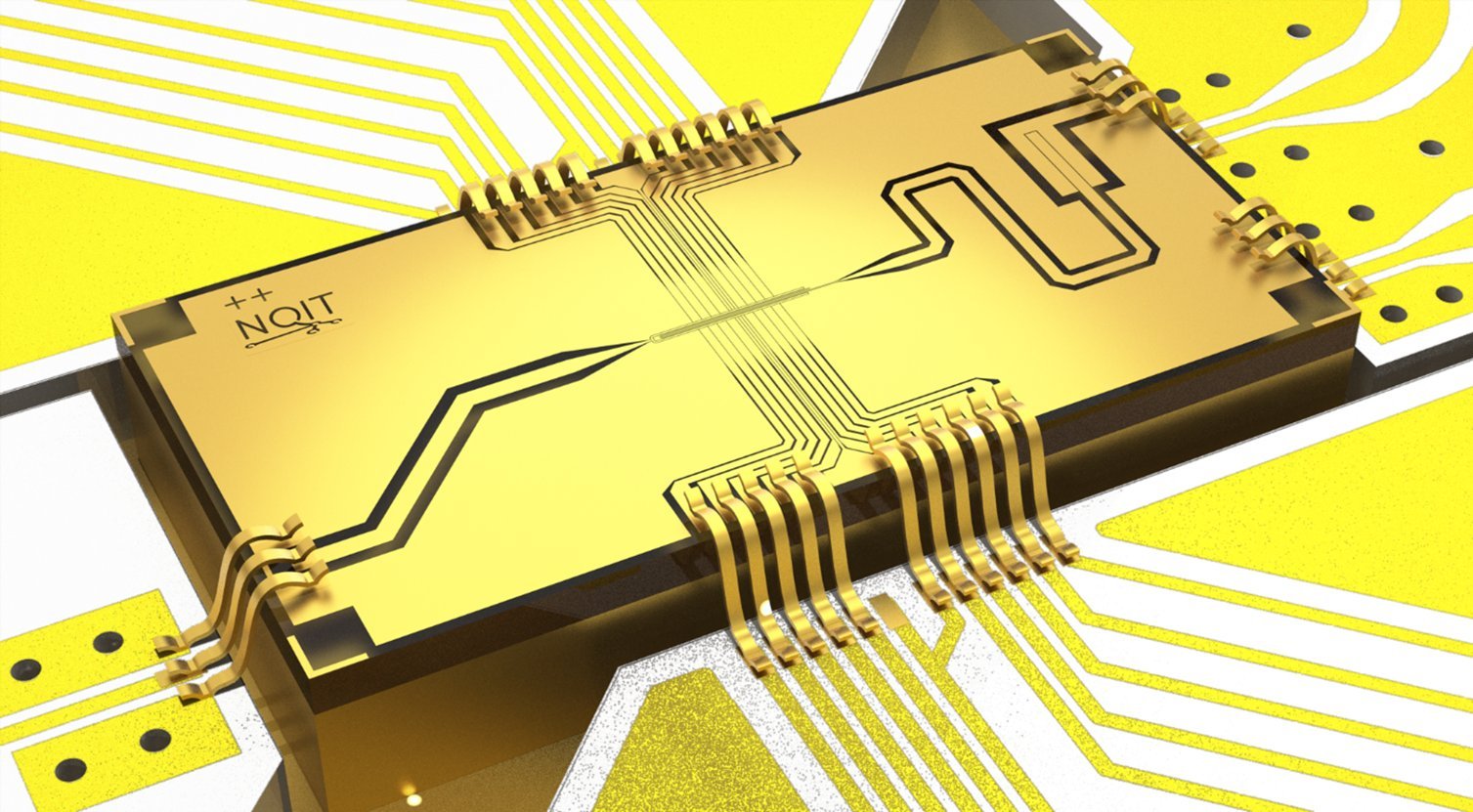
Quantum bits, or qubits, are the fragile building blocks of quantum computers, notoriously susceptible to environmental noise that causes errors during operations like gate manipulations. For decades, high error rates have been the Achilles' heel of quantum systems, forcing researchers to dedicate excessive qubits solely to error correction rather than computation. The Oxford team's breakthrough lies in achieving gate fidelities exceeding 99.99%—surpassing previous records by a substantial margin. This was accomplished using trapped-ion qubits, where individual atoms are precisely controlled with laser pulses in ultra-stable electromagnetic traps. Their approach minimized decoherence and control imperfections, enabling operations with error probabilities of just 0.01%, a feat once thought years away.
"This isn't just a minor improvement—it's a paradigm shift," explained Dr. Helena Quinn, lead experimentalist on the project. "By operating below the fault-tolerance threshold, we've drastically reduced the qubit overhead required for error correction. That means more resources can be directed toward actual computation, making scalable, practical quantum machines far more attainable."
The implications are profound for the quantum industry. Current quantum processors, like those from IBM or Google, require thousands of physical qubits to support a single logical qubit due to error rates. Oxford's advancement could shrink that ratio, accelerating timelines for quantum advantage—the point where quantum systems outperform classical supercomputers on meaningful tasks. Developers and engineers should note that this progress may soon influence quantum algorithm design, reducing the complexity of error-mitigation code and making quantum cloud services more reliable. However, challenges remain in scaling the trapped-ion architecture and integrating it with existing quantum hardware ecosystems.
As quantum computing transitions from lab curiosity to real-world tool, breakthroughs like Oxford's underscore a critical truth: mastering qubit accuracy is the linchpin for unlocking the technology's potential. With error rates now tamed, the race shifts to building systems where quantum mechanics can finally tackle humanity's most complex problems—not just in simulation, but in practice.
Source: University of Oxford
Comments
Please log in or register to join the discussion