Confer's novel implementation of the WebAuthn PRF extension leverages passkeys as durable encryption keys, eliminating traditional E2E encryption friction. This breakthrough enables biometric-secured cross-device data access without compromising zero-knowledge privacy principles.
For decades, end-to-end encryption (E2EE) has promised absolute data privacy with a critical tradeoff: cumbersome key management. Users faced either insecure password-based systems, fragile browser storage, or the notorious "12-word seed phrase" ritual—all creating friction that hampered adoption. As Confer engineers note in a recent technical blog post, this friction stems from cryptography's core challenge: "turning data security problems into key management problems."
The web's ephemeral nature exacerbated this dilemma. While modern browsers can generate strong encryption keys, they lacked mechanisms for durable, cross-device key persistence. Traditional solutions forced users to choose between security and accessibility—until now.
Passkeys: Beyond Authentication
Enter passkeys. Built on the WebAuthn standard, they've revolutionized authentication by enabling passwordless logins via device-stored cryptographic keys secured by biometrics. Confer's breakthrough realization? These same keys could solve E2EE's key management nightmare through the WebAuthn PRF (Pseudo-Random Function) extension.
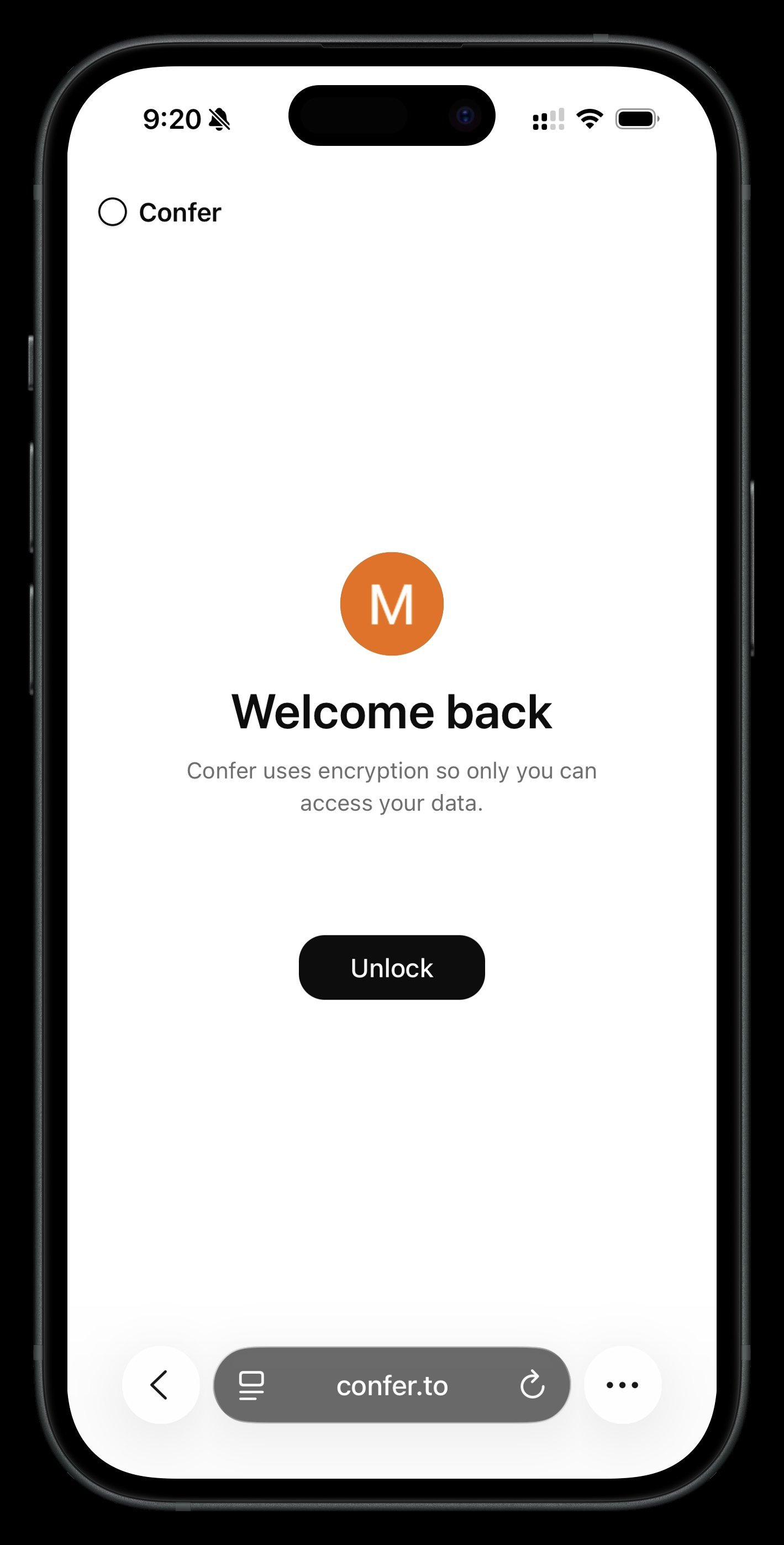
Confer's passkey authentication interface (Source: Confer)
The PRF extension, now supported in Chrome, Safari (18+), and Firefox across macOS, iOS, and Android, allows derivation of deterministic secrets from passkey private keys. This transforms passkeys from authentication tokens into cryptographic root keys. As Confer demonstrates, a single biometric gesture unlocks durable encryption capabilities:
const assertion = await navigator.credentials.get({
  mediation: "optional",
  publicKey: {
    challenge: crypto.getRandomValues(new Uint8Array(32)),
    allowCredentials: [{ id: credId, type: "public-key" }],
    userVerification: "required",
    extensions: { prf: { eval: { first: new Uint8Array(salt) } } }
  }
});

const { prf } = assertion.getClientExtensionResults();
const rawKey = new Uint8Array(prf.results.first); // Derived encryption key
Code snippet showing PRF-based key derivation (Source: Confer)
The Architecture Shift
This approach delivers three paradigm-changing advantages:
- Zero-Knowledge Durability: Keys synchronize securely via platform mechanisms (iCloud Keychain, Google Password Manager) without exposing secrets to service providers.
- Biometric Enforcement: Every decryption requires live biometric verification, preventing unauthorized device access.
- Ephemeral-to-Persistent Bridge: Web sessions gain durable encryption capabilities previously exclusive to native apps.
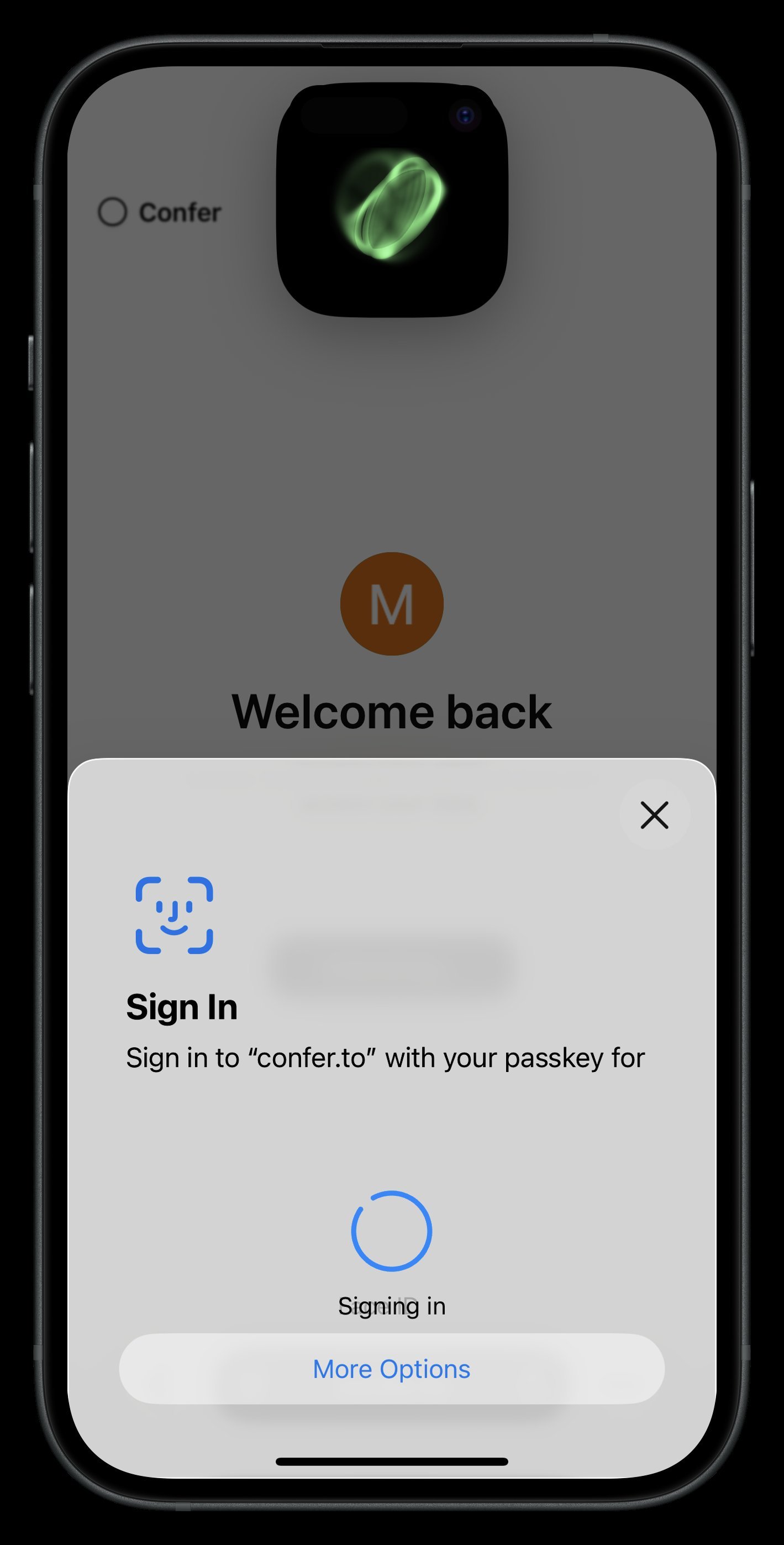
Biometric authentication during key derivation (Source: Confer)
While Windows and Linux support remains limited (requiring third-party authenticators), industry momentum suggests widespread adoption is inevitable. For developers, this unlocks new possibilities: Imagine encrypted web-based password managers that survive cache clears, or medical apps retaining sensitive data across devices without backend decryption access.
The Privacy Frontier
Confer's implementation demonstrates how this technique enables truly private AI chats—data remains encrypted during storage, transit, and even processing (with private inference hinted for future exploration). Crucially, this isn't just UX polish: It's a fundamental rearchitecture of web-based trust models. When cryptographic guarantees replace procedural safeguards, users gain mathematical certainty of privacy rather than policy-based promises.
As platforms continue standardizing PRF support, expect a wave of "passkey-native" encryption disrupting everything from secure messaging to confidential enterprise workflows—finally delivering on E2EE's original promise without the tradeoffs.
Comments
Please log in or register to join the discussion