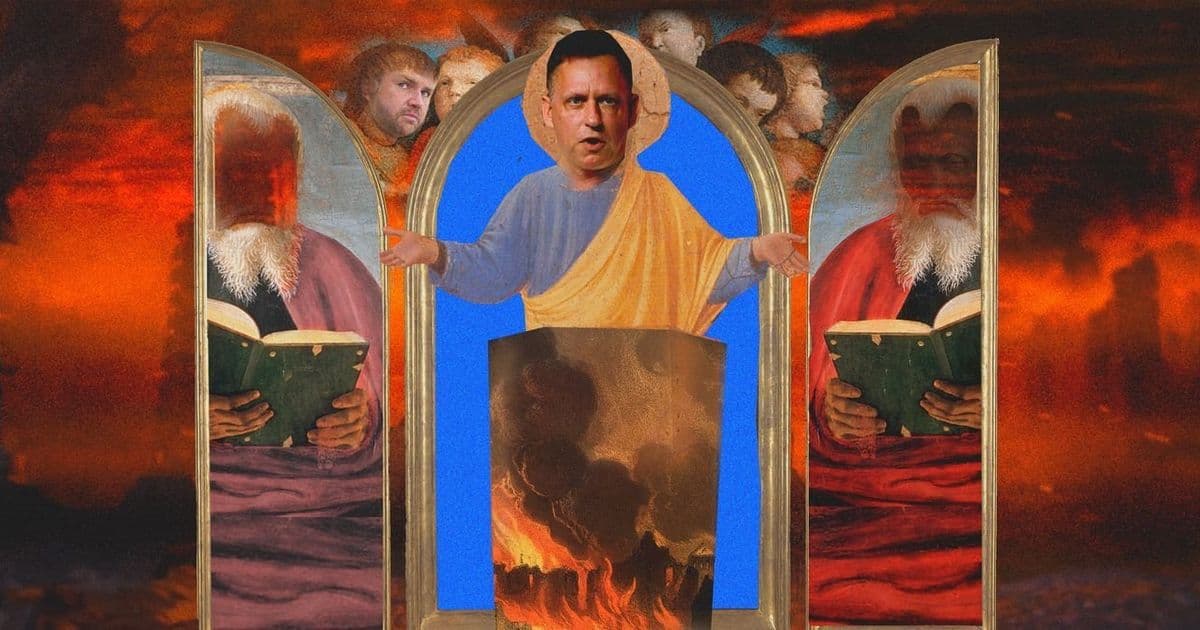
Billionaire tech investor Peter Thiel's deep engagement with René Girard's mimetic theory and Carl Schmitt's apocalyptic political theology reveals a worldview driving his investments in AI, Palantir, and nationalist politics. This investigation uncovers how Thiel fears both technological Armageddon *and* a globalist 'Antichrist,' positioning his ventures as potential bulwarks against the end times.
On an unusually warm Paris evening in 2023, dozens of philosophers and theologians gathered at the Catholic University of Paris. Their focus: the work of French-American theorist René Girard. To the podium stepped Peter Thiel—PayPal co-founder, Facebook's first major investor, and Palantir architect—delivering an hour-long meditation on Armageddon, the Antichrist, and humanity's precarious path. This lecture, reconstructed through extensive reporting and interviews, reveals the core ideology shaping Thiel's technological and political empire: a belief that we stand between dual existential threats demanding radical action.
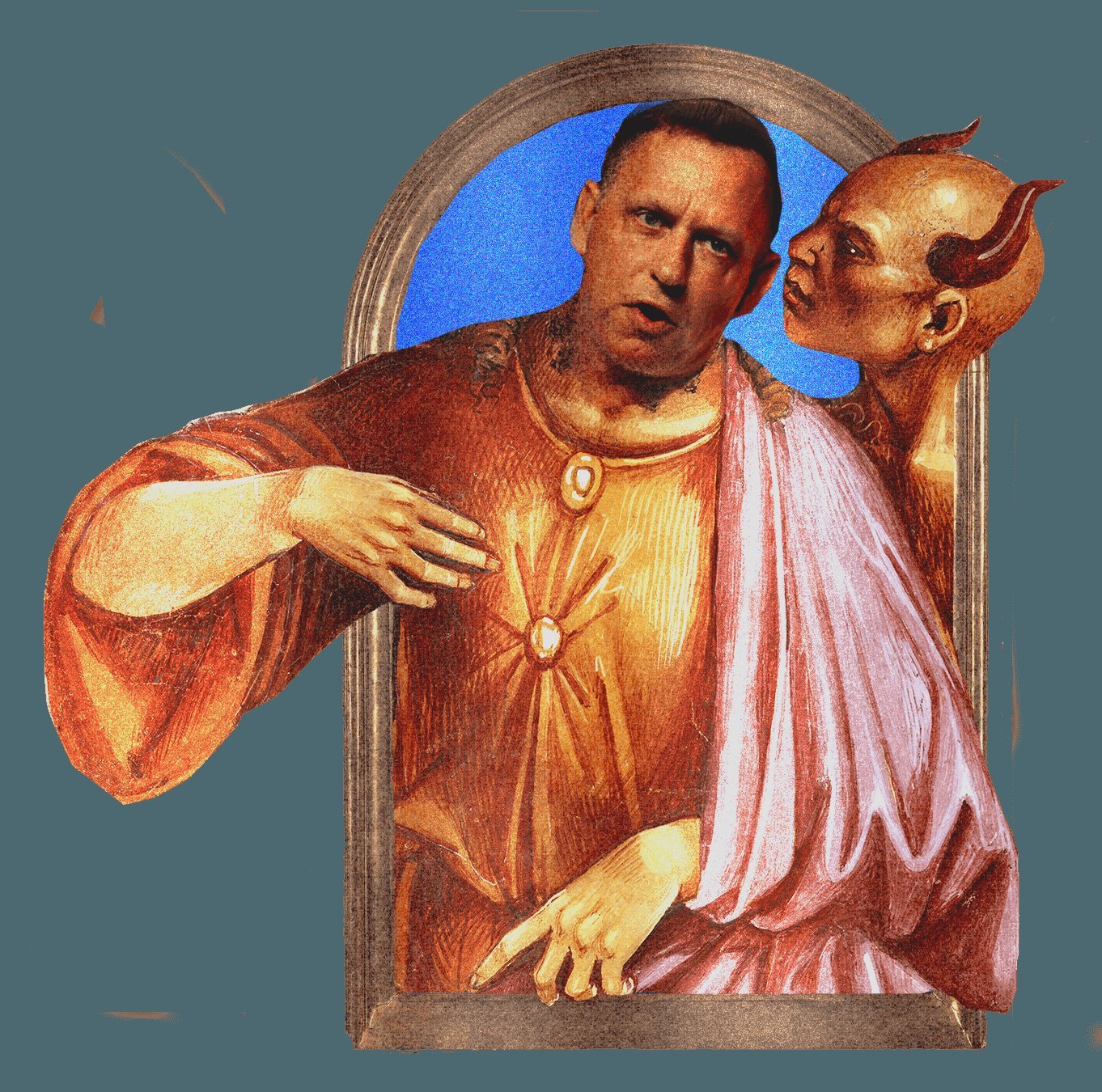 Peter Thiel has spent years refining his apocalyptic worldview through lectures and private debates.
The Girardian Foundation: Mimetic Rivalry and the Scapegoat Mechanism
At the heart of Thiel's thinking lies Girard's mimetic theory. Girard posited that human desire is fundamentally imitative ('mimetic'). We don't desire objects inherently; we desire what others desire, leading to escalating rivalry. This tension, Girard argued, historically found release through the 'scapegoat mechanism'—collective violence against a designated outsider, which temporarily restores social cohesion.
Christianity, Girard believed, fatally undermined this mechanism by revealing the scapegoat's innocence (exemplified by Christ's crucifixion). The consequence? Modern society lacks effective outlets for mimetic tension, hurtling toward apocalyptic, unconsummated violence. Thiel, a self-described 'hardcore Girardian,' absorbed this framework during formative discussions at Stanford in the early 1990s, contrasting sharply with his libertarian roots.
Carl Schmitt, the Katechon, and the Antichrist: Thiel's Dangerous Synthesis
Thiel's grim outlook intensifies through his engagement with Carl Schmitt—the controversial Nazi jurist—filtered via Austrian theologian Wolfgang Palaver. Schmitt feared a 'satanic unification of the world' under a global state, which he equated with the reign of the Antichrist foretold in Christian eschatology. He theorized the 'katechon' (from the Greek 'that which withholds')—a force restraining this unification and delaying the apocalypse.
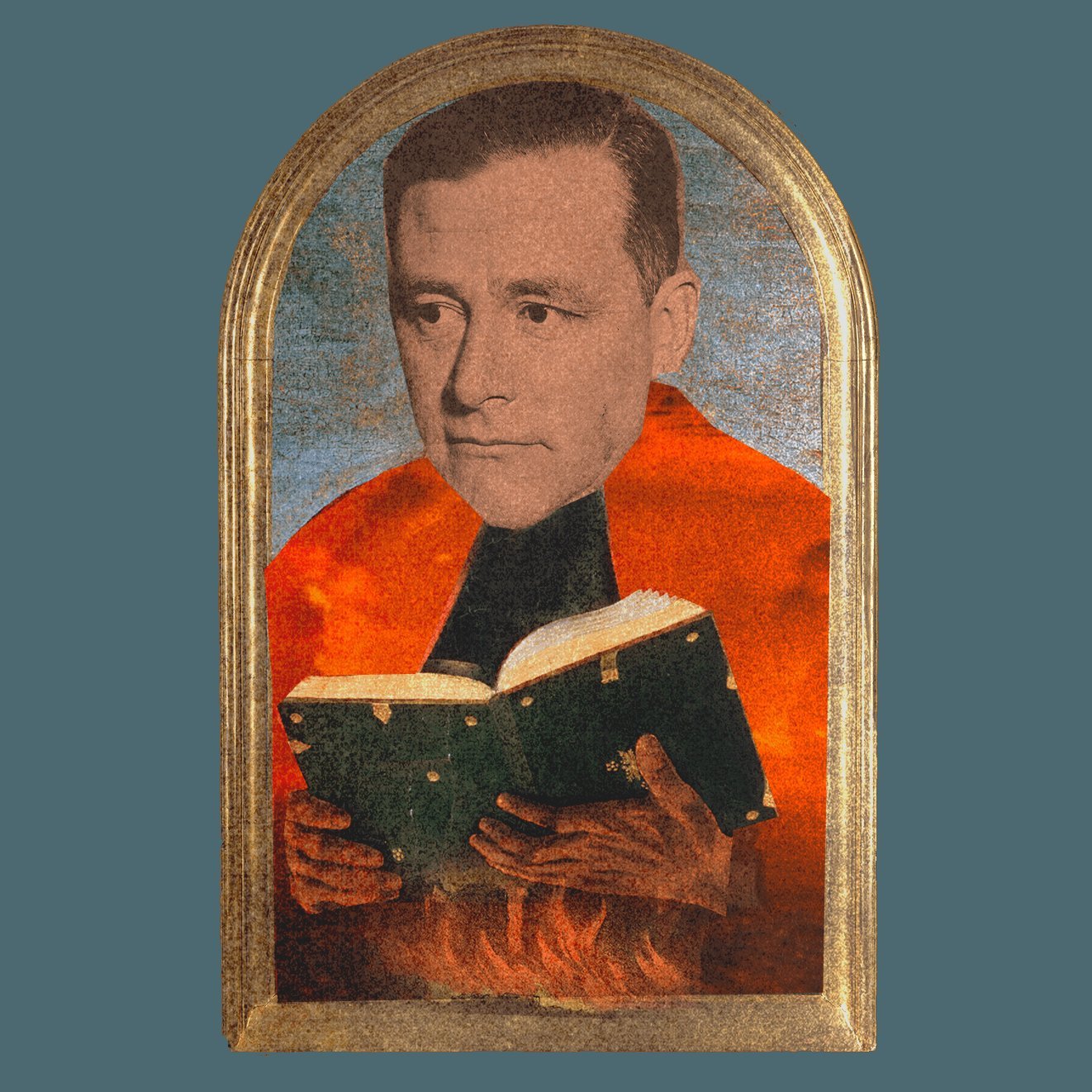 Carl Schmitt's controversial theories on sovereignty and the 'katechon' profoundly influence Thiel's political and technological strategy.
Palaver, a pacifist Girardian, had critiqued Schmitt in the 1990s, highlighting Schmitt's catastrophic error in believing Hitler could serve as the katechon. Thiel, however, absorbed Schmitt's diagnosis while downplaying the Nazi association. For Thiel:
- Technological Stagnation is Decadence: Modernity's 'listless' fear of innovation (AI risk, nuclear war, environmental collapse) creates vulnerability.
- The Antichrist Offers False Salvation: A unified global order promising 'peace and safety' (e.g., through AI governance like Nick Bostrom proposed) is the ultimate trap, paving the way for apocalyptic violence.
- The Katechon is Necessary but Dangerous: Something must actively forestall both technological collapse and global unification. But identifying it risks creating a new Antichrist (as with Schmitt and Hitler).
From Theory to Tech: Palantir, AI, and National Conservatism as Katechonic Tools
Thiel translates this theology into tangible technological and political strategy:
- Palantir as Security Katechon: Founded post-9/11, Palantir's global surveillance infrastructure embodies Thiel's 2004 call for a "secret coordination of the world’s intelligence services" operating "outside the checks and balances of representative democracy." It's a tool to identify enemies (Schmitt's core political function) and prevent catastrophic attacks, theoretically holding back chaos.
- AI Investment Amidst AI Fear: Thiel funds AI companies while simultaneously warning that AI doomerism fuels the Antichrist's rise. His capital accelerates potentially apocalyptic technology, positioning him as both arsonist and firefighter.
- National Conservatism as Political Katechon: Thiel is a major funder and speaker for the National Conservatism movement, which champions Schmitt's vision of a multipolar world order of strong, distinct nations—a deliberate bulwark against the 'Antichrist' of global governance. His protégé, JD Vance, now US Vice President, publicly credits Girard's scapegoat theory as influencing his conversion to Catholicism and political rhetoric, drawing criticism from scholars who see Vance's immigrant-blaming as employing the very scapegoat mechanism Girard condemned.
The Theologian and the Billionaire: Wolfgang Palaver's Uneasy Influence
Central to this story is Wolfgang Palaver, the Austrian theologian whose scholarship introduced Thiel to Schmitt's apocalyptic ideas. Their relationship is complex:
- Palaver, a peace activist, intended his critique of Schmitt to discredit the jurist's dangerous ideas.
- Thiel, however, embraced Schmitt's analysis of the problem while seeking technological and political solutions Palaver abhors.
- Palaver has engaged Thiel privately for years, urging him towards Christian non-violence, even hosting a 'dress rehearsal' for Thiel's Antichrist lectures in Austria. He observes Thiel's 'deep fear' driving a craving for security that 'plays with fire,' but remains hopeful he can influence Thiel spiritually.
The Irresolvable Tension: Building Tools of the Antichrist to Forestall the Antichrist?
Thiel's position is fraught with paradox, recognized even by his interlocutors. Ross Douthat directly questioned whether Thiel's investments in global surveillance (Palantir) and transformative AI might actually be building the infrastructure of the very globalist-technocratic 'Antichrist' he fears. Thiel's response: "I obviously don’t think that that’s what I’m doing." Yet the question lingers. Can tools designed for total information awareness and hyper-efficient governance not empower a future dictator?
Palaver identifies the core issue: Thiel's profound fear of chaos leads him to invest in systems of control that risk becoming the catalyst for the apocalypse he seeks to avoid. The Girardian framework suggests that in obsessively fighting the Antichrist through rivalrous power plays and scapegoating (evident in the politics he supports), Thiel risks mirroring the very forces he opposes. As Thiel himself conceded, "Perhaps if you talk too much about Armageddon, you are secretly pushing the agenda of the Antichrist."
For the tech world, Thiel's ideology is not an academic curiosity. It's the driving force behind billions in investment and political influence shaping the infrastructure of our future – a future envisioned as a narrow path between annihilation and tyranny, navigated by a billionaire convinced he must act as a reluctant player in the final acts of human history. Whether building katechons or unwittingly laying the Antichrist's foundations, Thiel's bets are existential, and their stakes are planetary.
Source: Based on reporting from WIRED: "The Real Stakes of Peter Thiel’s Antichrist Obsession" (Original URL: https://www.wired.com/story/the-real-stakes-real-story-peter-thiels-antichrist-obsession/)
Comments
Please log in or register to join the discussion