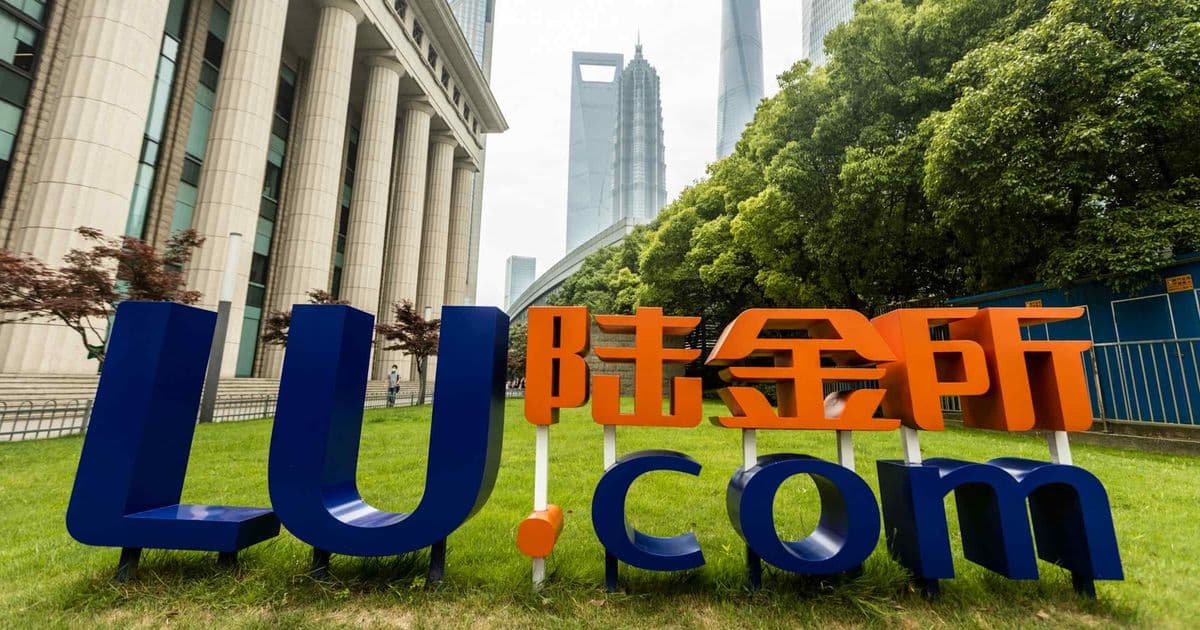
Lufax, the Chinese online wealth management arm of Ping An Insurance Group, has admitted to failing to comply with listing rules, disclosing previously unreported financial transactions totaling over $6.5 billion and triggering a major audit scandal.
Lufax Holding, the Chinese online wealth management platform backed by Ping An Insurance Group, has admitted to breaching listing rules after an investigation revealed it failed to seek shareholder approval for certain transactions and concealed related-party dealings worth billions of yuan.
In a series of filings to the Hong Kong Exchange on Sunday evening, Lufax acknowledged it did not seek shareholder approval in cases where it was required due to "unintentional oversight." The company disclosed subscriptions to wealth management products that were not previously reported, totaling 59 items across three batches. The principal amount subscribed from June 2023 to December 2025 exceeded 45 billion yuan ($6.5 billion), purchased from various mainland financial institutions including AVIC Trust, Bank of Communications, CICC, CITIC Bank, China Minsheng Bank, Huatai Securities, and Huaxia Bank.
Lufax conceded that some of these purchases constituted "disclosable transactions" subject to notification and announcement requirements. Four specific purchases totaling 2.1 billion yuan from Huaneng Trust, China Bohai Bank, CITIC Wealth Management, and Suyin Wealth Management not only required notification but also shareholder approval. The company stated it does not intend to convene shareholder meetings as it "might not be meaningful," noting that all four subscriptions have since been redeemed.
The disclosures emerged from ongoing investigations into the company's finances, initially triggered by PwC, Lufax's former external auditor, and PwC Zhong Tian, its Chinese affiliate, in January 2025. The auditors sent separate letters to Lufax's audit committee warning of "certain possible related-party transactions" that had not been reported. Lufax subsequently fired both auditors before their contracts ended, citing lost confidence and accusing PwC of being "less than candid" with the audit committee.
Newly hired EY audited Lufax's 2024 annual results, which were delayed from their expected March 2025 release until Sunday. The audit confirmed details of related-party transactions where Lufax extended loans worth 3.84 billion yuan to Shenzhen DeCheng Investment and Development from June 2017 to January 2023. This company used part of the loans to inject capital into two other entities, which in turn acquired distressed assets from certain clients who bought investment products promoted on Lufax's platform. The goal was to "mitigate potential reputational risks and to manage the company's potential exposure."
EY specifically drew "attention" to a note in the company's financial statements involving these previously concealed transactions, which led to the restatement of annual reports for 2022 and 2023 "to correct the misstatements." The bill for EY's services is expected to reach 135 million yuan, including the re-audit for 2022 and 2023. For comparison, Lufax paid PwC 49.2 million yuan for the 2023 audit according to previous annual reports.
Lufax's Hong Kong-traded shares have been suspended since January 2025, while its New York-listed shares in the form of American Depositary Receipts closed at $2.69 on Friday, down over 95% from their peak. The company had raised $2.36 billion in its October 2020 initial public offering on the NYSE, which turned out to be one of the last major Chinese blockbuster listings in the U.S.
The scandal has triggered significant management changes at Lufax. CEO Cho Yong Suk, who has held the position since August 2022 and served as a director since 2016, will step down at the end of March. Two nonexecutive directors will also resign as of Tuesday. Cai Fangfang, an executive director at Ping An Group, will move into the CEO position, while the two nonexecutive director posts will be filled by Ping An personnel.
Cho's departure follows a series of top management shake-ups at the company. Gregory Dean Gibb, then co-CEO with Cho, resigned in November 2024 to "focus on personal matters," and then-Chief Risk Officer Youn Jeong Lim stepped down in October 2025 due to "personal work arrangements." Last April, Cho ceded the post of Lufax chairman to Dicky Peter Yip, and Alston Peiqing Zhu, the chief financial officer, was removed simultaneously.
The Hong Kong Exchange declined to comment on individual cases, while the Securities and Futures Commission did not immediately respond to queries from Nikkei Asia. The timing of the disclosures, released right after China entered a Lunar New Year break lasting more than a week, has raised questions about the company's communication strategy during a sensitive period.
This scandal represents a significant blow to Ping An Insurance Group's reputation and highlights the challenges facing Chinese financial technology companies in maintaining compliance with international listing standards while navigating complex domestic regulatory environments. The case also underscores the growing scrutiny of related-party transactions and disclosure practices in China's rapidly evolving fintech sector.
Comments
Please log in or register to join the discussion