
Regulatory arbitrage offers a blueprint for nations to resist platform decay by establishing circumvention havens that empower users against monopolistic tech practices.
Ireland transformed global economics through regulatory arbitrage. During the 1970s and 1980s, facing economic hardship and emigration, Ireland positioned itself as a tax haven. Corporations pretending to establish headquarters there avoided 25-35% in taxes elsewhere, gaining competitive advantages through profit shifting. This strategy lifted Ireland from poverty but created dependency – the state became captive to corporate interests, compromising enforcement of regulations like GDPR.
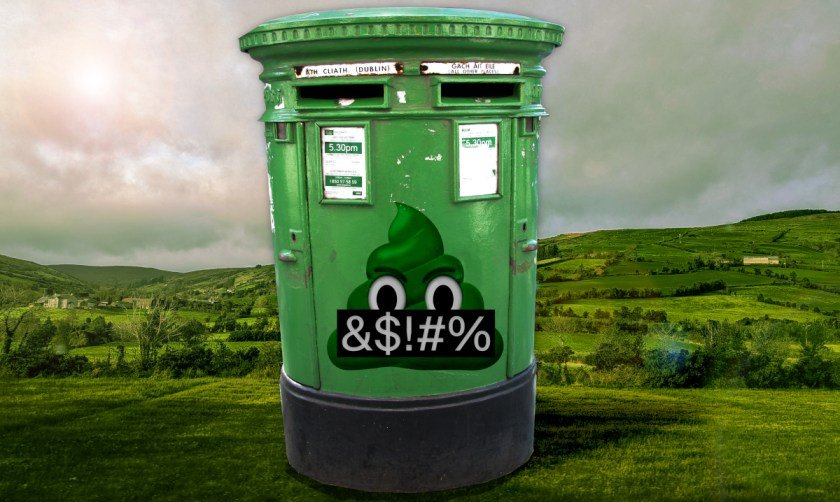
Ireland's pillarbox symbolically modified to represent enshittification resistance
Regulatory arbitrage demonstrated how small nations can reshape global systems. Ireland captured billions from tax avoidance, proving that offering unique jurisdictional advantages creates economic leverage. This model holds promise beyond tax evasion: the same principle could combat platform enshittification.
Globally, anti-circumvention laws criminalize modifying proprietary tech systems. These laws leave users defenseless against predatory practices while stifling local innovation. The U.S. enforces this regime through tariff threats, but recent trade instability has weakened this leverage.
A country repealing anti-circumvention laws could become a disenshittification haven. By permitting tools that bypass digital restrictions – privacy blockers, alternative clients, repair diagnostics – such a nation would attract technologists and entrepreneurs. Initial developers would gain first-mover advantages similar to Nokia's mobile dominance, creating exportable solutions against platform decay.

Public advocacy accelerates policy innovation
The economic incentives mirror Ireland's path: companies unlocking value from Big Tech's walled gardens would generate billions while returning value to users through better products. Like Ireland's tax strategy, this would create powerful domestic constituencies supporting the legal framework.
Over 200 nations could pursue this opportunity. With 88% of Spotify tracks already demonetized and platform extraction increasing, demand for disenshittification tools grows. International technologists displaced from Silicon Valley and Americans seeking alternatives (two-thirds of young citizens consider leaving) provide talent pipelines.
History shows small jurisdictions can redefine systems, from Madagascar's pirate utopias to Ireland's tax revolution. One nation embracing circumvention rights could cascade change globally through digital distribution. The result: a new economic ecosystem resisting platform decay and rebuilding digital sovereignty.

Grassroots efforts amplify policy shifts
Ireland proved regulatory arbitrage reshapes worlds. The same approach can transform technology from an extraction engine into a participatory ecosystem. By becoming the Ireland of disenshittification, a single nation could fracture digital feudalism.
Comments
Please log in or register to join the discussion