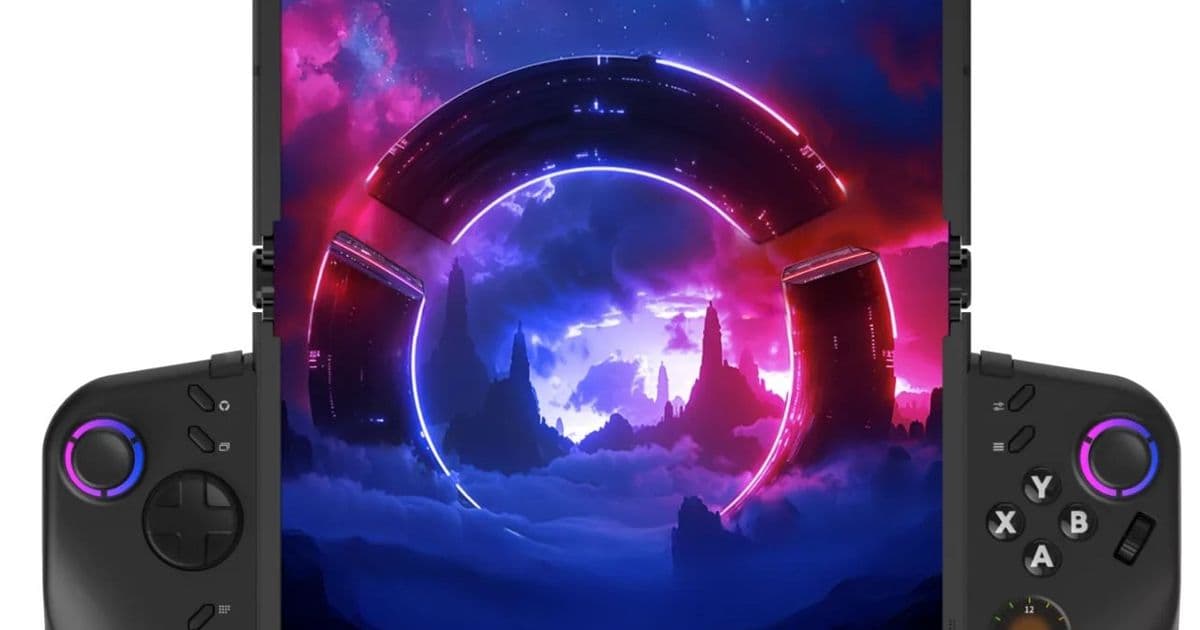
Lenovo's Legion Go Fold concept at MWC 2025 is a foldable gaming PC with detachable controllers, an 11.6-inch pOLED display, and optional keyboard, blurring the lines between handheld, tablet, and laptop.
Lenovo has unveiled one of the most ambitious and unusual portable gaming devices at Mobile World Congress 2025: the Legion Go Fold. As the name suggests, this is a foldable concept that aims to be a handheld gaming PC, but with enough versatility to function as a tablet and even a laptop when needed.
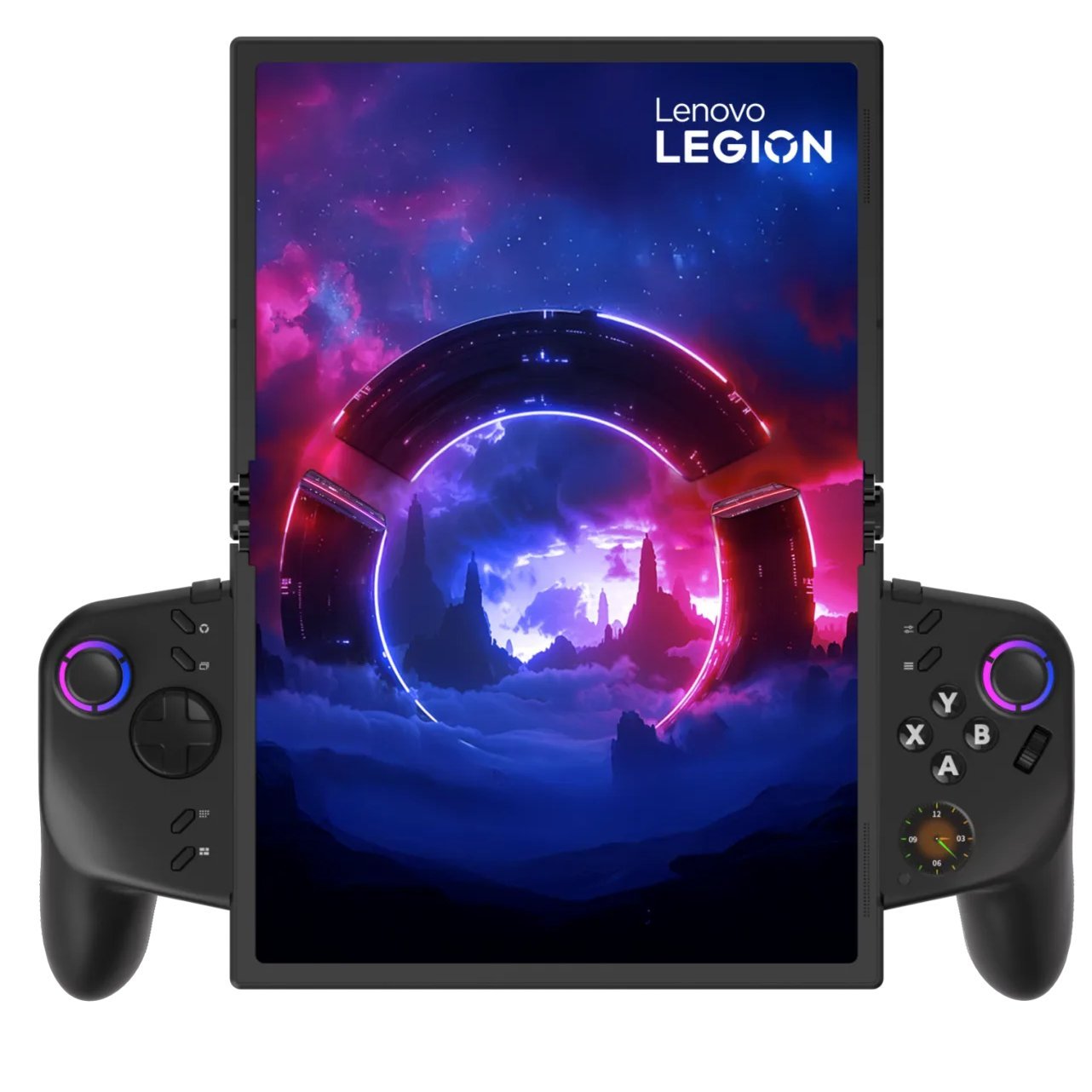
At its core, the Legion Go Fold is built around an 11.6-inch pOLED display with a 2435 x 1712 pixel resolution, 165 Hz refresh rate, and 500 nits of brightness. The key innovation is that this screen can fold in half, transforming the device from an 11.6-inch tablet into a more compact 7.7-inch form factor. This folding mechanism isn't just for portability—it fundamentally changes how you can use the device.
Gaming in Multiple Form Factors
When folded, the Legion Go Fold takes on the appearance of a handheld gaming device. Detachable controllers can be attached to either side of the folded screen, creating what looks like a traditional handheld console. The screen size here is admittedly a bit awkward—at 7.7 inches, it's larger than most handhelds but smaller than typical tablets.
However, unfolding the device opens up new possibilities. In landscape orientation, you get the full 11.6-inch display for gaming, providing significantly more screen real estate than most dedicated handhelds. The high refresh rate and pOLED technology should deliver excellent visual quality for fast-paced games.
Portrait mode offers perhaps the most interesting gaming configuration. With the screen unfolded vertically, you can effectively split the display into two zones—running your game on one half while using the other for a chat window, streaming interface, or walkthrough guides. This multitasking capability during gameplay is something traditional handhelds simply can't offer.
The detachable controllers add another layer of flexibility. They can be used wirelessly, with one controller featuring mouse functionality for games that benefit from precise pointer control. A bridge accessory allows you to connect both controllers into a more traditional gamepad configuration. This means the Legion Go Fold can adapt to different game genres and control preferences without requiring separate accessories.
Beyond Gaming: Tablet and Laptop Modes
What makes the Legion Go Fold particularly interesting is how it transcends the "gaming handheld" category. Without the controllers attached, it functions as a foldable tablet with the option to use it in either the compact 7.7-inch folded mode or the full 11.6-inch unfolded mode.
The device also includes a detachable keyboard and touchpad, transforming it into a laptop-like computing device. This three-in-one approach—handheld gaming PC, tablet, and laptop—represents a significant departure from traditional gaming handhelds that are typically single-purpose devices.
Technical Specifications
While the Legion Go Fold remains a concept device without confirmed commercial plans, the prototype shown at MWC is a fully functional computer. It's powered by an Intel Core Ultra 7 258V Lunar Lake processor, paired with 32GB of RAM and a 1TB SSD. These specifications suggest Lenovo is targeting performance that can handle demanding games while maintaining the portability benefits of a foldable design.
The device weighs 638 grams (about 1.4 pounds) without controllers attached, or 868 grams (1.9 pounds) with controllers connected. This weight is reasonable for a device with these capabilities, though it's heavier than dedicated gaming handhelds like the Steam Deck (669 grams) or ASUS ROG Ally (608 grams).
The Concept Challenge
As with many concept devices shown at trade shows, the Legion Go Fold faces significant hurdles before it could become a commercial product. Foldable displays, while increasingly common in smartphones, present unique challenges for gaming devices that may see more intense use and require higher refresh rates.
The durability of the folding mechanism under gaming conditions, the thermal management of a powerful processor in a compact foldable form factor, and the software optimization needed to seamlessly transition between different usage modes are all substantial engineering challenges.
Additionally, the price point for such a versatile device would likely be significant. Combining foldable display technology, detachable controllers, optional keyboard, and high-end internal components would result in a premium product that might struggle to find its market niche.
Industry Context
The Legion Go Fold represents an interesting experiment in the evolving landscape of portable gaming. Traditional gaming handhelds like the Steam Deck, ROG Ally, and Lenovo's own Legion Go have found success by offering PC gaming in a portable form factor. However, these devices are essentially single-purpose tools optimized for one use case.
By contrast, the Legion Go Fold attempts to merge multiple device categories into one. This approach has parallels with devices like the Nintendo Switch, which successfully bridged the gap between home console and portable gaming. However, the Legion Go Fold goes further by incorporating tablet and laptop functionality alongside gaming capabilities.
This multi-mode approach could appeal to users who want a single device that can handle gaming sessions, productivity work, media consumption, and everything in between. The challenge will be executing this vision without compromising the user experience in any particular mode.
Looking Forward
For now, the Legion Go Fold remains a concept, and Lenovo has not announced any plans for commercial release. However, concept devices often serve as testbeds for technologies and design approaches that may appear in future products, even if the specific device never reaches market.
The ideas explored in the Legion Go Fold—foldable displays in gaming devices, detachable controllers with multiple usage modes, and the convergence of gaming handhelds with traditional computing form factors—are likely to influence future product development in the portable gaming space.
Whether or not the Legion Go Fold itself becomes a real product, it demonstrates the ongoing innovation in portable computing and gaming, pushing the boundaries of what a handheld device can be. The question remains whether consumers want such a versatile but potentially complex device, or whether they prefer specialized tools optimized for specific use cases.
As foldable display technology continues to mature and gaming handhelds become increasingly powerful, we may see more devices that blur the lines between different computing categories. The Legion Go Fold, even as a concept, points toward an interesting future where the distinction between handheld, tablet, and laptop becomes increasingly fluid.
Comments
Please log in or register to join the discussion