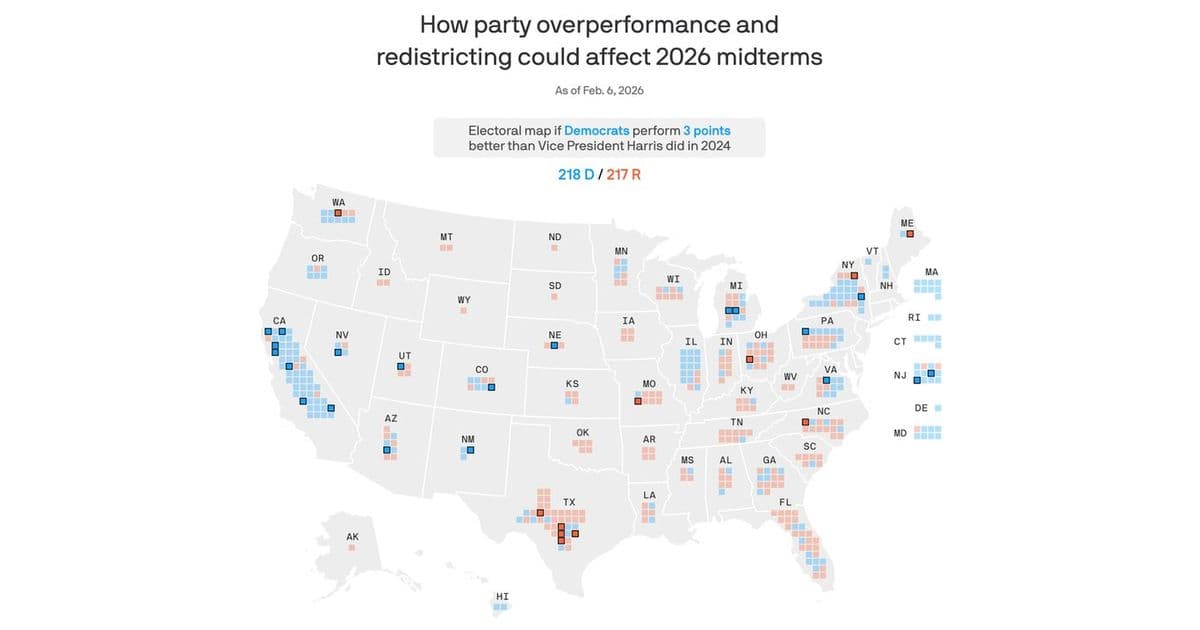
Axios analysis reveals key battleground districts where Democrats could flip Republican seats in the 2026 midterms, with suburban districts showing the most vulnerability to a potential 'blue wave.'
A comprehensive Axios analysis has identified the congressional districts most vulnerable to Democratic gains in the 2026 midterm elections, with suburban districts across the country showing the highest potential for Republican seat losses.
Key Battleground Districts
The analysis reveals that districts in traditionally Republican suburban areas are showing the most significant shifts toward Democratic candidates. These include:
- Districts in Texas's growing suburbs, particularly around Houston and Dallas
- California's Central Valley seats that have trended Democratic in recent cycles
- New York's Long Island districts that have become increasingly competitive
- Florida's I-4 corridor districts showing Democratic momentum
Demographic Factors Driving Change
Several demographic trends are contributing to the potential "blue wave":
Suburban Voter Shift: College-educated suburban voters, particularly women, have been trending Democratic since 2018
Generation Z Impact: Younger voters are registering and voting in higher numbers, with polls showing they lean heavily Democratic
Education Gap: The partisan divide between college-educated and non-college-educated voters continues to widen
Urban-Rural Divide: Growing polarization between urban and rural voting patterns is affecting suburban districts that bridge these areas
Historical Context
The potential for significant Democratic gains mirrors the 2018 "blue wave" that resulted in Democrats gaining 41 House seats. However, redistricting following the 2020 census has created a more complex landscape, with some districts becoming more competitive while others have been made safer for one party.
What This Means for 2026
If current trends continue, Democrats would need to flip approximately 15-20 seats to regain control of the House. The Axios analysis suggests that the most likely pickups would come from:
- Districts won by Biden in 2020 but represented by Republicans
- Suburban districts where Republicans won by less than 5% in 2022
- Open seats where Republican incumbents are retiring
The analysis also notes that economic factors, particularly inflation and housing costs, could play a decisive role in determining whether these trends accelerate or moderate by election day.
Methodology
The Axios analysis combined multiple data sources including:
- 2020 and 2022 election results
- Demographic changes from Census data
- Polling trends from competitive districts
- Fundraising data and candidate quality assessments
- Historical voting patterns in midterm elections
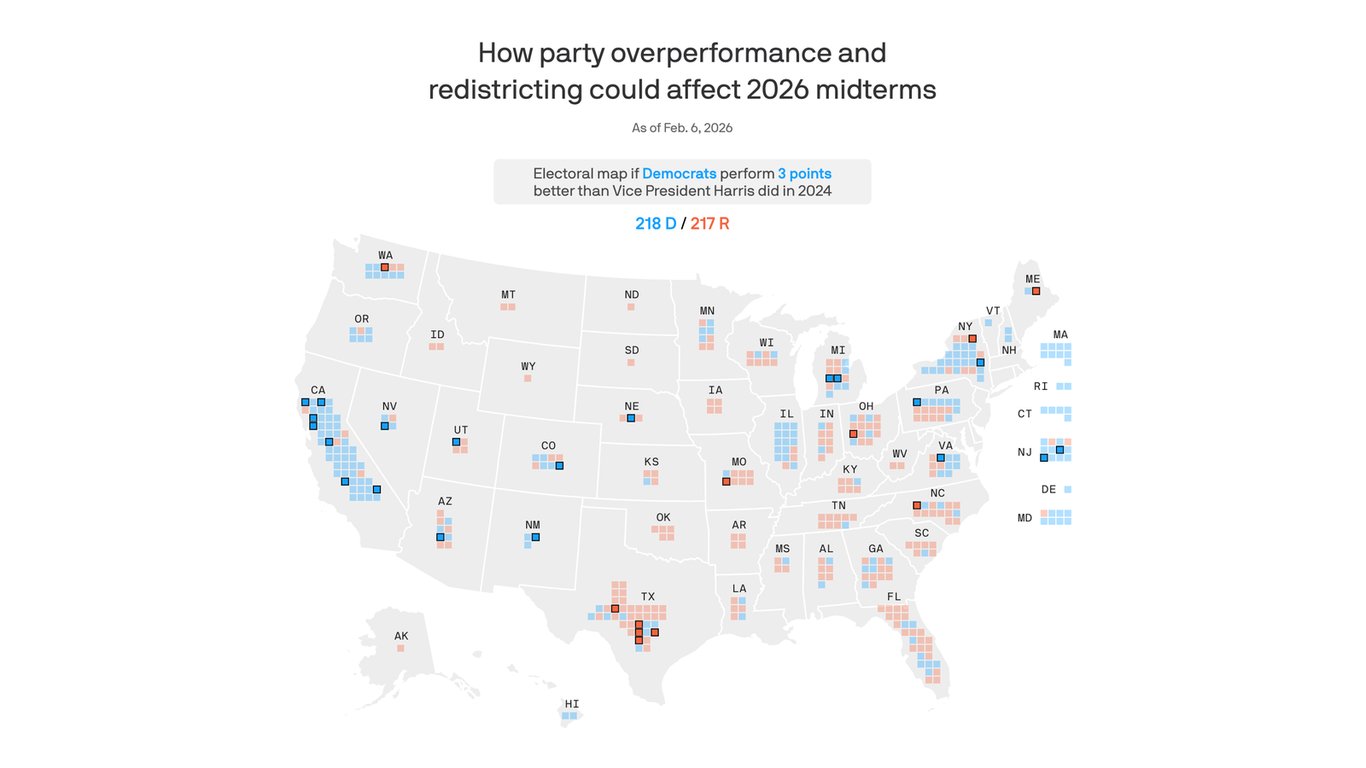
Map showing the congressional districts most vulnerable to Democratic gains in the 2026 midterms, with suburban districts highlighted in orange and red indicating the highest potential for Republican seat losses.
Comments
Please log in or register to join the discussion