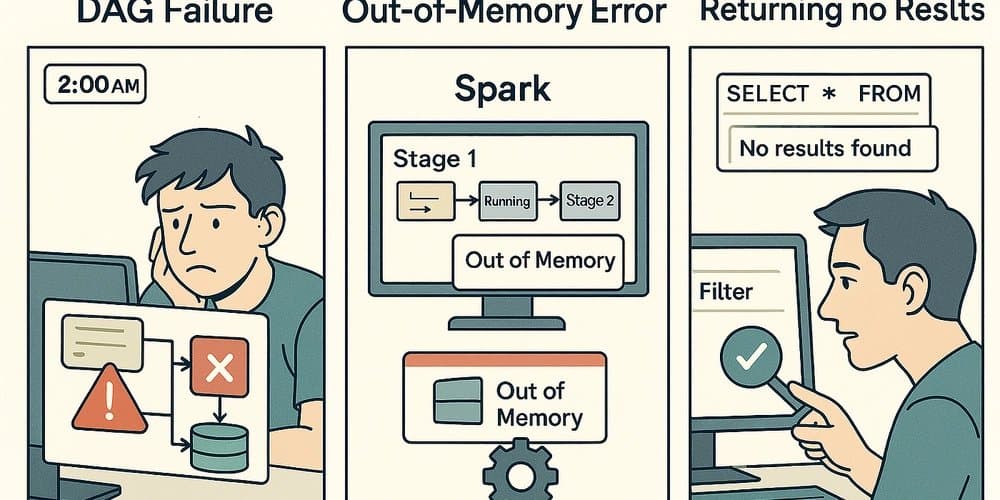
Every production incident is the final chapter of a story your system has been telling for weeks. The teams that suffer less aren't faster at fixing crashes — they're better at listening before the crash happens.
When production breaks, the instinct is to find the line of code that crashed. But that's almost never the right question. The real question is: why was this state possible in the first place?
The Story Before the Crash
Production bugs aren't random events. They're the final chapter of a story your system has been telling for weeks — sometimes months — before it breaks. Most teams only start listening when users start screaming.
When something fails in production, the crashing line is just where the story ends. The real story started much earlier:
- Why was this state possible?
- Why wasn't this path visible earlier?
- Why did the system allow this combination of inputs?
The line that crashed is rarely the problem. It's just the point where the accumulated technical debt, ignored warnings, and design flaws finally became visible to users.
The Warning Signs Are Usually Boring
Before most incidents, you'll find:
- Logs that were "a bit noisy"
- Metrics that slowly drifted
- Edge cases dismissed as "unlikely"
- TODOs that said "handle later"
Nothing dramatic. Nothing urgent. That's why they're ignored. Teams don't miss red flags — they miss gray ones. The subtle degradation that happens over weeks, not hours.
Debugging in Production Is Archaeology
Real-world debugging looks less like problem-solving and more like excavation:
- Old assumptions buried in comments
- Workarounds added under pressure
- Configs changed by someone who's no longer on the team
- Code paths nobody remembers approving
By the time you're debugging production, you're reconstructing decisions, not just logic. You're trying to understand why the system was allowed to get into a state where this failure was even possible.
Why "Works Fine in Staging" Is Meaningless
Production is where:
- Real traffic shapes appear
- Data is messy instead of ideal
- Latency, retries, and partial failures exist
- Users behave creatively
Staging proves correctness. Production reveals behavior. If your system only survives because traffic is polite, it's already broken.
The Teams That Debug Less Aren't Smarter
They just design differently. Patterns you'll see:
- Clear ownership of data flows
- Fewer "magic" side effects
- Boring, explicit state transitions
- Logs written for humans, not machines
They assume things will go wrong — and plan for reading the story later. They build observability into their systems from day one, not as an afterthought.
A Simple Habit That Changes Everything
After every incident, ask one question: "What did the system know before users did?"
If the answer is "nothing," you didn't have a bug — you had silence. Logs, metrics, and alerts aren't for dashboards. They're for future you, under pressure.
The best teams treat production incidents as opportunities to improve their listening skills, not just their fixing skills.
The Real Difference
The teams that suffer less aren't faster at fixing crashes — they're better at listening before the crash happens. They read the story their system is telling them, even when it's boring, subtle, or inconvenient.
Production bugs aren't surprises. They're delayed conversations. The question is: are you listening?
Discussion question: What's the earliest signal you've learned to trust before a production issue blows up?
Comments
Please log in or register to join the discussion