Qualcomm is reportedly developing a 7-core variant of the Snapdragon 8 Elite Gen 5 that drops one performance core for improved efficiency, with early Geekbench results showing the trade-off between multi-core performance and battery life.
The Snapdragon 8 Elite Gen 5 is getting a 7-core variant that could help Android phones achieve better battery life at the cost of some multi-core performance. Early Geekbench results have surfaced showing this new configuration, which follows a similar pattern to last year's 7-core Snapdragon 8 Elite variant.
What's New with the 7-Core Snapdragon 8 Elite Gen 5
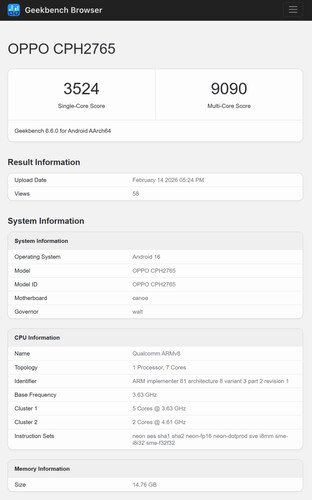
The new 7-core variant maintains the same clock speeds as its 8-core sibling - 3.6 GHz for the performance cores and 4.6 GHz for the Prime cores. However, by dropping one performance core, the chipset achieves a different performance profile that could be particularly appealing for foldable devices and other form factors where battery life is paramount.
According to early Geekbench results, the single-core performance of this 7-core variant scores 3,524 points, which aligns with expectations for the standard Snapdragon 8 Elite Gen 5. This means users won't notice any difference in everyday tasks like app launches, web browsing, or social media scrolling.
Performance Trade-offs
Where the differences become apparent is in multi-core performance. The 7-core variant trails its 8-core sibling by approximately 17% in Geekbench 6.5 multi-core tests. This puts it roughly on par with the original Snapdragon 8 Elite rather than the newer Gen 5 version.
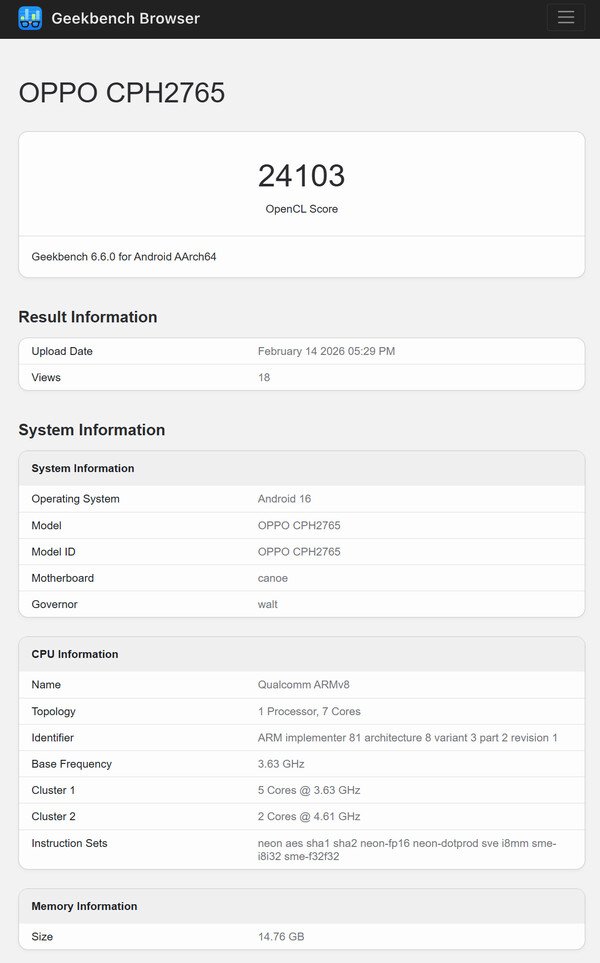
However, GPU performance remains unaffected. The variant achieves an OpenCL score of 24,103, which would place it near the top of the benchmark rankings alongside devices like the Poco F8 Ultra and RedMagic 11 Pro. This suggests that gaming and graphics-intensive tasks should perform identically to the full 8-core version.
Who's Using It First
The Find N6 is expected to be the first device to feature this 7-core Snapdragon 8 Elite Gen 5 variant, with a global launch scheduled for March 17. This follows the pattern from last year when Oppo's Find N5 was the primary adopter of the 7-core Snapdragon 8 Elite variant.
Interestingly, the 7-core variant shows around 10% better performance compared to its predecessor, suggesting Qualcomm has made efficiency improvements even with the reduced core count.
Why This Matters for Android Phones
This strategy of offering both 7-core and 8-core variants gives Android manufacturers more flexibility in balancing performance and battery life. While the Galaxy Z Fold7 opted for an 8-core "for Galaxy" variant last year, the 7-core version proved successful for the Find N5 in our battery life tests.
For foldable devices and other phones where all-day battery life is crucial, the 7-core variant could be the better choice despite the multi-core performance hit. Most users won't notice the difference in daily use, but they'll appreciate the extra hours of screen time.
It remains to be seen whether other Android OEMs will adopt this 7-core variant or stick with the full 8-core version. The choice will likely depend on their specific design priorities and target use cases for each device.
The Snapdragon 8 Elite Gen 5 7-core variant represents Qualcomm's continued refinement of its chipset strategy, offering manufacturers the ability to optimize for either peak performance or balanced efficiency depending on their device requirements.
Comments
Please log in or register to join the discussion