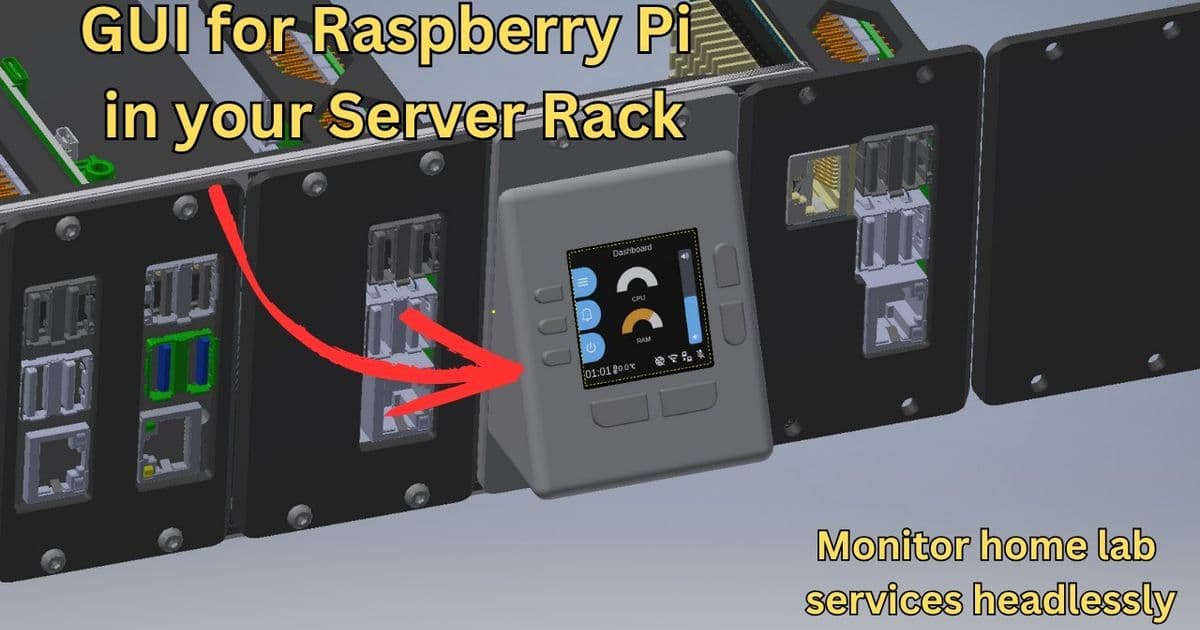
A new open source hardware project tackles the pain point of managing headless Raspberry Pi nodes in server racks. The Ubo GUI module provides real-time system monitoring and control in a 2U form factor, addressing the growing needs of home lab enthusiasts and tinkerers.
The Rise of Compact Homelabs and Their Unmet Needs
As Raspberry Pi clusters and compact server racks proliferate in home labs worldwide, a persistent challenge remains: efficiently monitoring and controlling headless nodes without external peripherals. Jeff Geerling's popular mini-rack experiments highlighted this gap, inspiring developer Aboelbisher to create a dedicated hardware solution. The result? A decoupled GUI module designed specifically for rack-mounted Raspberry Pi deployments.
Engineering a Rack-Optimized Interface
The standalone module—extracted from the open source Ubo pod project—features a 2U enclosure housing a custom PCB and display. After initial struggles with a 1U form factor, the designer settled on 2U for improved usability and thermal management. The interface provides:
- Real-time CPU/RAM/storage monitoring
- Application health status checks
- Direct device control (reboot/shutdown)
- Network configuration access
- Visual alert system
 GUI capabilities: System monitoring and headless control in one interface
Hardware Innovation Meets Software Maturity
The hardware redesign complements already robust software. The Ubo App runs in any browser, allowing immediate testing without physical hardware—a deliberate design choice to accelerate adoption. For production deployment, the solution supports bare-metal Raspberry Pi installations, as demonstrated in the setup tutorial.
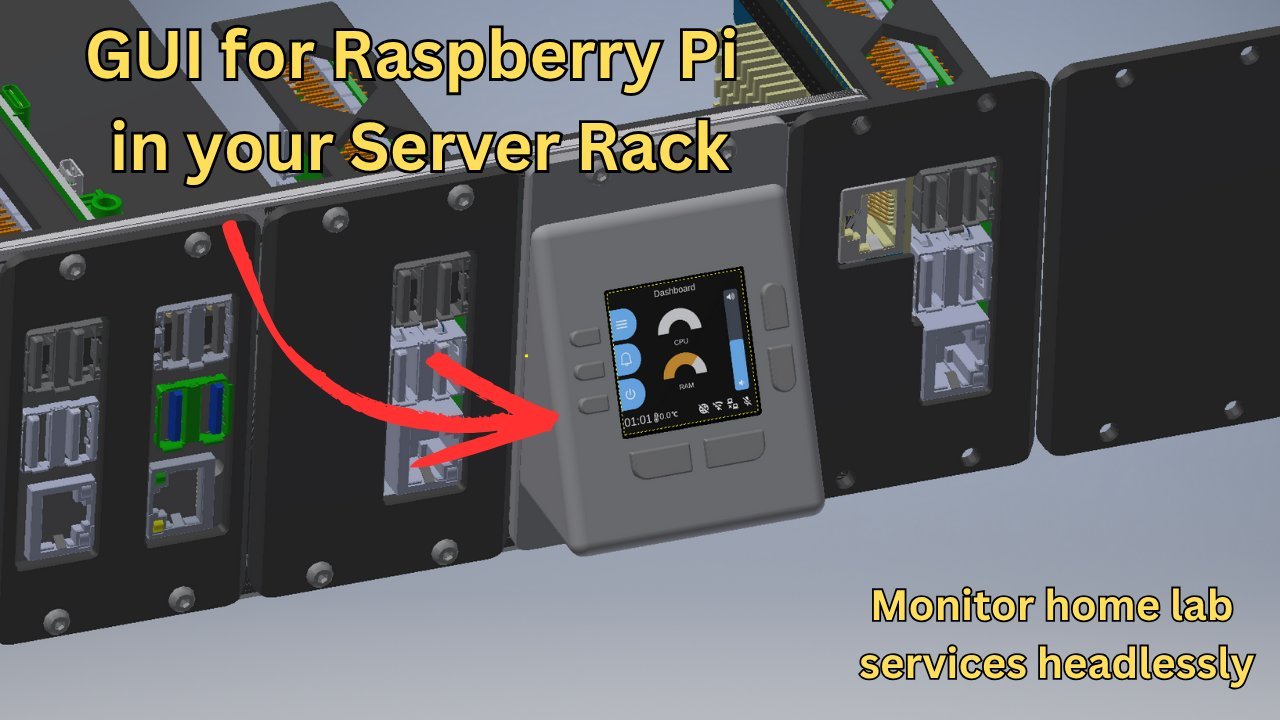
 Standalone module: Designed for seamless rack integration
Future-Proofing Through Modularity
Decoupling the GUI unlocks iterative development, including a tilt-adjustable prototype for improved viewing angles. All hardware files are open sourced, inviting community collaboration. As Aboelbisher notes: "This modularization enables rapid iteration—whether for server racks or future Ubo pod accessories."
Why This Matters for Developers
Beyond convenience, the project signals a maturation of home lab tooling. By addressing physical deployment challenges in constrained spaces, it enables more sophisticated Raspberry Pi applications—from Kubernetes clusters to distributed IoT networks. The open approach also creates a template for others to extend, reflecting hardware culture's growing alignment with software's collaborative ethos.
Design documentation and prototyping progress are being shared in the project video series. Developers can contribute to the PCB designs or test the software today.
Comments
Please log in or register to join the discussion