

A new contender enters the AI development space with Rudy's AI, promising to streamline the creation of user-centric applications through intuitive tools and workflows. The platform emphasizes 'lovable' experiences while addressing critical pain points in AI integration and interface design for developers.
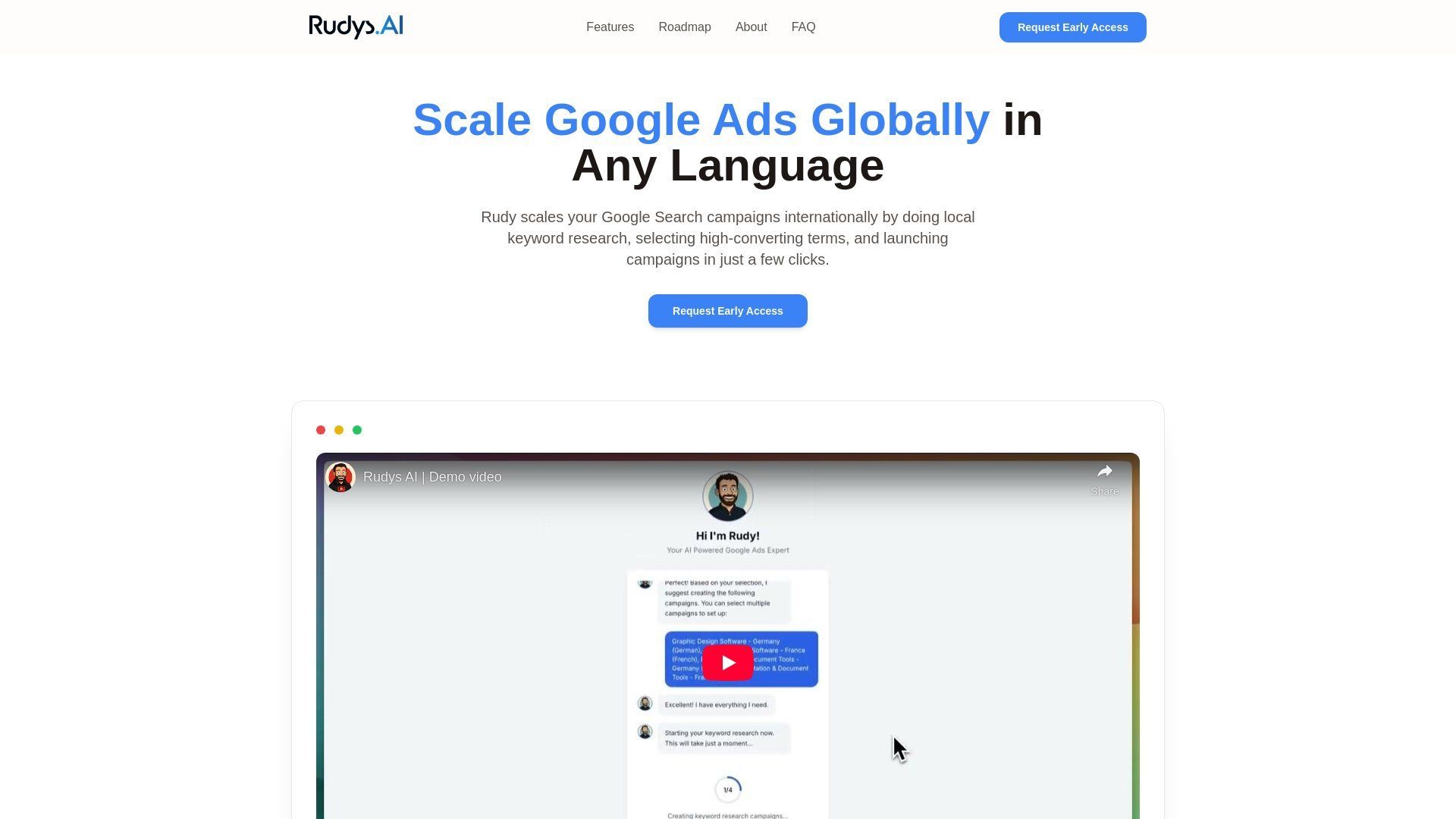
The AI development landscape just welcomed a fresh player: Rudy's AI has launched with a bold mission—to empower developers to build AI applications that users won't just tolerate, but genuinely love. While technical specifics remain under wraps, the platform’s branding and visual language suggest a strong focus on reducing friction in AI implementation while prioritizing end-user engagement. This comes at a pivotal moment when developers grapple with balancing model complexity and human-centered design.
Bridging the Gap Between AI Capability and User Experience
Current AI development often forces engineers into a tug-of-war: powerful models like LLMs and neural networks demand sophisticated backend work, while frontend experiences suffer from clunky interactions. Rudy’s AI appears positioned to tackle this disconnect head-on. The term 'lovable' in its branding isn’t accidental—it signals an emphasis on intuitive interfaces, emotional resonance, and frictionless user journeys. For developers, this could translate to:
- Pre-configured UI components tailored for common AI interactions (chat, recommendations, personalization)
- Simplified API integrations reducing boilerplate code for model deployment
- Built-in tools for testing user engagement and iterating on feedback
Why 'Lovable' Matters in Enterprise AI
User frustration with AI tools remains rampant—from chatbots that misunderstand context to recommendation engines that feel invasive. Rudy’s AI implicitly challenges this status quo by making empathy a technical requirement. For development teams, this shift could mean:
"Less time wrestling with UX debt around AI features, and more time refining core functionality. If Rudy’s delivers on making 'lovable' a configurable attribute rather than an afterthought, it could significantly accelerate adoption cycles."
—Senior ML Engineer at a Fortune 500 tech firm (anonymous)
The Technical Promise: Opinionated Conventions Over Configuration
While documentation isn’t public yet, the platform’s aesthetic suggests an opinionated framework enforcing best practices for AI interaction design—similar to how Ruby on Rails revolutionized web development conventions. Potential wins for engineers include:
- Standardized error handling for AI unpredictability (e.g., fallback flows when models low-confidence)
- Embedded analytics tracking emotional signals (engagement time, sentiment cues)
- Compliance guardrails for ethical AI deployment
The Road to Adoption
Success hinges on execution details still unseen: Will Rudy’s support fine-tuning open-source models? How will it handle scalability for real-time inference? Does 'lovable' extend to the developer experience itself through observability tools? One thing is clear: As AI transitions from novelty to necessity, platforms that humanize technology while respecting engineers’ time will define the next era. Rudy’s AI now enters a space where delight isn’t a luxury—it’s the benchmark.
Source: Rudy's AI
Comments
Please log in or register to join the discussion