An exploration of RustCast's emergence as an open-source alternative to Raycast/PowerToys, examining its technical foundations, community-driven development, and implications for desktop productivity ecosystems.
The landscape of desktop productivity tools is undergoing a quiet revolution, with RustCast emerging as a compelling open-source alternative to established players like Raycast and Microsoft's PowerToys. Developed entirely in Rust, this popup launcher represents more than just another application launcher—it embodies a fundamental shift toward community-driven, privacy-respecting productivity tools that challenge the proprietary subscription models dominating the space.
Technical Architecture and Performance Foundations
At its core, RustCast leverages Rust's memory safety guarantees and performance characteristics to create a responsive, low-latency user experience. Unlike Electron-based alternatives, RustCast utilizes native macOS frameworks through Rust's foreign function interface, resulting in significantly reduced memory footprint and near-instantaneous search responsiveness. The application architecture employs a modular design where core functionality (app indexing, hotkey handling, UI rendering) operates independently from plugin execution, creating a sandboxed environment that prevents third-party extensions from compromising system stability.
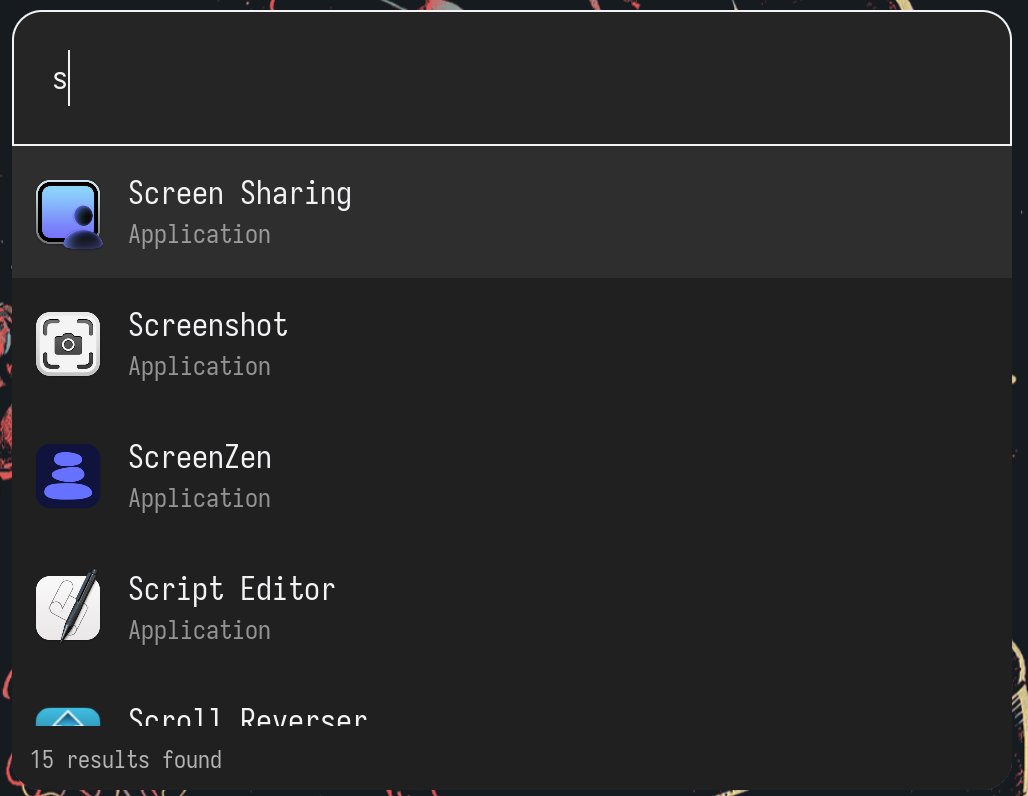
What distinguishes RustCast technically is its implementation of real-time process introspection for application indexing. Rather than relying on static application directories, RustCast's autoload feature dynamically monitors LaunchServices database changes, enabling instantaneous recognition of newly installed applications without manual reindexing. This approach demonstrates sophisticated interprocess communication handling—a non-trivial achievement in Rust that required careful management of memory boundaries between Objective-C and Rust data structures.
Feature Ecosystem and Workflow Integration
The current feature set reveals thoughtful workflow integration:
- Spotify Control: Direct media control bypasses Spotify's restricted API through simulated system events
- Contextual Clipboard History: Implements secure memory handling for sensitive data with automatic redaction patterns
- Emoji Search: Leverages Unicode CLDR data for semantic search beyond simple keyword matching
- Unit Conversions: Integrates dimensional analysis to prevent invalid unit conversions (e.g., length to volume)
What's particularly noteworthy is the implementation of variable interpolation in custom scripts, allowing users to create parameterized workflows comparable to Raycast's script commands. The calculator implementation parses mathematical expressions using a shunting-yard algorithm with support for unit-aware calculations—demonstrating attention to computational accuracy often overlooked in productivity tools.
Community Dynamics and Sustainability Model
RustCast's development trajectory highlights an emerging pattern in sustainable open-source work: the sponsorship-driven feature pipeline. Contributors like Nazeofel and Mnem42 directly influenced Windows compatibility efforts, while sponsors receive Easter egg features—a novel approach that maintains project integrity while acknowledging support. This creates a fascinating tension between democratic open-source development and sponsor-directed prioritization that merits observation as the project scales.

The project's GitHub repository reveals rapid feature progression since its inception, with core functionality evolving from basic app launching to comprehensive workflow automation in under six months. This velocity stems partly from Rust's expressive type system reducing debugging overhead, but equally from deliberate architectural choices like the TOML-based configuration system that enables frictionless user customization without GUI overhead.
Proprietary Alternatives and Open-Source Tradeoffs
When positioned against Raycast, RustCast currently lacks the extensive plugin ecosystem that defines Raycast's value proposition. Raycast's team synchronization and AI features represent significant engineering investments unlikely to be replicated in open-source soon. Conversely, RustCast offers absolute data privacy—no telemetry, cloud synchronization, or proprietary license constraints—which aligns with growing developer concerns about SaaS tooling.
For PowerToys users, RustCast presents a UNIX-philosophy alternative: focused tools with clean integration points rather than Microsoft's monolithic utility bundle. The planned hyperkey implementation (mapping CMD+OPT+CTRL+SHIFT to a physical key) demonstrates attention to power-user ergonomics that challenges PowerToys' more generalized approach.
Future Trajectory and Ecosystem Implications
The roadmap reveals ambitious cross-platform aspirations, with Windows support already in development through the winrt-rs crate. The planned browser tab management via Puppeteer suggests recognition that modern workflows span beyond local applications—an area where most launchers remain limited. If RustCast successfully implements its plugin architecture while maintaining performance characteristics, it could catalyze a new category of Rust-based desktop utilities.
Ultimately, RustCast represents more than technical achievement—it validates Rust's suitability for interactive desktop applications while demonstrating that open-source alternatives can compete with venture-backed productivity tools on features while excelling in privacy and customizability. As the project evolves, it will test whether community-driven development can sustainably deliver the polish expected of professional productivity tools while preserving its foundational principles.
Installation options and configuration details are available on the RustCast GitHub repository. Community discussion occurs on the project's Discord server.
Comments
Please log in or register to join the discussion