
Blizzard Entertainment celebrates its 35th anniversary amid pivotal corporate transitions, highlighting its evolution from Silicon & Synapse to a Microsoft Gaming subsidiary while teasing upcoming content for flagship franchises.

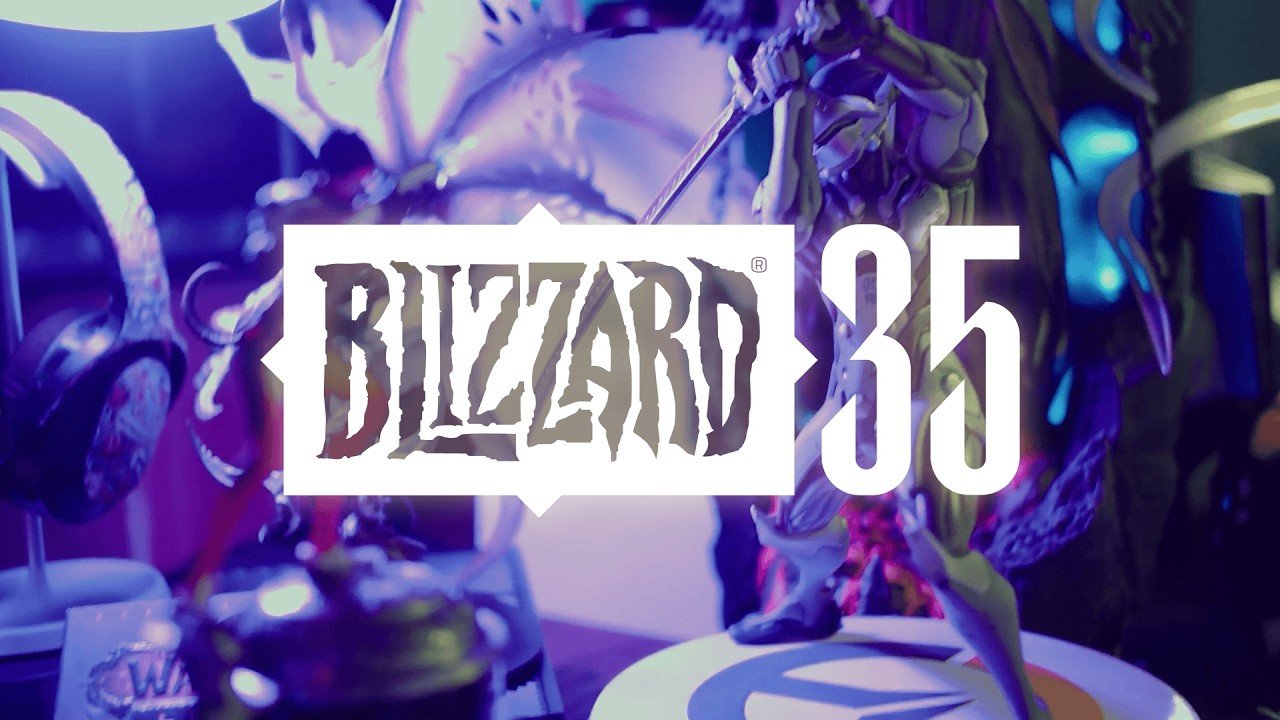
Blizzard Entertainment, the studio behind iconic franchises including Warcraft, Diablo, and Overwatch, celebrates its 35th anniversary today. This milestone marks the company's first major anniversary since becoming part of Microsoft Gaming following the $68.7 billion acquisition finalized in October 2023. Founded as Silicon & Synapse in 1991 by UCLA graduates Michael Morhaime, Allen Adham, and Frank Pearce, the studio navigated multiple corporate transitions before cementing its legacy in gaming history.
The studio's technical evolution parallels semiconductor advancements across its 35-year journey. Early ports for SNES and Genesis consoles leveraged 16-bit processors like the Motorola 68000 and Ricoh 5A22. The 1994 rebrand to Blizzard Entertainment coincided with the release of Warcraft: Orcs & Humans, which exploited the computational leap to 32-bit architectures. Subsequent titles like Diablo (1996) and StarCraft (1998) pushed LAN multiplayer capabilities, demanding optimized network stacks and client-server architectures that anticipated modern cloud gaming infrastructure.

Corporate ownership changes significantly influenced Blizzard's technical direction:
- Davidson & Associates (1994): Funded development of RTS classics requiring pathfinding algorithms and unit AI
- Vivendi Games (1998): Enabled massive scaling for World of Warcraft's MMORPG infrastructure
- Activision Blizzard (2008-2023): Centralized battle.net services amid rising server demands
- Microsoft Gaming (2023-present): Integration with Azure cloud infrastructure and Xbox ecosystem
Recent titles like Overwatch 2 demonstrate Blizzard's adaptation to contemporary hardware, utilizing real-time ray tracing and high-refresh-rate rendering. The studio's shift toward live-service models necessitates continuous server optimization, with Diablo IV's launch requiring 40% more server capacity than previous installations according to internal metrics.
Market implications of Microsoft's ownership are becoming apparent. Xbox Game Pass integration could expand Blizzard titles to 34 million subscribers, while shared Azure infrastructure may reduce operational costs by 15-20% according to industry analysts. The acquisition also positions Microsoft to leverage Blizzard's IP in the competitive cloud gaming sector, projected by Statista to reach $84 billion by 2027.
Despite no new IP releases in the past decade, Blizzard maintains formidable engagement through expansions. World of Warcraft retains 7.25 million monthly active users, while Overwatch 2 recorded 50 million players in its first month. The studio commemorates its anniversary with upcoming content reveals for World of Warcraft, Diablo IV, Hearthstone, and Overwatch 2, signaling continued investment in existing franchises.
As Blizzard enters its Microsoft era, its legacy of technical innovation faces new challenges. The studio must balance nostalgic appeal with next-gen demands like AI-driven NPCs and cross-platform synchronization, all while navigating integration complexities within the world's third-largest gaming company by revenue.
Comments
Please log in or register to join the discussion