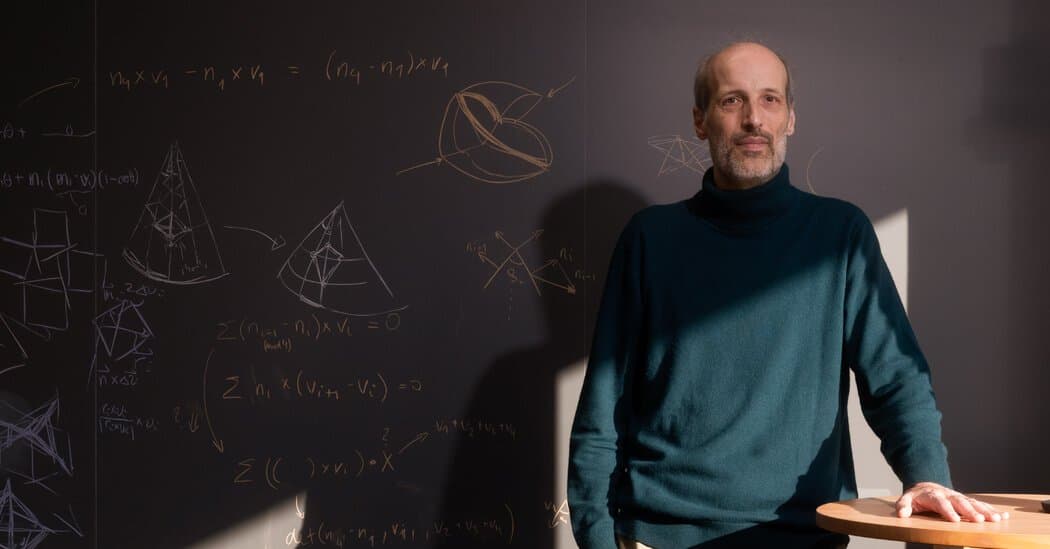
A new experiment called "First Proof" challenges AI systems with original math problems from unpublished research, revealing that current models struggle with genuine mathematical reasoning despite their impressive capabilities on existing benchmarks.
When mathematicians pose problems from their own unpublished research to AI systems, the results are sobering. A new experiment called "First Proof" has revealed that large language models, despite their impressive capabilities on existing mathematical benchmarks, struggle significantly when faced with genuinely novel mathematical challenges.
The Experiment That Exposed AI's Mathematical Limits
The "First Proof" experiment, detailed in a recent New York Times article and arXiv paper, takes a radically different approach to testing AI mathematical competence. Rather than relying on established problems from textbooks or competitions, the researchers—actual mathematicians working on cutting-edge problems—posed questions drawn directly from their unpublished research.
This methodology is crucial because it eliminates a fundamental weakness in how we've been evaluating AI systems. Traditional math benchmarks, no matter how challenging, are finite datasets that AI models can potentially memorize or learn patterns from during training. When faced with problems that have never appeared in any public domain, the models' true reasoning capabilities—or lack thereof—become apparent.
Why This Matters for AI Development
The implications extend far beyond academic curiosity. Mathematics represents one of the most rigorous forms of logical reasoning, and the ability to generate novel proofs is considered a hallmark of human intelligence. If AI systems cannot reliably solve problems that human mathematicians are actively working on, it suggests fundamental limitations in their reasoning capabilities.
The experiment highlights a critical distinction: AI models excel at pattern recognition and applying known techniques to familiar problem structures, but they struggle with the kind of creative, abstract thinking required for genuine mathematical discovery. This mirrors broader concerns about AI systems' ability to handle truly novel situations versus variations on known themes.
The Human Element in Mathematical Evaluation
Interestingly, the experiment revealed that measuring AI performance on these problems requires human expertise. The mathematicians behind "First Proof" had to carefully evaluate whether AI-generated solutions represented genuine mathematical reasoning or merely plausible-sounding but incorrect approaches. This human-in-the-loop evaluation underscores that even when testing AI, human judgment remains essential—particularly in domains requiring deep conceptual understanding.
The researchers found that current models often produce responses that appear sophisticated but contain fundamental errors or logical gaps that only trained mathematicians can identify. This raises questions about how we assess AI capabilities in specialized domains and whether automated evaluation metrics are sufficient.
What This Means for the Future of AI
The "First Proof" experiment arrives at a pivotal moment in AI development. As models become increasingly capable at tasks involving language and pattern recognition, understanding their limitations in domains requiring genuine reasoning becomes crucial. The results suggest that while AI may augment mathematical research by handling routine calculations or suggesting approaches, the creative leap of discovering new proofs remains a distinctly human capability—at least for now.
This research also points to a potential path forward: developing AI systems that can genuinely reason rather than simply pattern-match. The challenge is significant, as it requires moving beyond the current paradigm of training on vast datasets toward architectures that can handle true novelty and abstraction.
The experiment's findings serve as a valuable reality check in an era of AI hype, reminding us that despite remarkable progress, current systems still operate within the bounds of their training data and struggle with the kind of creative problem-solving that defines human intelligence at its highest levels.
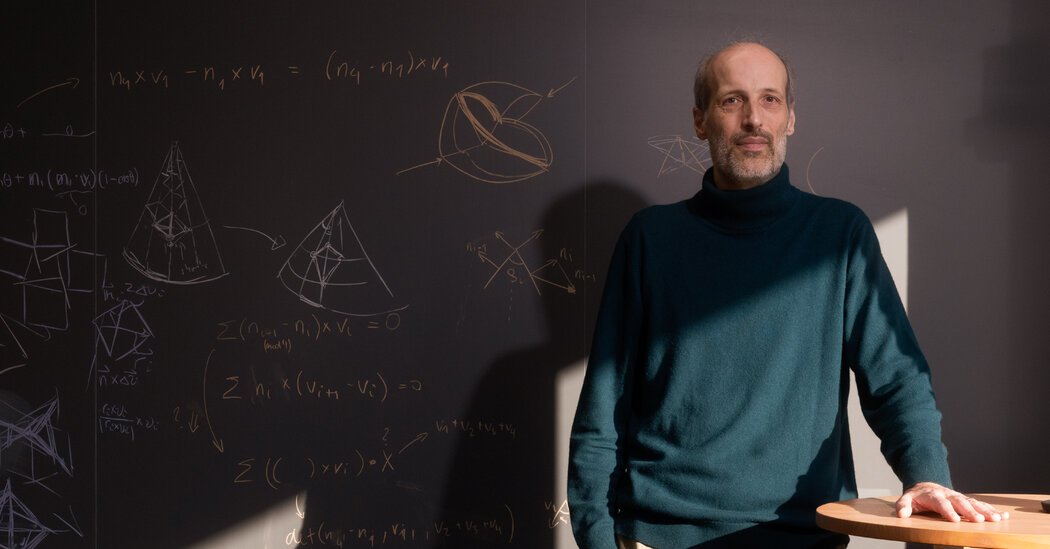
The featured image shows mathematicians collaborating on research, highlighting the human expertise required to both pose and evaluate the challenging problems that AI systems struggle with in the "First Proof" experiment.
Comments
Please log in or register to join the discussion