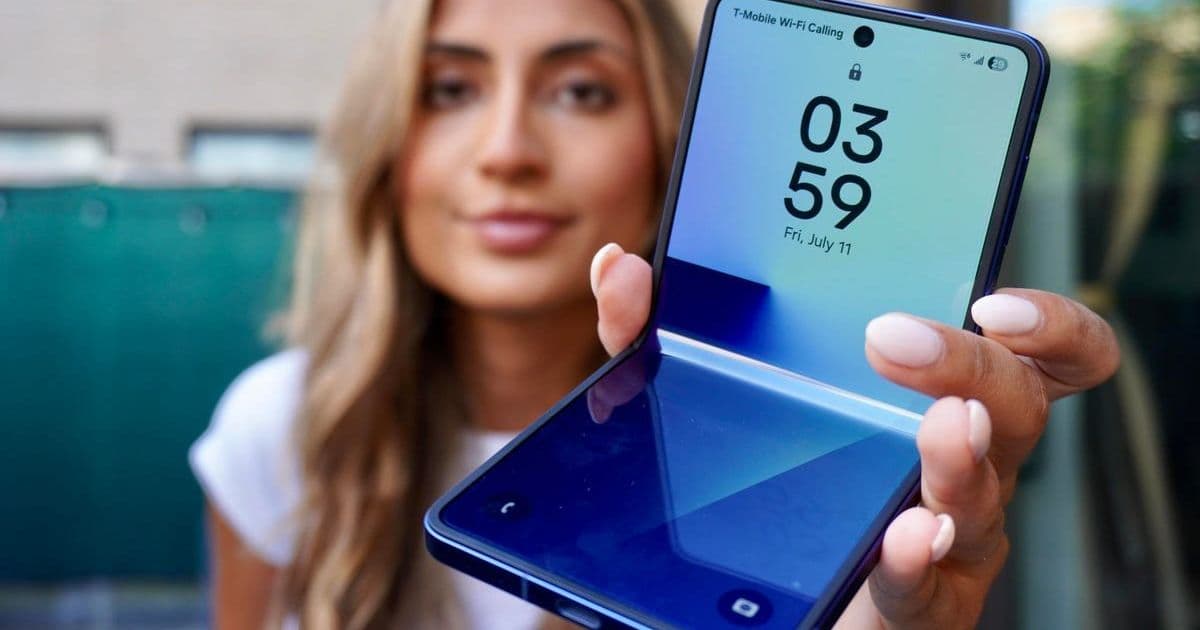
After a week of real-world testing, Samsung's latest flip phone emerges as a significant evolution, not just in its slimmer 13.7mm profile and larger 4.1-inch cover display, but in fundamentally altering user interaction patterns. The enhanced FlexWindow with 2,600-nit brightness and seamless Gemini AI access reduces screen dependency, while the 3nm Exynos 2500 chip and improved battery life signal serious performance gains. This isn't just an upgrade—it's a strategic leap in the foldable arms r
When Samsung's Galaxy Z Flip 7 landed in my hands, I braced for incremental improvements—a spec bump here, a design tweak there. Instead, replacing my daily iPhone 16 Pro with this $1,099 foldable for a week revealed something more profound: a device engineered to reshape how we engage with our pockets. Beyond the headline-grabbing thinner chassis and larger screens, it’s the behavioral shift—less doom-scrolling, more intentional interaction—that cements this as Samsung’s most compelling flip phone yet.
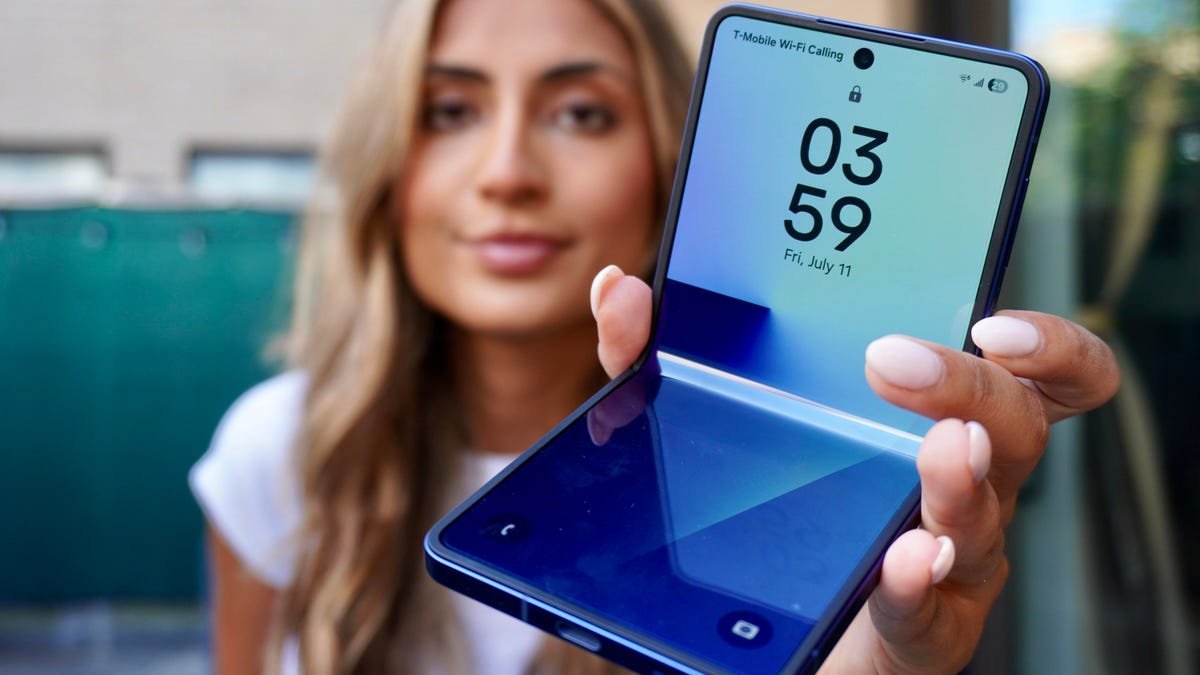 The Galaxy Z Flip 7’s refined FlexWindow dominates the front panel, offering unprecedented utility for a cover display. Credit: Sabrina Ortiz/ZDNET
The FlexWindow Evolution: From Gimmick to Gateway
Samsung’s 4.1-inch FlexWindow isn’t just larger—it’s transformative. With 2,600 nits of peak brightness, a 120Hz refresh rate, and VisionBooster for outdoor clarity, it finally delivers on the cover-screen promise earlier models fumbled. During NYC street tests, sunlight glare became a non-issue, enabling practical tasks like notification triage and quick searches without unfolding. Crucially, the expanded real estate reduced my instinct to open the device by 40% during the trial, curbing reflexive social media binges. As one developer noted:
"Cover screens demand app ecosystems rethink interaction models. Samsung’s execution here pushes the industry toward legitimate secondary-display utility."
While third-party apps still require Good Lock tweaks for full functionality, the out-of-box experience now rivals Motorola’s Razr Ultra—at a $200 lower entry point.
AI as an Always-On Co-Pilot
Gemini integration shifts from novelty to necessity on the Z Flip 7. The cover screen’s direct access to Gemini Live—activated via side-button or app—enables multimodal queries without flipping open the device. I used the clamshell’s natural kickstand angle to snap product photos for instant identification during shopping, bypassing the awkward phone-propping my iPhone demanded. One UI 8’s Personalized Now Bar surfaces contextual alerts like calendar reminders or weather shifts, while the bundled six-month Google AI Pro subscription ($120 value) unlocks advanced tools like Veo 3 Fast video generation. For developers, this signals a critical trend: AI is becoming ambient, demanding lightweight, glanceable interfaces.
Engineering Triumphs: Thinness Without Compromise
Shaving 1.2mm off last year’s thickness seems minor until you pocket the Z Flip 7. At 13.7mm, it eliminates the "double-stack" bulkiness while packing a 6.9-inch main display (up from 6.7 inches) and a 4,300mAh battery—7.5% larger than its predecessor. Real-world endurance impressed, with 30% charge remaining after heavy use days, though 25W charging feels glacial next to rivals.
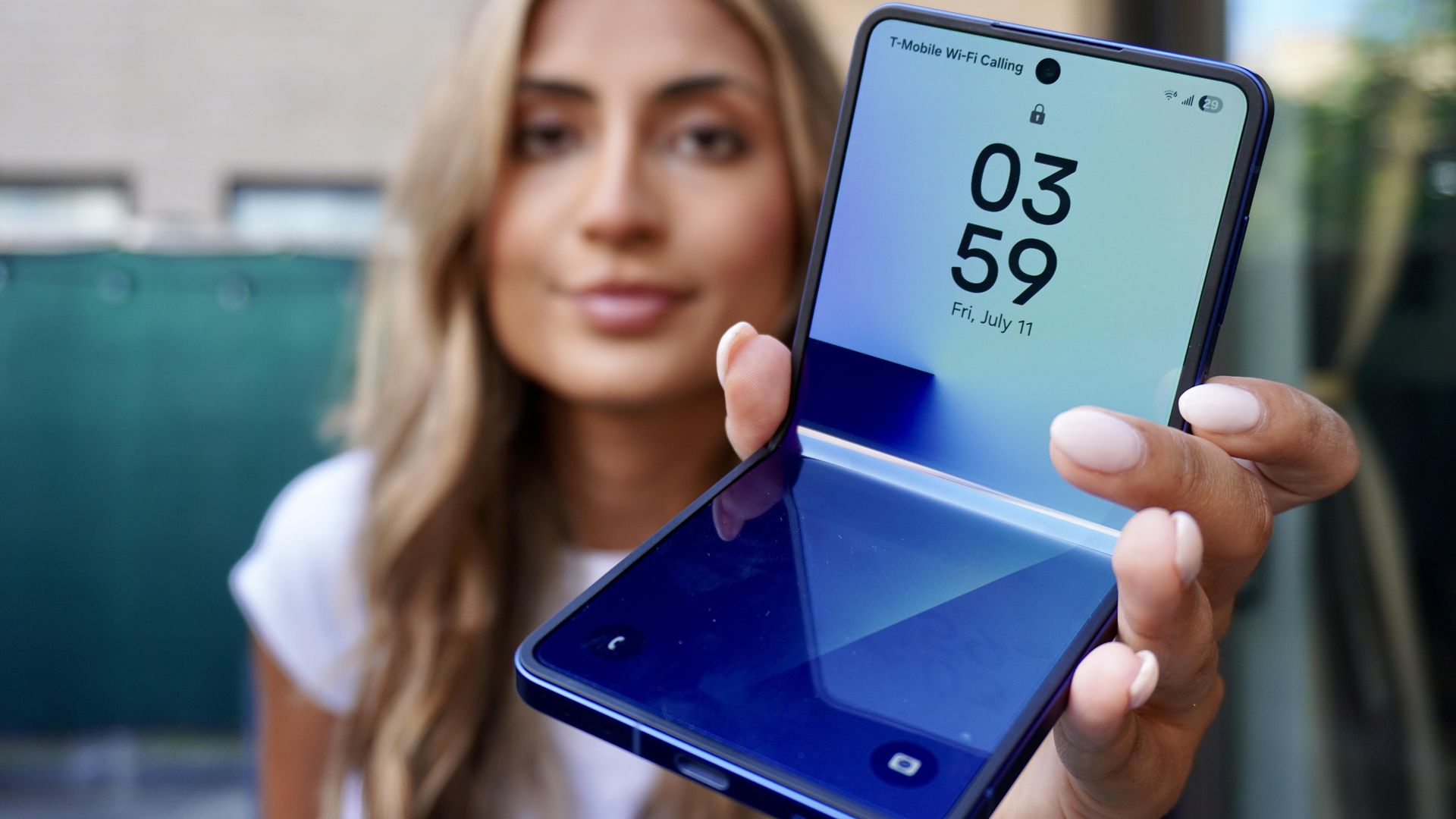 Side-by-side comparison highlights the Z Flip 7’s (right) slimmer profile versus the Z Flip 6. Credit: Sabrina Ortiz/ZDNET
Internally, Samsung’s in-house 3nm Exynos 2500 replaces Qualcomm’s silicon, enabling desktop-grade DeX support—a first for the Flip line. Paired with 12GB RAM, it handled multitasking smoothly, though computational photography remains a weakness. The unchanged 50MP+12MP camera setup delivers vibrant daytime shots but can’t match the S25 Ultra’s low-light prowess despite "Enhanced Nightography" claims.
The Foldable Inflection Point
What Samsung achieves here transcends specs. By optimizing the cover screen for Gemini and core tasks, they’ve created a device that actively reshapes usage habits—a rarity in smartphone design. For engineers, the implications are clear: foldables are maturing beyond novelty into legitimate productivity tools. As app developers explore cover-screen SDKs and AI integrations, the Z Flip 7 could become a catalyst for interaction innovation. While the Razr Ultra’s superior camera and app support tempt power users, Samsung’s balance of polish, pricing, and purposeful design makes this the foldable to beat—and a blueprint for the pocket-computing future.
Source: ZDNET
Comments
Please log in or register to join the discussion