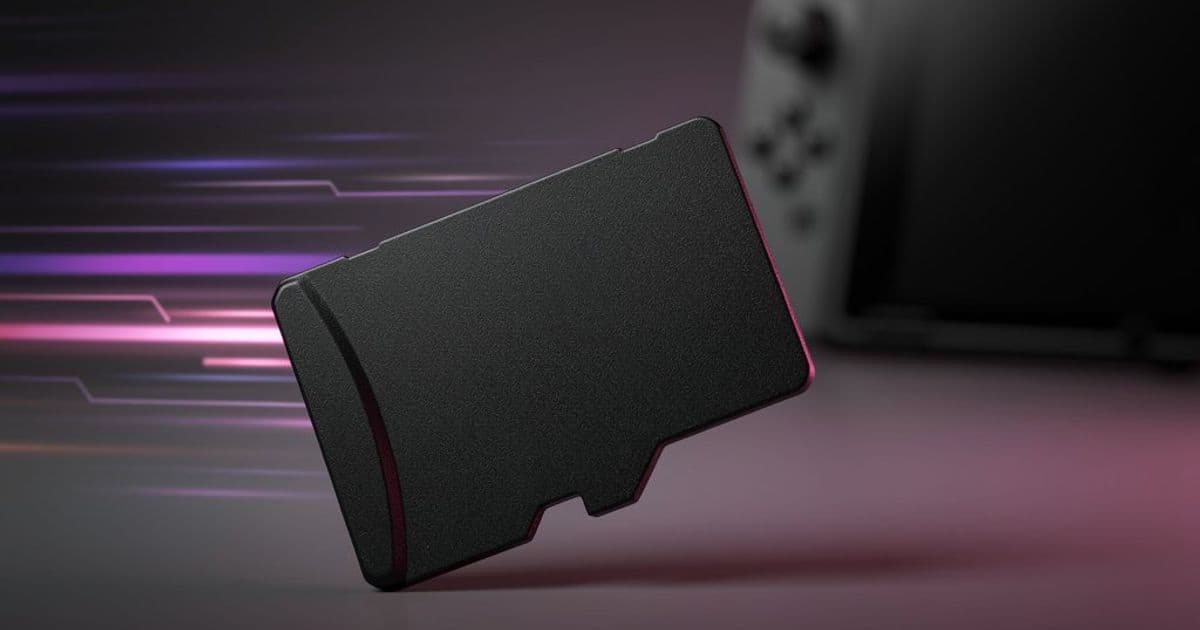
A limited-time Amazon deal drops the price of Samsung's 512GB P9 microSD Express card to $79.99, offering a $40 discount on storage that uses PCIe 3.0 and the NVMe protocol to deliver SSD-like sequential read speeds of up to 800 MB/s, making it a prime candidate for the Nintendo Switch 2's expanded storage needs.
The microSD Express format is experiencing a pivotal moment in the storage market, driven by the imminent arrival of the Nintendo Switch 2 and its requirement for faster data throughput than legacy microSD cards can provide. In this landscape, Samsung's 512GB P9 Express microSD card has emerged as a key player, and a current deal at Amazon presents a significant opportunity for early adopters. The card is now available for $79.99, a $40 reduction from its recent list price of $119.99, and a notable $20 drop from its original launch price of $99.99.
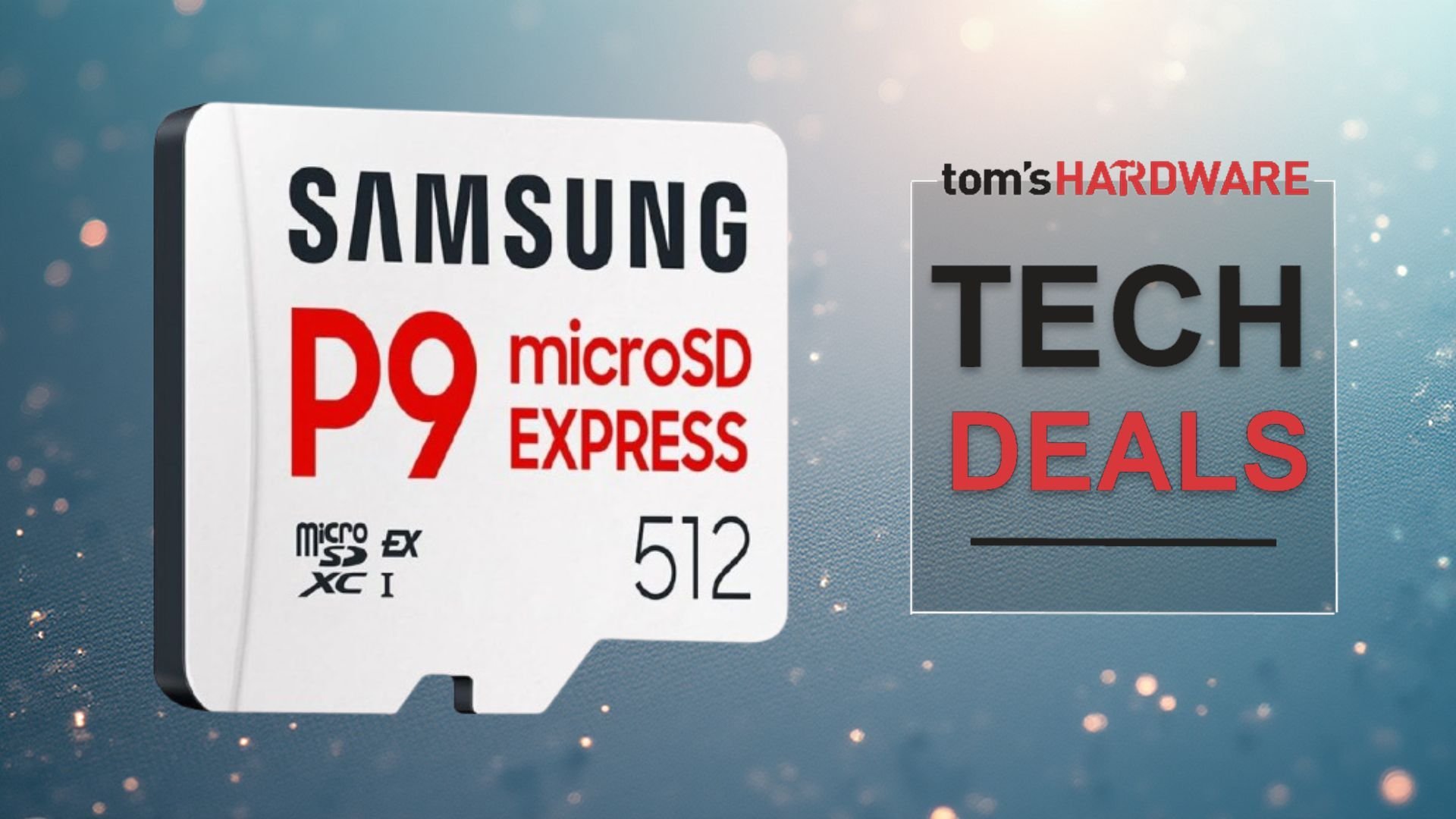
This pricing adjustment is particularly relevant given the market context. The first wave of microSD Express cards from various manufacturers launched with premium pricing and saw rapid inventory depletion, reflecting strong initial demand tied to next-generation handheld gaming. Samsung's P9 Express entered this competitive field not just as an alternative, but as a benchmark for price-to-performance ratio. The card is available in two capacities: the 512GB model featured in this deal, and a 256GB variant. While it is backward compatible with the original Nintendo Switch and other devices using the standard microSD interface, its full performance potential is only unlocked on hardware that can utilize the PCIe 3.0 x1 interface, such as the upcoming Switch 2.
Technical Specifications and Performance Architecture
The performance of the Samsung P9 Express is rooted in its adoption of the microSD Express specification, which fundamentally changes the underlying technology of the card. Unlike traditional microSD cards that use the older SD bus interface, microSD Express leverages the NVMe protocol over a PCIe 3.0 x1 connection. This is the same foundational technology used in modern M.2 NVMe SSDs, albeit in a much smaller form factor. This architectural shift allows for a significant leap in data transfer rates.
The Samsung P9 Express is rated for maximum sequential read speeds of up to 800 MB/s. To put this in perspective, the fastest traditional microSD cards (UHS-I) typically top out around 104 MB/s, and even UHS-II cards, which use a different bus, rarely exceed 300 MB/s in real-world scenarios. The 800 MB/s figure places the P9 Express in a performance category closer to entry-level SATA SSDs, which max out around 550 MB/s, and even approaches the lower end of PCIe 3.0 NVMe SSD performance.
Beyond sequential speeds, the card's random read/write performance is crucial for real-world application responsiveness, such as loading game assets or operating system files. Samsung rates the P9 Express at 65,000 IOPS (Input/Output Operations Per Second) for random reads and 52,000 IOPS for random writes. These figures indicate how quickly the card can access small, scattered pieces of data, which is a more accurate measure of perceived speed for many tasks than peak sequential throughput.
The card's endurance is backed by a 3-year warranty, a standard metric for consumer storage that provides a baseline for reliability under typical usage patterns.
Market Implications and the Switch 2 Ecosystem
The timing of this deal is not coincidental. The Nintendo Switch 2 is expected to require microSD Express cards to fully utilize its enhanced game loading speeds and potentially for higher-fidelity asset streaming. The console's internal storage will likely be faster than the original Switch's, and using a standard microSD card would create a bottleneck, negating the performance improvements of the new hardware. Therefore, the storage upgrade path for Switch 2 owners will almost certainly be through the microSD Express standard.
This creates a new, specific demand curve for these cards. The initial scarcity and high prices seen at launch were a direct result of this anticipated demand. Samsung's aggressive pricing with the P9 Express, especially in this discounted form, could be a strategic move to capture market share before the Switch 2's release, establishing it as the go-to recommendation for storage expansion. For consumers, this deal offers a chance to secure a high-performance card at a price point that is more palatable than the initial wave of offerings.
It's important to note that while the P9 Express is an excellent choice for the Switch 2, its utility extends to other devices. Any device that can accept a microSD Express card and has a compatible interface will benefit from the speed increase. This includes certain high-end cameras, drones, and other portable electronics that demand fast data recording and playback. However, the primary driver for the microSD Express market in the near term will be handheld gaming.
The NVMe Protocol in a Micro Form Factor
The core innovation of microSD Express is the integration of the NVMe protocol. NVMe, or Non-Volatile Memory Express, is a protocol designed specifically for accessing flash storage via the PCIe bus. It is far more efficient than the older AHCI protocol used with SATA interfaces, reducing latency and increasing parallelism. By implementing NVMe on a microSD card, manufacturers like Samsung can achieve performance levels that were previously impossible with the SD bus architecture.
The PCIe 3.0 x1 interface provides a theoretical bandwidth of about 985 MB/s, which aligns with the P9 Express's 800 MB/s sequential read speed. This leaves some overhead for protocol efficiency and real-world variability. The use of this interface means that the card's speed is directly tied to the host device's capability. A device with a slower interface, like the original Nintendo Switch's UHS-I bus, will not be able to leverage the card's full speed, though it will still function due to backward compatibility.
This technological convergence—bringing SSD-grade protocols to the ubiquitous microSD form factor—represents a significant evolution in removable storage. It bridges the gap between the convenience of removable cards and the performance of internal storage solutions.
Deal Context and Recommendations
For potential buyers, the $79.99 price for 512GB of storage with these specifications represents a strong value proposition. When compared to the cost of internal storage upgrades for many devices, or the price per gigabyte of other high-speed storage options, this deal is competitive. The 512GB capacity is also a practical sweet spot, offering ample space for a substantial game library, media files, or project data without the premium associated with larger capacities.
Before purchasing, users should verify that their target device supports the microSD Express standard. While the card will work in older devices, the investment is justified primarily for devices that can utilize the PCIe interface. For Nintendo Switch 2 owners, this card is a near-essential accessory for maximizing the console's potential.
The deal is available at Amazon, and as with all limited-time offers, availability may change rapidly. The historical context of microSD Express cards selling out quickly suggests that interested parties should act with reasonable promptness.
In summary, the Samsung P9 Express 512GB microSD card at $79.99 is more than just a discounted storage device. It represents the mainstream arrival of a new storage standard, driven by the gaming market and enabled by the adaptation of proven SSD technology into a miniature, removable format. Its performance metrics, backed by Samsung's reputation and a solid warranty, make it a compelling choice for anyone looking to future-proof their storage needs for the next generation of handheld gaming and beyond.
Comments
Please log in or register to join the discussion