The Biological Computing Company announces a biological computing platform using living neurons to accelerate AI workloads like computer vision and generative video, backed by $25M seed funding.
The Biological Computing Company (TBC), a San Francisco-based startup founded by neuroscientists, claims to have developed the first functional biological computing platform integrating living neurons with artificial intelligence systems. According to TBC, this approach processes foundational AI models 5x faster than silicon-based chips while consuming less power and improving output accuracy. The company recently secured $25 million in seed funding and plans to establish a flagship laboratory in San Francisco to advance its research.
Technical Implementation and Performance Claims
TBC's platform encodes real-world data—such as images or video—into living neuronal networks. Neural activity is then decoded into enhanced representations mapped to conventional AI models through proprietary modular adapters. This biological layer interfaces with TBC's Algorithm Discovery platform to augment traditional compute infrastructure.
In generative video applications, TBC demonstrates how its biologically derived adapter maintains coherence in AI-generated content over extended durations. Without this adapter, AI-generated videos degrade over time, but TBC's solution preserves clarity and consistency. This addresses a key limitation in current AI video generation where temporal coherence often breaks down beyond short sequences.
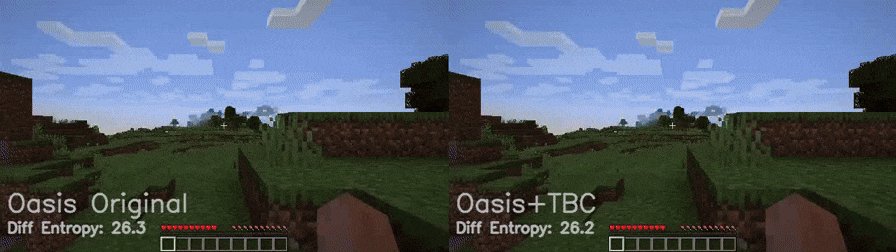 Caption: TBC's comparative demonstration shows standard AI-generated video degradation (left) versus sustained coherence using their neuronal adapter (right). (Image credit: The Biological Computing Company)
Performance metrics cited by TBC include:
- 5x acceleration for foundational AI model processing
- Reduced power requirements versus equivalent silicon-based systems
- Improved accuracy in computer vision and pattern recognition tasks
- Enhanced scalability for large-scale AI deployments
Semiconductor Market Implications
This development arrives amid significant challenges in conventional semiconductor scaling. With Moore's Law slowing and sub-3nm process nodes facing physical limitations, power efficiency improvements have dropped below historical trends. Global chip shortages further highlight supply chain vulnerabilities in silicon-dependent AI infrastructure.
TBC's $25 million funding round signals investor confidence in alternative compute architectures. However, the technology remains at an early stage, with co-founders describing a 10-20 year roadmap for full commercial integration. The biological approach presents unique manufacturing hurdles: neuronal cultures require sterile bioreactors, controlled environments, and specialized interfaces distinct from semiconductor fab processes. Scalability questions persist regarding mass production of stable biological computing units.
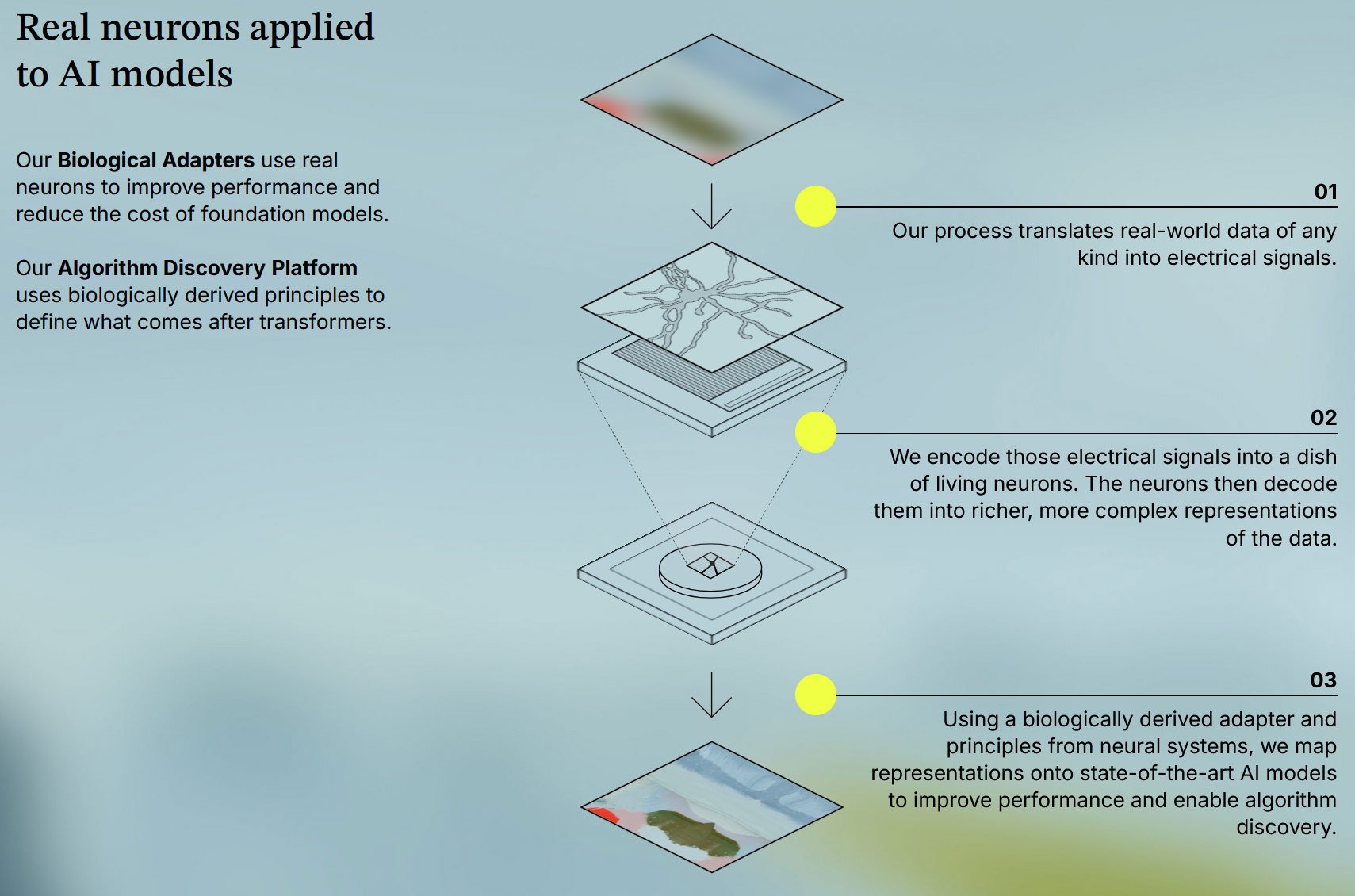 Caption: TBC's new San Francisco lab will advance neuronal-AI integration research. (Image credit: The Biological Computing Company)
Analyst Perspective
While TBC's claims of 5x speedup and reduced power consumption could potentially disrupt the $500B semiconductor industry, substantive technical validation remains pending. No peer-reviewed papers or third-party benchmarks are publicly available. The startup's approach differs fundamentally from neuromorphic chips (like Intel's Loihi or IBM's TrueNorth), which mimic neural networks in silicon rather than incorporating organic neurons.
Short-term applications may emerge in specialized sectors like medical imaging or physics simulation, where TBC's accuracy claims could provide competitive advantage. Long-term success hinges on demonstrating reliability across temperature variations, sustained performance without neuronal degradation, and cost-effective scaling—challenges silicon has solved over decades. As semiconductor foundries push 2nm production and beyond, biological computing must prove it can complement rather than merely compete with established silicon roadmaps.
For technical details, visit The Biological Computing Company's research portal.
Comments
Please log in or register to join the discussion