An international team has identified HD 137010 b, a rocky planet orbiting a Sun-like star 146 light-years away that receives only one-third the heat Earth gets, making it potentially the coldest Earth-like world found yet.
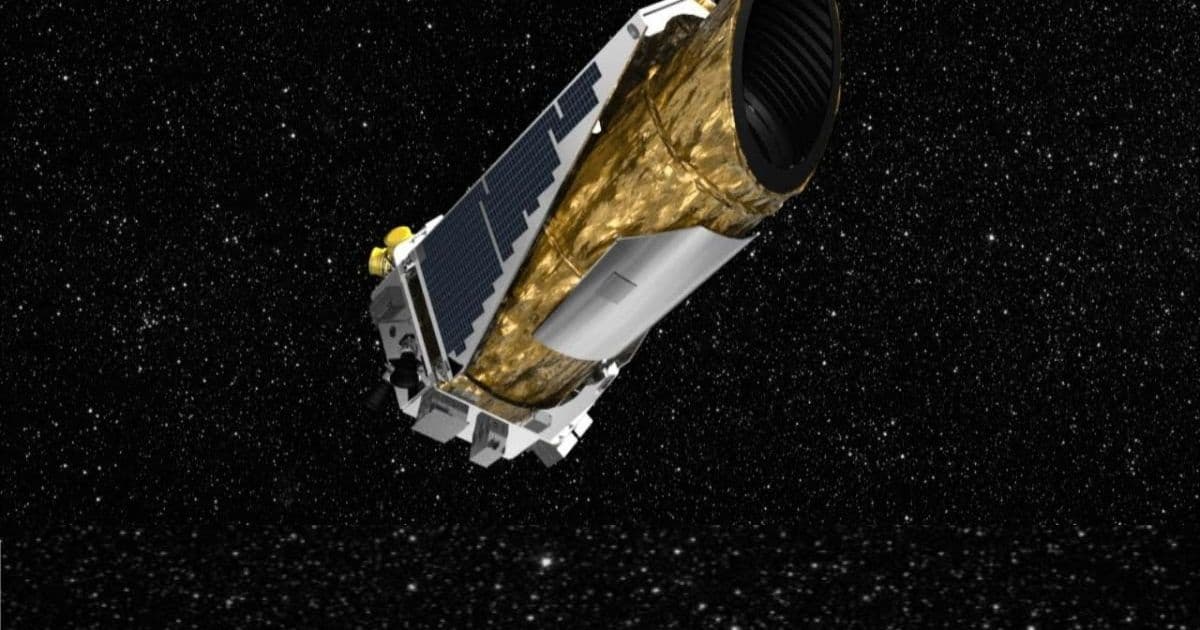
An international science team has identified a candidate exoplanet that could be the coldest Earth-like world ever discovered, using data from NASA's retired Kepler Space Telescope. The planet, designated HD 137010 b, orbits a Sun-like star approximately 146 light-years from Earth and presents a fascinating case of a potentially rocky world on the outer edge of its star's habitable zone.
Unlike most exoplanet discoveries that focus on hot, close-orbiting worlds, HD 137010 b stands out for its extreme cold. The planet's estimated surface temperature is no higher than minus 90° Fahrenheit, making it even colder than Mars, which averages around minus 85° Fahrenheit. This frigid climate results from the planet receiving only one-third of the heat and light that Earth receives from our Sun.
A year like Earth's, but in the cold
HD 137010 b takes approximately one year to complete its orbit around its host star, mirroring Earth's orbital period. This similarity in orbital timing, combined with the star's Sun-like characteristics, initially suggested the planet might occupy a temperate zone suitable for life. However, the star itself is cooler and dimmer than our Sun, which dramatically affects the planet's climate.
The planet's position relative to its star's habitable zone remains uncertain. Scientists' models suggest a 40% chance that HD 137010 b falls within the "conservative" habitable zone and a 51% chance of being in the broader "optimistic" habitable zone. However, the researchers acknowledge a significant possibility - up to 50% - that the planet lies entirely beyond the habitable zone.
The challenge of detection
This discovery came from analyzing a single transit event - a 10-hour period when the planet passed in front of its star, causing a measurable dimming of the star's light. Such single-transit detections are particularly challenging because they provide limited data for confirming planetary status and characterizing orbital parameters.
The science team must now conduct additional observations to confirm whether HD 137010 b is indeed a planet rather than another astronomical phenomenon that could mimic a planetary transit. This verification process typically involves multiple observation methods and extended monitoring periods.
The role of atmosphere in habitability
Despite the planet's extreme cold, the possibility of liquid water existing on its surface cannot be entirely ruled out. The researchers note that if HD 137010 b possesses an atmosphere significantly richer in carbon dioxide than Earth's, this greenhouse effect could potentially warm the planet enough to allow liquid water formation, even at such low temperatures.
This atmospheric consideration highlights the complex interplay between planetary composition, atmospheric chemistry, and surface conditions in determining habitability. Many exoplanets that appear inhospitable based on distance from their stars alone might still support life if their atmospheric conditions are favorable.
Scientific significance
The discovery of HD 137010 b contributes to our understanding of planetary system diversity and the range of conditions under which rocky planets can form and persist. Its extreme cold challenges assumptions about where Earth-like planets might exist and what conditions they might experience.
As astronomers continue analyzing Kepler's extensive dataset, discoveries like HD 137010 b demonstrate that even data from retired telescopes can yield new insights into planetary systems beyond our own. The planet serves as a reminder that the universe contains worlds far more diverse and extreme than our solar system's familiar planets.

Source: NASA
Comments
Please log in or register to join the discussion