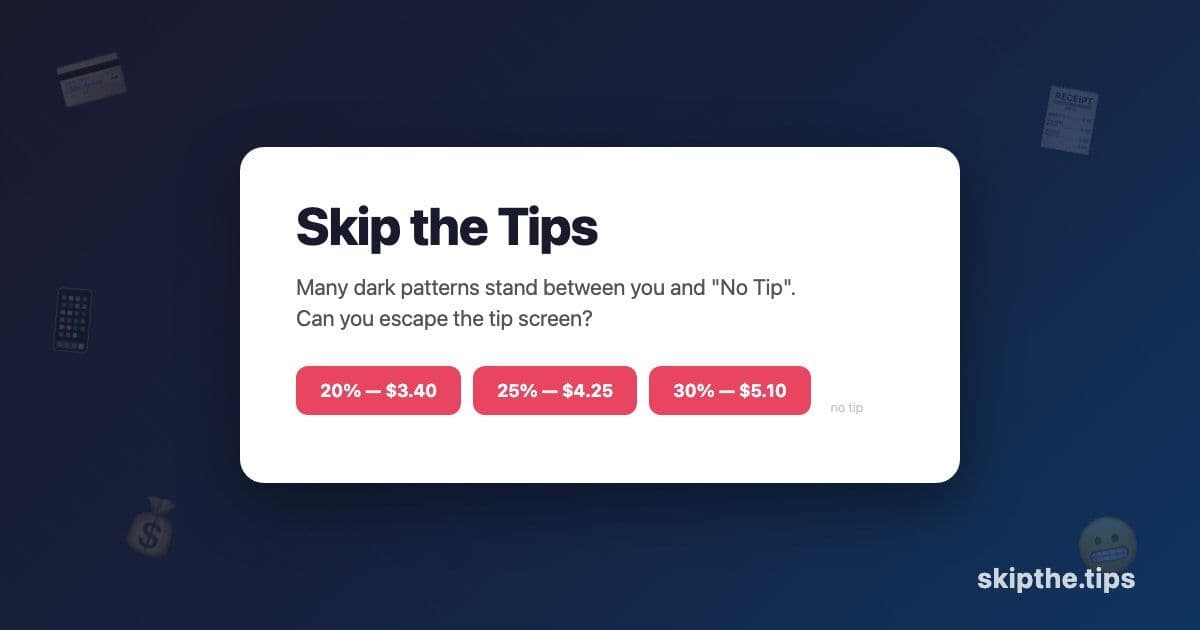
An interactive game reveals how 39 psychological tactics manipulate users through guilt-driven tip screens.
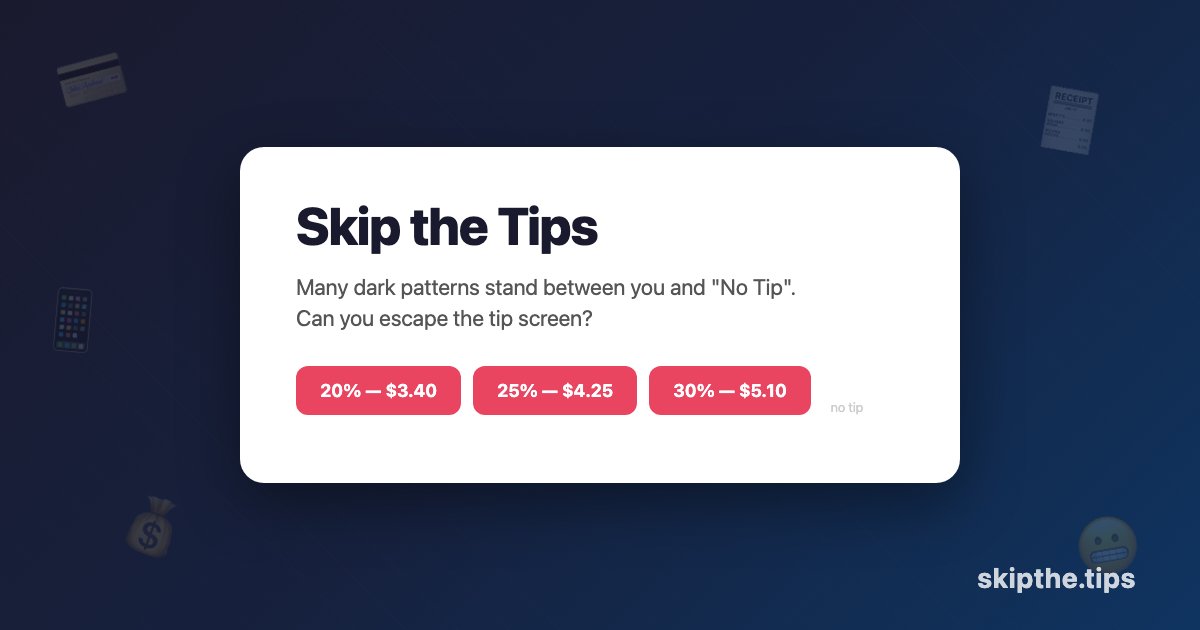
Digital tipping has become an unavoidable friction point in everyday transactions, but few understand the deliberate psychological engineering behind those persistent screens. Developer Vladimir Johnson's interactive experience Skip the Tips pulls back the curtain by simulating 39 distinct dark patterns deployed by real-world payment systems. This isn't theoretical design critique—it's a direct mirror of tactics used by major payment processors and point-of-sale systems.
Dark patterns are interface designs that manipulate users through psychological pressure, and tipping screens have become their perfect vector. Johnson's game demonstrates how techniques like preselected high-percentage options, guilt-inducing phrasing ('Your server will see this!'), false urgency ('Offer expires in 10 seconds'), and visual hierarchy tricks exploit social norms. One particularly effective pattern isolates the user's cursor path, forcing deliberate navigation through guilt-inducing options before reaching the 'No tip' button.
The timing reflects growing consumer fatigue. Tipping prompts now appear in contexts far beyond hospitality—from self-checkout kiosks to online takeout orders—with default suggestions creeping toward 25-30%. Payment processors like Square and Toast financially benefit from higher tip percentages through transaction fees, creating incentives to optimize interfaces for guilt rather than fairness.
Johnson's approach stands out by avoiding preachiness. Instead, players experience manipulation firsthand: attempting to skip tipping triggers increasingly aggressive tactics across simulated cafe, ride-share, and delivery scenarios. Each pattern includes technical annotations explaining real-world equivalents, such as how color psychology and button placement influence choices. The project builds on Johnson's previous work analyzing deceptive patterns in cookie consent banners.
For developers, Skip the Tips offers concrete anti-patterns to avoid when designing payment flows. Its open-source structure (viewable on GitHub) encourages transparency around ethical interface decisions. While not a commercial venture, its viral spread signals market readiness for alternatives—a space payment startups like SpotOn are exploring with customizable tipping interfaces.
As tipping prompts invade more digital interactions, tools like Skip the Tips provide crucial literacy. They expose how choice architecture can cross into coercion, challenging designers to build systems that respect user autonomy rather than exploiting behavioral psychology for marginal revenue gains. The game's most revealing moment? When players realize escaping the tip screen feels like winning—and question why that should ever be the case.
Comments
Please log in or register to join the discussion