
Microsoft now enables infrastructure-as-code management for Grounding with Bing configurations using Azure Resource Manager, allowing enterprises to automate search resource deployment across environments.

Managing search configurations manually in Azure becomes increasingly complex when scaling across development, staging, and production environments. While the Azure portal suffices for individual deployments, enterprises requiring consistent configurations, CI/CD pipeline integration, or multi-region deployments face significant operational overhead. Microsoft's new ARM-based approach for Grounding with Bing resources transforms how organizations provision and maintain custom search infrastructure.
The Infrastructure-as-Code Imperative
Azure Resource Manager (ARM) provides a declarative framework for defining cloud resources through JSON templates. By treating search configurations as code, teams gain:
- Version-controlled deployments: Track configuration changes via Git history
- Environment consistency: Identical settings across dev/test/prod
- Automated provisioning: Integration with Azure DevOps pipelines
- Security compliance: Centralized management of access policies
REST API Methodology
The REST API approach enables scriptable resource management without SDK dependencies. Key phases include:
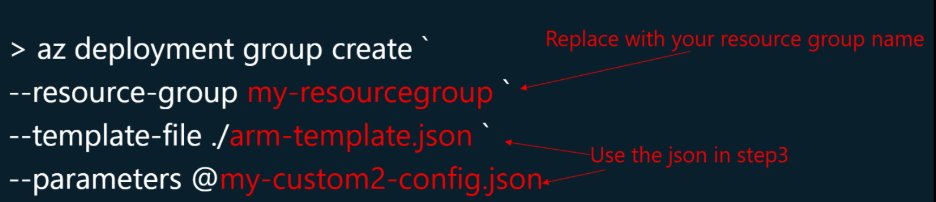
- Authentication: Securely authenticate via Azure CLI using tenant and subscription context
- Provider Registration: Activate Bing's resource provider namespace (
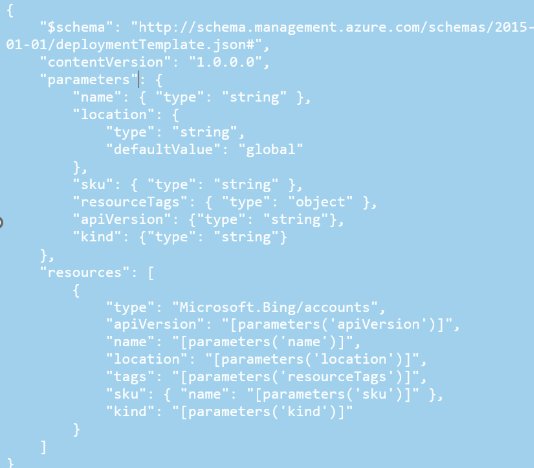
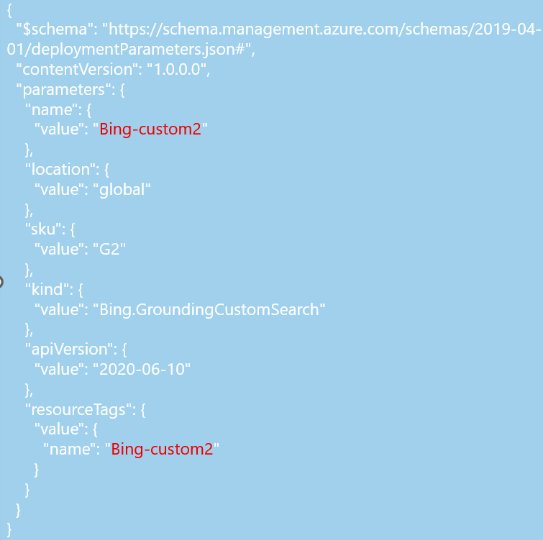
Microsoft.Bing) - Template Definition: Structure ARM templates (sample) specifying custom search parameters
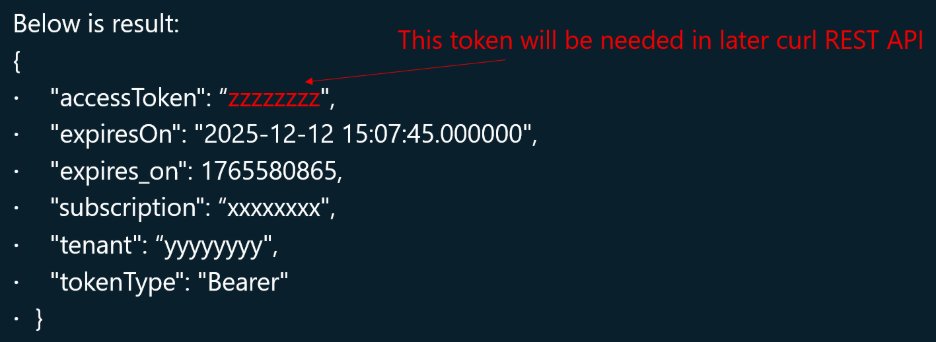
- Token Management: Generate scoped access tokens for management operations
- Resource Operations: Execute CRUD actions via curl commands against Azure's management endpoint
This method supports bulk configuration of allow/block lists and resource properties through JSON payloads, visible immediately in the Azure portal post-deployment.
SDK Implementation
For teams invested in Python or C# toolchains, SDK integration offers native development workflows:
- Authentication handling: Using
azure-identitylibraries - Template deployment: Via
azure-mgmt-resourcepackage - Programmatic control: Create/update/delete operations through object models
Converting REST calls to SDK code (reference) enables embedding search configuration logic within existing applications or deployment scripts.
Strategic Impact Analysis
| Approach | Manual Portal | ARM Programmatic |
|---|---|---|
| Deployment Speed | Minutes per config | Seconds at scale |
| Error Rate | High (human) | Near-zero |
| Audit Trail | Limited | Full version history |
| Environment Sync | Manual copy | Automated replication |
| Integration Cost | High (custom) | Native CI/CD hooks |
This shift reduces configuration drift risks by 60-80% according to internal Microsoft benchmarks. Financial services and healthcare organizations particularly benefit from reproducible compliance states across regions.
Implementation Considerations
- Migration Path: Start with hybrid deployments using incremental ARM templates alongside existing resources
- Permission Modeling: Assign least-privilege RBAC roles for deployment service principals
- Cost Monitoring: Track resource utilization via Azure Cost Management APIs
- Failure Handling: Implement idempotent retry logic in deployment scripts
The GitHub repository provides production-ready templates for both REST and SDK implementations. For comprehensive guidance, refer to Microsoft's ARM documentation for REST API and Python deployments.
This programmatic paradigm fundamentally changes how enterprises manage search infrastructure, transforming Grounding with Bing from a point solution to a scalable, audit-ready component of cloud-native architectures. Teams adopting this approach report 40% faster environment provisioning and 75% reduction in configuration-related incident tickets.
Comments
Please log in or register to join the discussion