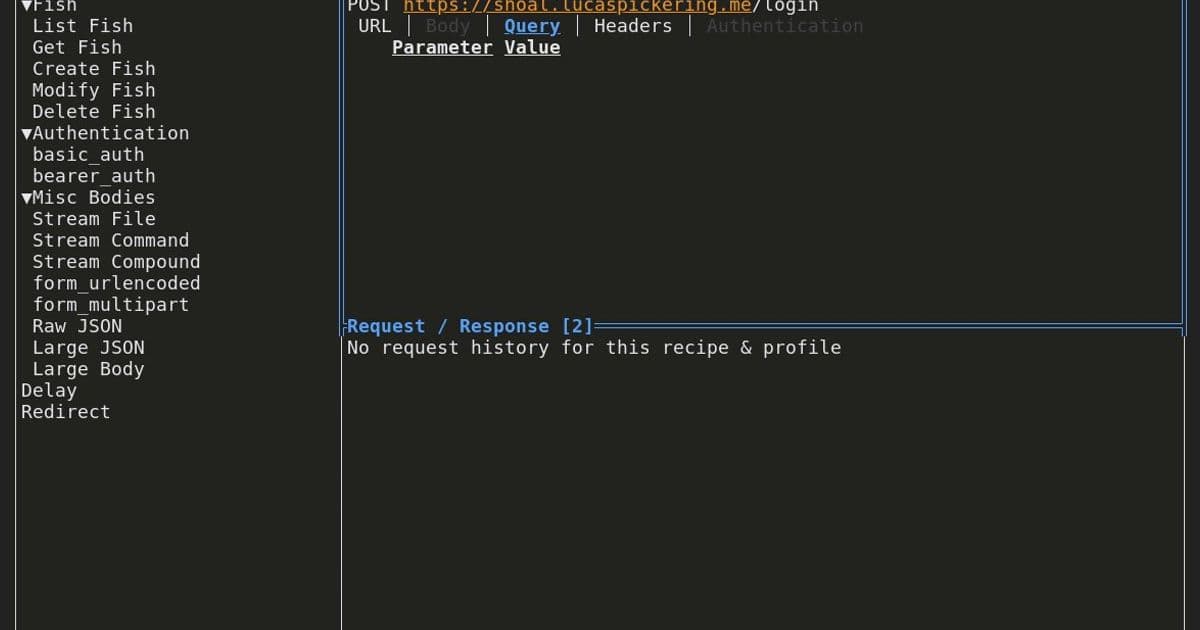
Slumber introduces a terminal-based HTTP client that shares YAML request collections between its TUI and CLI modes, aiming to reduce configuration friction for developers working across interactive and scripted workflows.
Slumber presents itself as a terminal HTTP client designed for REST API interaction, offering two primary interfaces: a Terminal User Interface (TUI) for interactive request building and response inspection, and a Command Line Interface (CLI) for quick one-off requests or scripting. The core innovation highlighted is its shared configuration model—both interfaces consume the same YAML-formatted request collection file, eliminating the need to maintain separate configurations for interactive use versus automation.
This approach addresses a common pain point: developers often switch between tools like httpie (for CLI scripting) and graphical clients like Postman (for interactive testing), leading to context-switching overhead and configuration drift. By unifying the configuration layer, Slumber promises a seamless transition from manually crafting a request in the TUI to exporting that same request definition for use in CI pipelines or local scripts via the CLI. The YAML structure defines requests with standard fields—method, URL, headers, body—and supports features like environment variables and request chaining within the collection.
However, the novelty here is incremental rather than revolutionary. Tools like HTTPie already support exporting sessions to JSON/YAML for reuse, and curl benefits from widespread scripting familiarity. Slumber’s value hinges on the ergonomics of its TUI—whether it genuinely reduces the cognitive load compared to typing curl commands or using ncurses-based alternatives like httpie’s interactive mode. Early demonstrations (see [Slumber demo](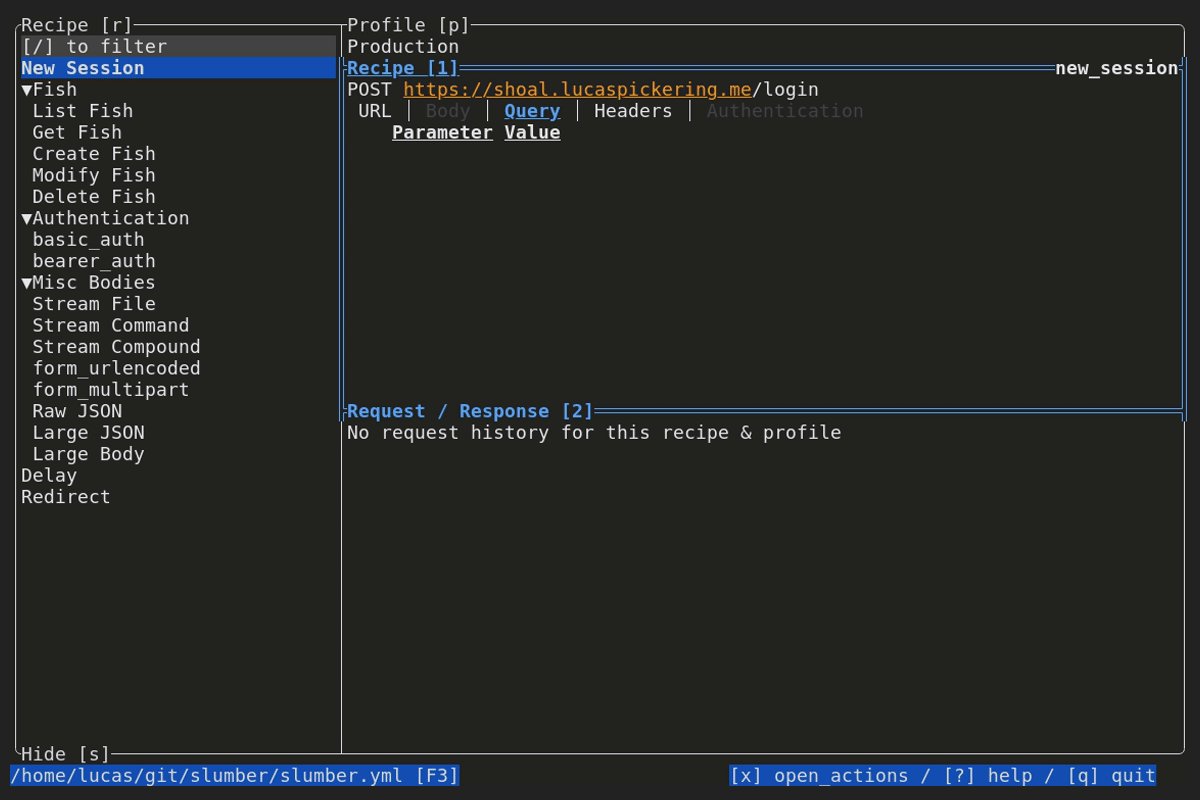 )) show a clean interface with split panes for request editing and response viewing, but real-world adoption depends on factors like plugin extensibility, authentication handling depth, and performance with large payloads.
Practical limitations include its current immaturity as a relatively new project. The ecosystem lacks the vast array of community plugins seen in mature tools like Postman, and debugging complex authentication flows (e.g., OAuth 2.0 with PKCE) may require more manual YAML manipulation than a dedicated GUI offers. For teams already invested in curl-based scripting or httpie’s simplicity, the migration cost might outweigh benefits unless the TUI significantly accelerates API exploration.
Slumber’s documentation emphasizes getting started via a Getting Started guide and progressing to Key Concepts for deeper configuration details. Its success will likely depend on whether the shared YAML model demonstrably reduces workflow friction in real API development cycles compared to established alternatives—something only sustained community use can validate.
Comments
Please log in or register to join the discussion