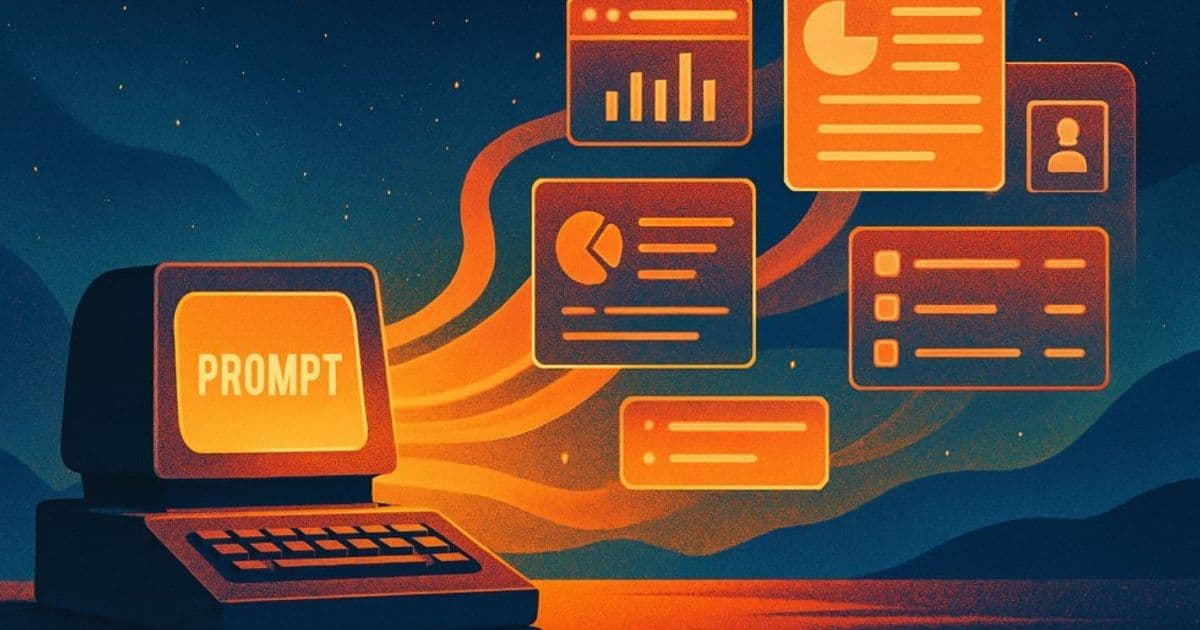
The era of bloated, expensive SaaS subscriptions is facing a challenger: AI-generated 'on-demand software'. Developers and businesses are now building custom, functional applications in minutes using natural language prompts, slashing costs and bypassing feature bloat. This shift towards 'Software-as-a-Prompt' (SaaP) promises to democratize development and force traditional vendors to adapt or perish.
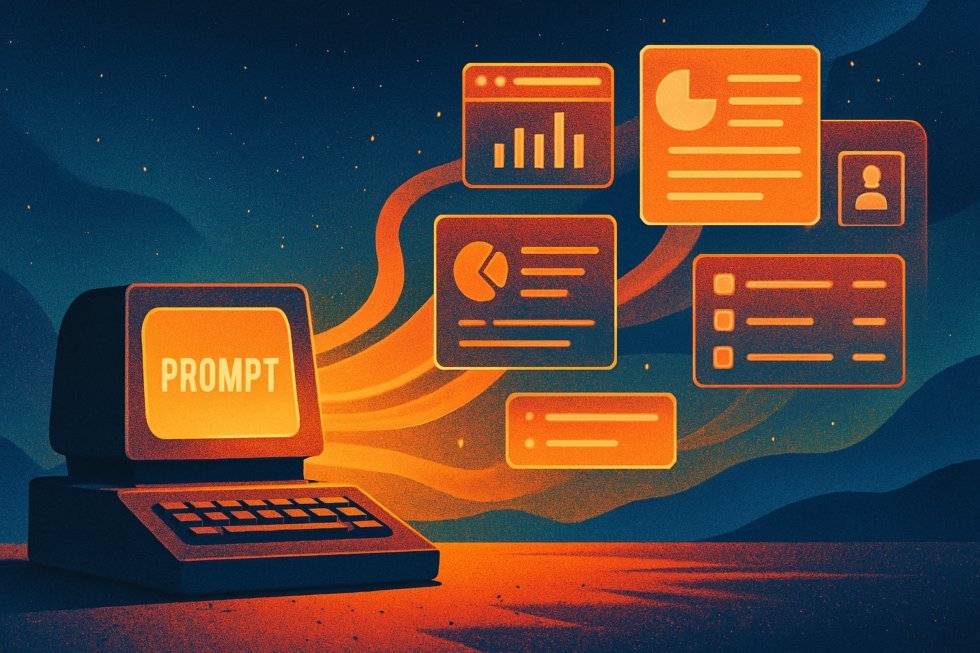
Last week, I witnessed the future of software development. A speaking coach friend needed to analyze client videos—a manual, time-consuming process. Using Lovable.dev and Google's Gemini, we prompted a custom video analysis application into existence. In under 10 minutes, it was built, deployed, and running. Cost? Pennies. Time? Less than brewing coffee. This isn't magic; it's the dawn of on-demand software, where applications aren't bought off the shelf—they're prompted into existence. Welcome to Software-as-a-Prompt (SaaP).
The Cracks in the Traditional SaaS Foundation
Traditional SaaS giants like Salesforce or SAP dominate enterprise software, but they're buckling under their own weight:
- Feature Bloat & Cost Inefficiency: Businesses pay thousands monthly for platforms where they might use only 20% of features. A small company needing basic CRM functionality subsidizes complex modules they'll never touch.
- Rigid Workflows: Predefined structures force businesses to contort their unique processes to fit the software, not the other way around.
- Integration Sprawl: Juggling multiple specialized SaaS tools creates data silos and maintenance nightmares.
"Why should a small business pay enterprise prices for a complex CRM when they might only need basic contact management?"
This inefficiency creates fertile ground for disruption. Why rent a monolithic solution when you can instantly generate exactly what you need?
The Engine Room: How SaaP Actually Works
Recent leaps in large language models (LLMs) like Gemini 1.5 Pro, GPT-4o, and Claude 3 are the catalysts. These models:
- Generate Functional Code: They produce working code in multiple languages from natural language descriptions, understanding syntax and basic best practices.
- Power New Platforms: Services like Replit AI, Lovable.dev, and Bolt.new provide interfaces where users describe their desired app in plain English and receive a deployable application. AI-enhanced IDEs like Cursor and agents like Claude Code further streamline creation.
The workflow is strikingly simple:
- Describe the application in natural language.
- AI generates the project structure and initial code.
- User tests and provides feedback.
- AI iterates and refines.
- Deploy the finished app.
Real-World Impact: Beyond Theory
This isn't hypothetical. Beyond the video analysis tool:
- A UK Product Designer: Built a complex commercial vehicle document tracking system (Next.js frontend, Supabase DB, Stripe payments, auth) in under two weeks for $75 using Cursor and Claude – with zero prior coding experience.
- Enterprise Shift: Klarna announced plans to eliminate 1,200 SaaS tools, replacing them with internally built AI-generated solutions.
- Niche Solutions Flourish: Users build custom Chrome ad-skippers, lead qualifiers, and internal tools – solving hyper-specific problems without subscriptions.
The core shift? AI dramatically lowers the barrier to implementing niche features. Users iterate with an AI co-pilot to get exactly the tool they need.
Navigating the Limitations
SaaP isn't a silver bullet yet. Critical considerations remain:
- Code Quality & Security: AI-generated code can be functional but suboptimal or contain vulnerabilities (e.g., SQL injection risks). It often lacks the refinement of human-engineered software. "Good enough for personal use but maybe not to serve to the masses."
- Scope Constraints: AI excels at common patterns (forms, CRUD apps). Highly complex, unique, or massively scalable systems remain challenging.
- Debugging & Maintenance: Troubleshooting opaque AI-generated code requires technical skill. Who fixes it when it breaks?
- The SaaS Advantage: Established platforms offer support, compliance, reliability, and community knowledge.
SaaP currently shines for discrete, well-defined problems, not rebuilding Salesforce. Human oversight, especially for security and scaling, is still crucial.
The Looming Disruption: Who Wins, Who Adapts?
The rise of SaaP forces a reckoning:
Traditional SaaS Vendors: Face an existential threat. Responses are emerging:
- Embedding AI: Salesforce's Einstein GPT, Microsoft's Power Platform Copilot allow customization within their ecosystems.
- Shifting Value: Emphasizing unique data, network effects, and enterprise-grade reliability.
- Hybrid Models: Offering AI tools to build custom extensions on their core platforms.
"If you’re steering a SaaS ship, you’d better start disrupting your own tea party or someone else will crash it for you."
Startups: Have unprecedented opportunity:
- Target overpriced, bloated SaaS point solutions.
- Build AI-first products where customization is core.
- Leverage network effects (e.g., marketplaces for AI-generated components).
Businesses & Executives: Gain power to cut costs and build bespoke solutions:
- Start with non-critical internal tools.
- Evaluate true costs (hosting, AI services, maintenance).
- Identify internal technical oversight.
- Transition gradually, Klarna-style wholesale cuts are high-risk.
Building Your First SaaP: A Practical Guide
Ready to prompt your own software?
- Pick Your Platform: Start with Replit AI, Lovable.dev, Bolt.new, or an LLM (Gemini/GPT-4o/Claude) + IDE like Cursor.
- Define a Small Problem: Target a manual task or a clunky spreadsheet (e.g., lead tracker, report generator, form collector).
- Craft a Clear Prompt: Be specific: "Build a simple CRM with a form to add leads, a table to view them, and a weekly email summary sent via Gmail." Include examples.
- Build, Test, Iterate: Let the AI generate. Test rigorously. Prompt for changes: "Add an edit button," "Store data in Supabase," "Make it mobile responsive."
- Deploy & Share: Platforms offer one-click deployment for a live link.
- Expand: Success with one app unlocks countless automation possibilities.
The Prompt is Mightier Than the Subscription
The last decade belonged to SaaS. The next belongs to SaaP – Software-as-a-Prompt. The power dynamic is flipping: users are no longer forced to adapt their workflows to rigid software. Instead, software adapts to them. Whether you're a developer exploring new workflows, a founder drowning in SaaS bills, or a non-technical user with a specific need, the tools exist to build your solution. No engineering team required. Just a clear vision and a well-crafted prompt. The age of democratized, on-demand software creation is here.
Source: Siddharth Bharath, Software as a Prompt: How AI is Ushering in the End of SaaS as We Know It
Comments
Please log in or register to join the discussion