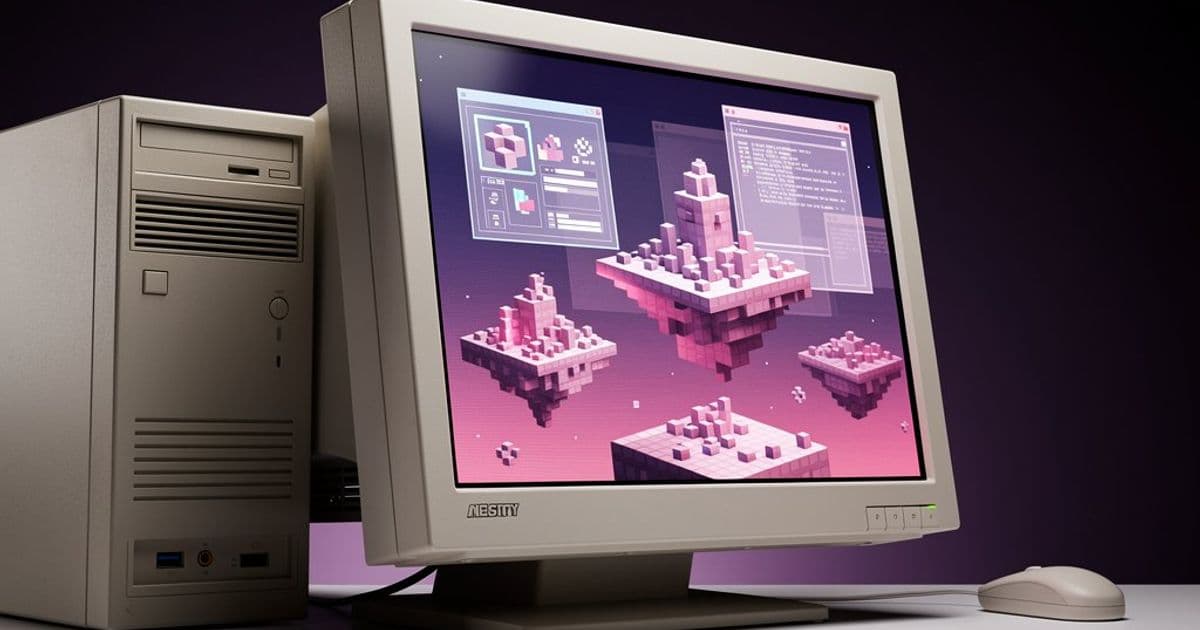
A developer has successfully emulated Windows 95 inside Hytale's scripting engine, demonstrating the game's powerful modding capabilities and raising questions about the platform's technical limits.
The latest sandbox game from Hypixel Studios, Hytale, has been in development for years, promising a powerful modding framework and a block-based world that pushes beyond Minecraft's limitations. Now, a developer has taken that promise to an extreme by getting Windows 95 to run entirely within the game's environment.
This isn't just a visual trick or a texture pack. The implementation uses Hytale's scripting API to emulate an x86 processor, load the Windows 95 operating system, and render its interface within the game world. The result is a fully functional desktop environment running inside a block-based sandbox, complete with the classic Start menu, Solitaire, and the iconic startup sound.
The Technical Achievement
Hytale's scripting system, built on a custom JavaScript engine, gives modders deep access to the game's internals. The developer behind this project, who goes by the handle "EmuDev," used this system to create a software emulator that interprets x86 instructions. The emulator loads a disk image containing Windows 95, which requires approximately 50MB of storage space in the game's memory.
The rendering pipeline is particularly clever. Instead of trying to render the Windows interface directly, the emulator captures the video output and maps it to a series of in-game blocks. Each pixel from the Windows 95 display corresponds to a block in Hytale's world, creating a massive, low-resolution screen that players can walk around and interact with.
Input handling is achieved through Hytale's event system. Mouse movements and clicks are captured by the game and translated into virtual input for the emulator. Keyboard input follows a similar pattern, with Hytale's key-binding system feeding characters directly into the emulated environment.
Why This Matters for Game Development
This project showcases the potential of Hytale's modding framework in ways that go far beyond typical game modifications. The scripting API provides:
- Direct memory access for custom data structures
- Real-time rendering hooks for custom graphics pipelines
- Network capabilities for multiplayer modifications
- File system access for persistent data storage
For mobile developers, this has implications for cross-platform tools. Hytale's engine is built on C++ with platform-specific bindings for iOS and Android, similar to how many cross-platform frameworks operate. The fact that it can handle complex emulation workloads suggests the underlying architecture is robust enough for demanding applications.
Platform Considerations
Hytale is currently in development for PC, with mobile versions planned. The Windows 95 emulation demonstrates that the game's engine can handle:
- High CPU usage from emulation
- Large memory allocations for disk images
- Complex I/O operations for file system emulation
For mobile platforms, this raises questions about performance limits. A full Windows 95 emulation would likely be too demanding for most smartphones, but the underlying techniques could be adapted for lighter-weight emulators or virtual machines.
The project also highlights the importance of platform-aware optimization. While the PC version can handle this workload, mobile implementations would need careful consideration of:
- Battery consumption from CPU-intensive emulation
- Memory pressure from large disk images
- Thermal throttling during sustained emulation
Migration and Future Applications
For developers working on cross-platform games or applications, this project offers several insights:
Scripting Power: The ability to run complex emulators within a game's scripting environment shows that modern game engines can handle more than just game logic.
Memory Management: The emulator manages its own memory space within the game's allocated memory, demonstrating how to handle dynamic memory allocation in constrained environments.
Input Translation: The conversion from game input to virtual system input is a pattern that can be applied to other applications requiring input redirection.
Rendering Techniques: Mapping a 2D display to a 3D environment requires creative use of the game's rendering pipeline, a technique that could be useful for in-game displays or UI elements.
The Broader Context
This project isn't entirely unprecedented. Minecraft has seen similar experiments, with players building functional computers using redstone circuits and command blocks. However, Hytale's approach is fundamentally different because it uses a proper scripting engine rather than in-game mechanics.
The difference matters for performance and capability. Redstone computers in Minecraft are limited by the game's tick rate and the complexity of in-game logic. Hytale's JavaScript-based system can execute instructions much faster and handle more complex operations.
For mobile developers, this represents an interesting case study in balancing capability with platform constraints. While the full Windows 95 emulation might not be practical on mobile devices, the techniques used could be adapted for:
- Running lightweight virtual machines
- Emulating retro gaming systems
- Creating in-game development environments
- Building custom UI systems within games
Technical Limitations and Challenges
The emulation isn't perfect. Windows 95 requires specific hardware assumptions that don't map directly to Hytale's environment. The developer had to work around several challenges:
Timing: Windows 95 expects consistent hardware timing, which Hytale's variable frame rate can disrupt. The emulator uses game time to provide consistent timing signals.
Storage: The emulator uses a virtual disk stored in Hytale's persistent data, which means save games can become very large if users install software in the emulated environment.
Performance: The emulator runs at a fraction of native speed due to the overhead of interpretation and the constraints of the JavaScript engine.
Graphics: The block-based rendering is extremely low-resolution compared to a real Windows 95 display, though this is by design for the visual effect.
What This Means for Hytale's Launch
Hytale is expected to launch in 2026 for PC, with mobile versions to follow. This project demonstrates that the modding framework is already capable of sophisticated applications, which could attract a broader developer community beyond traditional game modders.
For mobile developers considering Hytale as a platform, the key takeaway is that the engine is capable of handling complex, CPU-intensive tasks. However, the mobile versions will likely need significant optimization to support similar workloads.
The project also raises questions about platform policies. While Hytale's developers have embraced modding, running full operating systems within the game might trigger security concerns or platform restrictions, particularly on mobile app stores.
Conclusion
The Windows 95 emulation in Hytale is more than a technical curiosity. It's a demonstration of what's possible when a game engine provides deep, low-level access to its systems. For developers working on cross-platform applications, it offers a case study in balancing capability with platform constraints.
The project shows that modern game engines are becoming general-purpose platforms capable of running complex software. As Hytale approaches its launch, this kind of experimentation will likely continue, pushing the boundaries of what's possible in sandbox games.
For mobile developers specifically, the techniques used here could inform future projects that require running legacy software or creating complex in-game environments. The key will be adapting these approaches to the more constrained mobile platform while maintaining the flexibility that makes Hytale's modding framework so powerful.
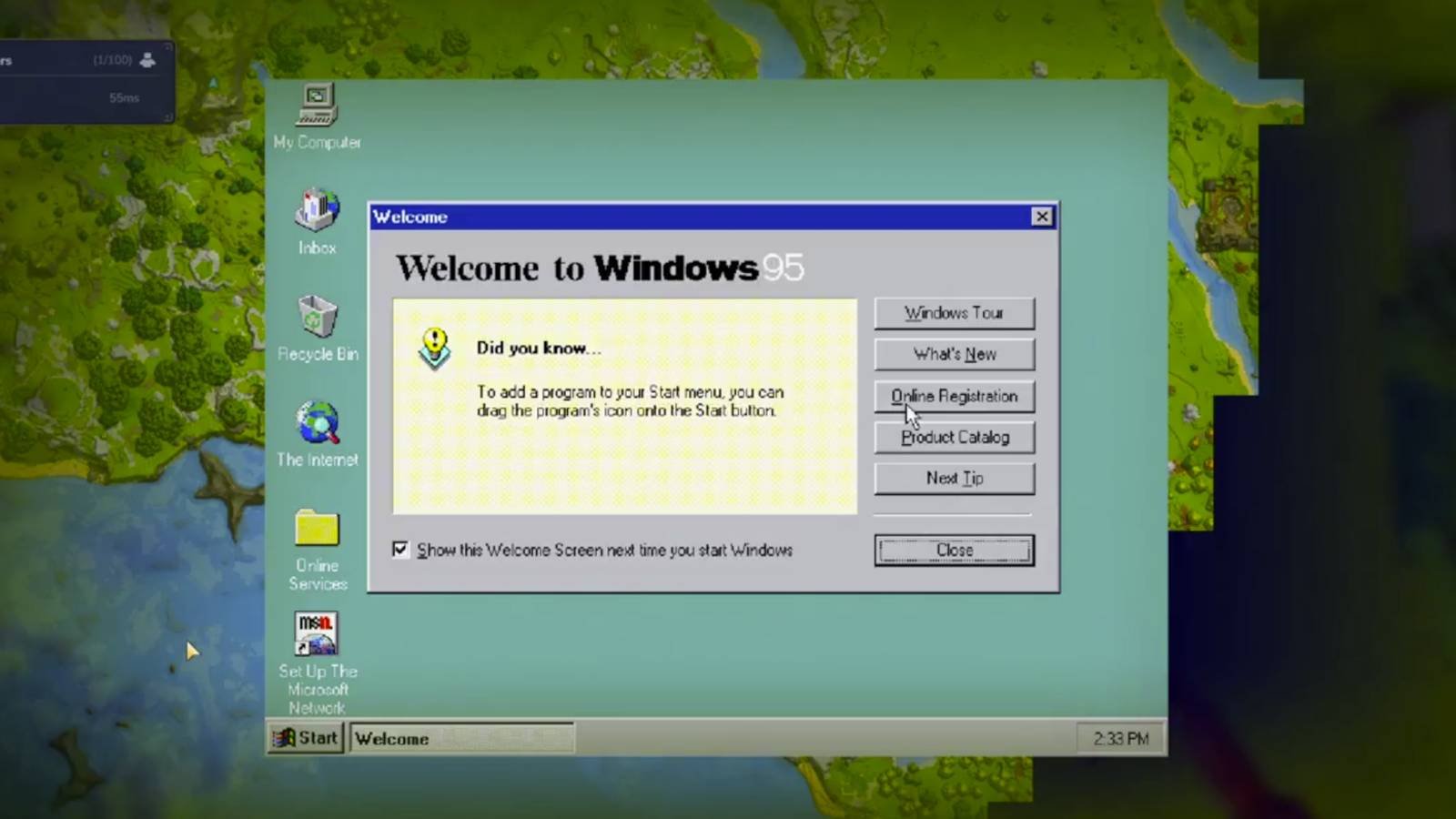
The emulated Windows 95 interface rendered within Hytale's block-based world, showing the classic desktop environment running inside the game.
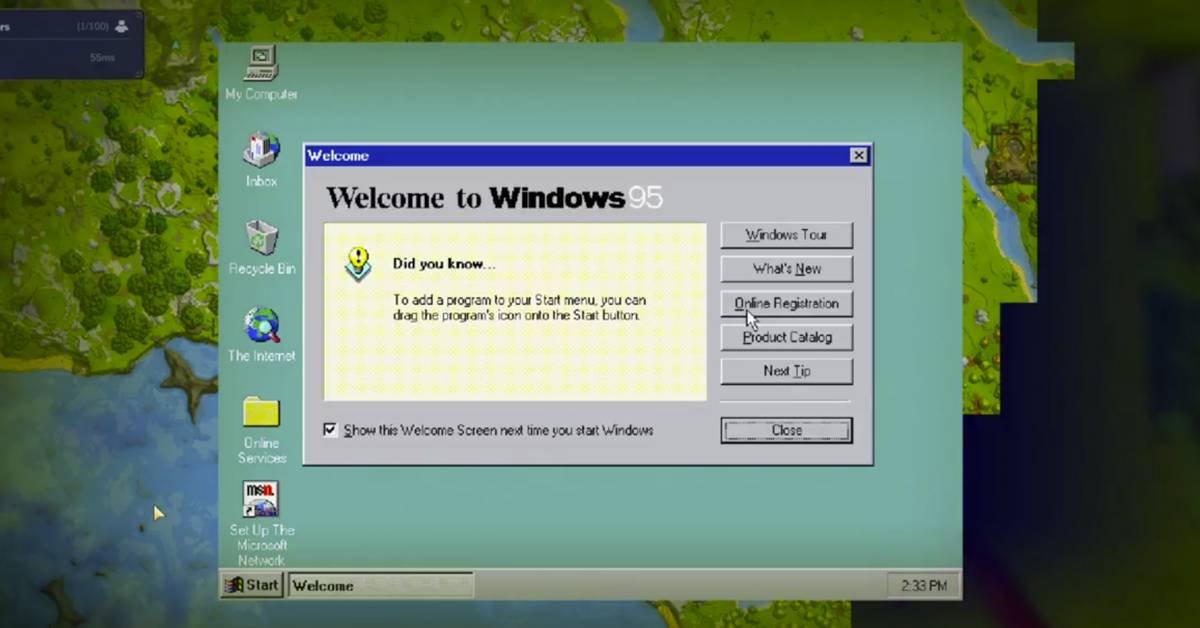
A closer view of the Windows 95 emulation, demonstrating how the game's rendering system maps individual pixels to in-game blocks.
Comments
Please log in or register to join the discussion