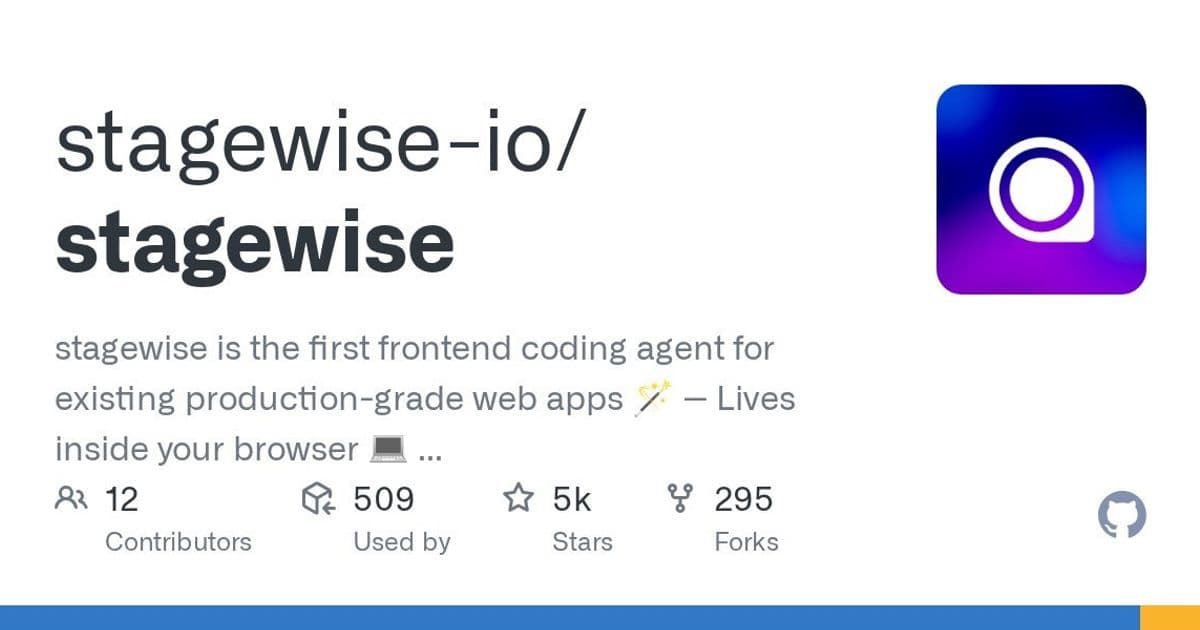
Stagewise introduces a revolutionary approach to frontend development by combining browser-powered context awareness with AI agents. This open-source tool lets developers click UI elements and describe changes in natural language, generating production-ready code without tedious context switching. Supporting major AI agents like GitHub Copilot and Cursor, it promises to reshape how teams interact with complex codebases.
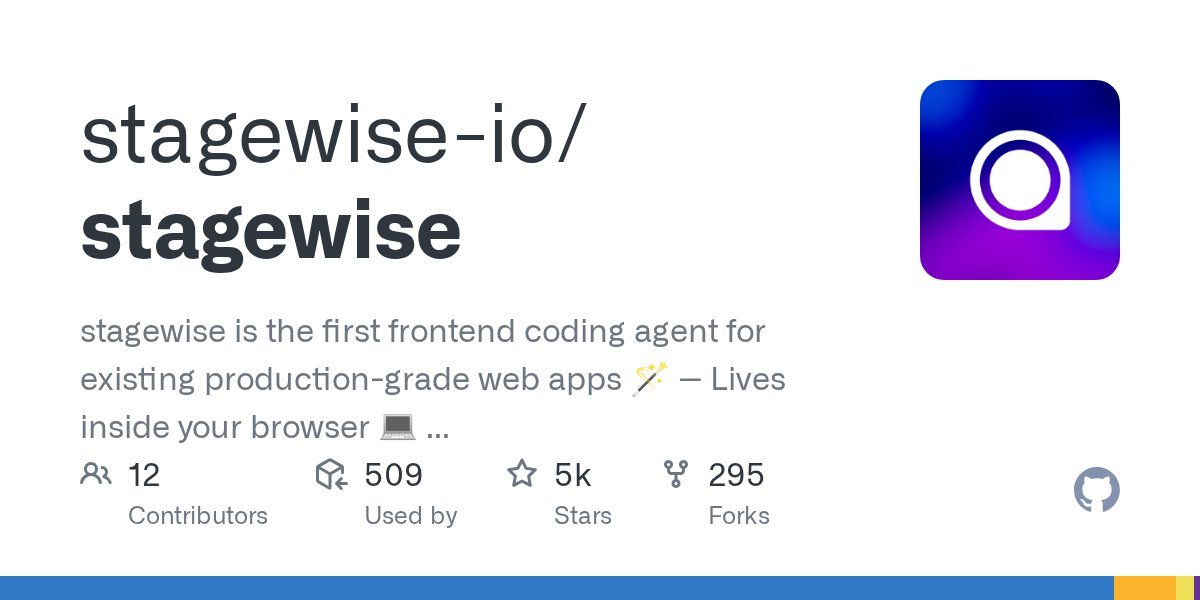
For frontend developers juggling component hierarchies, state management, and responsive logic, Stagewise emerges as a potential game-changer. This open-source tool acts as a "coding agent" that understands your actual production codebase through browser-powered context—eliminating the need to manually paste element details or folder paths into AI prompts.
How It Works: Context-Aware Development
- Natural Language Instructions: Describe desired changes ("Make this button blue", "Add hover animation")
- Element Selection: Click components directly in your running development environment
- AI Code Generation: Stagewise's agent (or compatible third-party agents) generates framework-agnostic code
Key Features
- ⚡ Zero-Config Setup: Run
npx stagewiseto inject into existing projects - 🧩 Plugin Ecosystem: Extend functionality for custom workflows
- ⛓️ Framework Agnostic: Works with React, Vue, Angular, and others
- 🧠 Multi-Agent Support: Choose between Stagewise's dedicated agent or popular alternatives:
| Agent | Supported |
|---|---|
| Stagewise Agent | ✅⭐️ |
| GitHub Copilot | ✅ |
| Cursor | ✅ |
| Windsurf | ✅ |
Why This Matters
Frontend development often involves tedious context switching between browsers, IDEs, and documentation. Stagewise reduces this friction by leveraging real-time DOM context—a significant evolution beyond traditional AI coding assistants. As their GitHub repo explains, it's designed specifically for the nuances of modern web development where visual relationships matter as much as abstract code structures.
Getting Started
# In your project root:
npx stagewise
# Or with pnpm:
pnpm dlx stagewise
After quick authentication, your local dev server becomes an interactive canvas for AI-driven modifications.
Open Source with Enterprise Pathways
Licensed under AGPLv3, Stagewise encourages community contributions through their GitHub. For teams needing proprietary licensing, the developers at tiq UG offer commercial options. Early adoption metrics show promising traction: {{IMAGE:4}}
The Bigger Picture
As AI coding tools evolve from autocomplete to active collaborators, Stagewise represents a shift toward visual-first development. By anchoring changes to actual UI elements rather than abstract file paths, it bridges the gap between design intent and implementation. For teams drowning in legacy CSS or component spaghetti, this could mean faster refactors and fewer "it looked different in my IDE" moments.
🔗 Connect with the community: {{IMAGE:5}}
Comments
Please log in or register to join the discussion