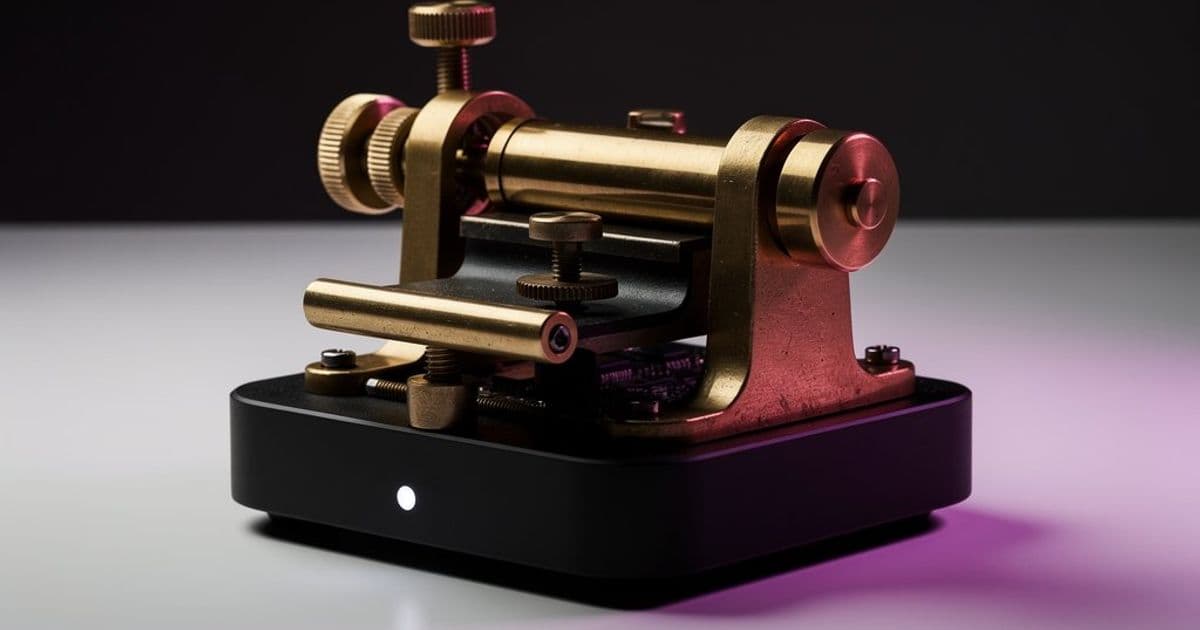
A personal project transforms a vintage telegraph key into a functional Bluetooth keyboard, exploring the intersection of historical technology and modern computing through the deliberate, tactile process of Morse code input.
The act of typing has become so frictionless that we rarely consider its mechanics. We tap plastic keys and expect instant digital characters, a process so streamlined it has lost almost all physical dimension. This project, the Telegraph Key(singular)board, deliberately reintroduces friction and deliberation by converting a vintage telegraph key into a functional Bluetooth keyboard. The result is a device that is both a practical input tool and a meditation on the relationship between human gesture and digital communication.
The core of the project is an Adafruit ItsyBitsy microcontroller, which bridges the analog world of the telegraph key's mechanical switch to the digital Bluetooth protocol. The system operates in two distinct modes. In "raw" mode, the key's physical state—depressed or released—is translated directly into a sequence of dots, dashes, and spaces. This mode serves as a training interface, allowing the user to calibrate their muscle memory against the precise timing required to differentiate a dot from a dash, and to understand the pauses that separate characters and words. The transition to "alphanumeric" mode is where the translation becomes functional; the microcontroller's firmware interprets the timing of the taps and releases, matching them against the International Morse code standard to output the corresponding alphanumeric keystrokes to any paired computer.
The experience of using such a device is fundamentally different from conventional typing. There is no immediate visual feedback on the screen as you type; instead, you must commit to a sequence of taps and then wait for the translation to complete. This introduces a deliberate pacing, a necessary slowness that mirrors the original purpose of telegraphy. The author notes the satisfaction of this process, even as it increases errors and reduces speed. It transforms typing from a subconscious activity into a conscious, physical performance. The clatter of the key itself becomes part of the experience, a tactile and auditory feedback loop that is absent from silent, membrane keyboards.
One of the project's most compelling aspects is its social dimension. The author added a display mode to a flipdot board in their apartment, turning the act of typing into a public spectacle. When someone uses the Key(singular)board, the resulting text appears on the physical display, making the slow, deliberate process visible to others. This transforms a solitary activity into a shared curiosity, inviting engagement and demystifying the underlying technology. The clatter of the key and the gradual appearance of letters on the flipdots create a unique, communal experience around what is typically a private act of communication.
From a technical perspective, the project demonstrates the accessibility of modern microcontroller programming. The author mentions that the build felt "satisfyingly fast and easy" because it reused hardware and software components from previous projects. This highlights a key trend in maker culture: the development of a personal toolkit of reusable code libraries and hardware modules that can be adapted to new ideas. The firmware logic for debouncing the mechanical switch, measuring tap durations, and performing Morse code translation is a straightforward but effective application of embedded systems programming. The project serves as a practical tutorial in bridging analog inputs with digital outputs, a foundational skill in hardware hacking.
The implications extend beyond a novelty project. It serves as a tangible critique of modern interface design, which often prioritizes speed and efficiency over engagement and physicality. By choosing a slower, more deliberate input method, the user is forced to be more mindful of their communication. There is a parallel here to the resurgence of analog hobbies like vinyl records or film photography, where the process itself is as valued as the output. The Key(singular)board is a keyboard that makes you aware of the keyboard itself, a rare quality in an era of seamless, invisible technology.
For those interested in building their own, the project is well-documented. The author provides instructions and notes that while a telegraph key is aesthetically pleasing, any button will functionally work. A key lesson from the build process was the importance of cleaning the vintage key's contacts—a simple step that prevented hours of unnecessary troubleshooting. The code is available for reuse, though the author suggests tuning the hard-coded timing thresholds to match individual typing speed, potentially with a physical switch for adjustment. The project is a testament to the joy of repurposing old technology, not just for nostalgia, but to create a new, meaningful interaction with our digital tools.
Ultimately, the Telegraph Key(singular)board is more than a quirky peripheral. It is a philosophical device that questions the default settings of our digital lives. It asks what we gain and lose when we optimize for speed, and whether there is value in reintroducing friction and deliberation. In a world of instant messaging and silent keyboards, the loud, slow, and tangible act of sending a Morse code message is a radical act of presence. It connects the modern user to a century-old communication method, not through a museum display, but through direct, hands-on use, proving that the most compelling technology often bridges the past and the present in unexpected ways.
For those interested in the technical details and build process, the author's project write-up provides a comprehensive guide, including the code and hardware list. The Adafruit ItsyBitsy platform is a popular choice for such projects due to its compact size and Bluetooth capabilities.
Comments
Please log in or register to join the discussion