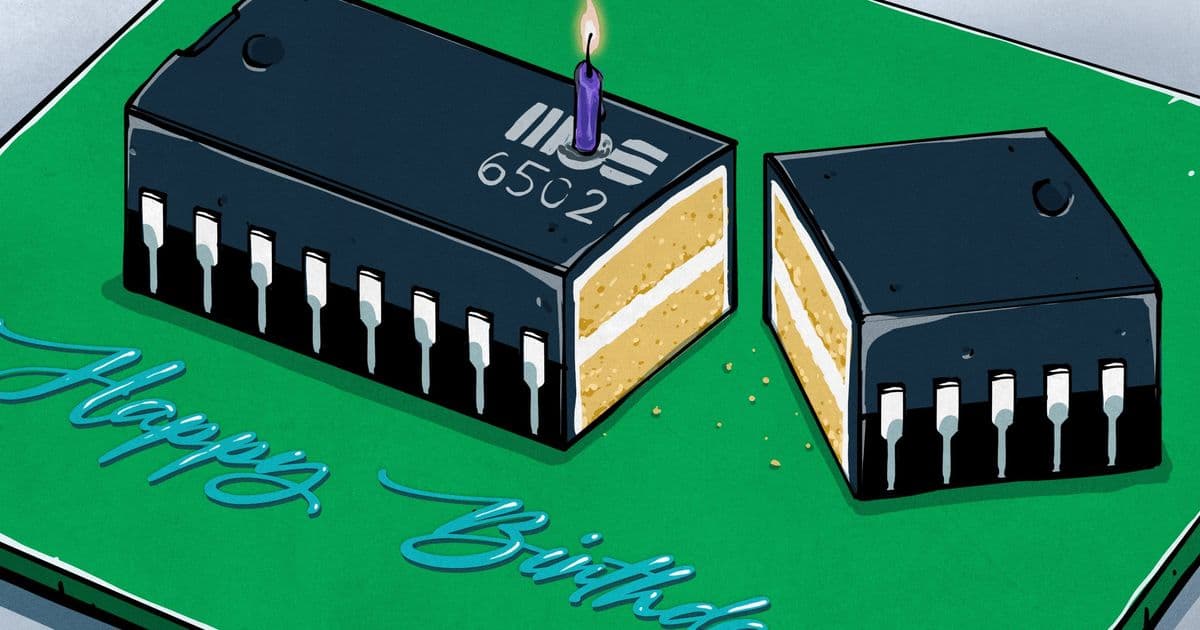

Fifty years after its debut, the MOS Technology 6502 microprocessor remains in production—a testament to its revolutionary design. We explore how this $25 chip powered the Apple II, Commodore 64, and Nintendo Entertainment System while outlasting rivals like the Z80.
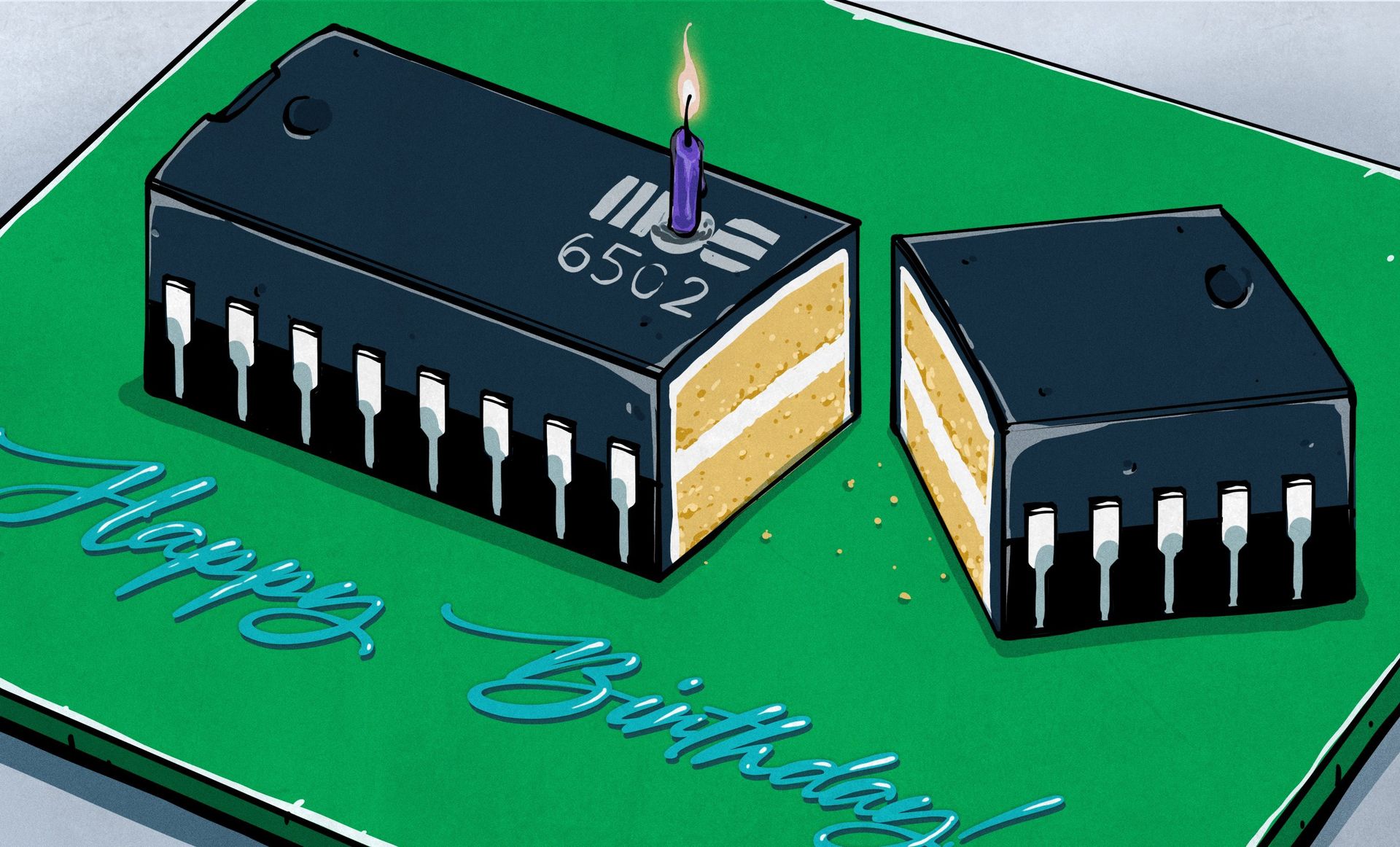
Fifty years ago, a microprocessor quietly ignited the personal computing revolution. The MOS Technology 6502—the silicon heart of iconic machines like the Apple II, Commodore 64, and Nintendo Entertainment System—debuted in 1975 for just $25, undercutting competitors by 90%. Today, Western Design Center (WDC) still manufactures the W65C02 variant, making it one of computing’s most enduring architectures.
Rebellion at MOS: The Chip That Broke Motorola's Monopoly
The 6502’s origin story reads like a Silicon Valley thriller. In 1974, Motorola engineer Chuck Peddle envisioned a simplified, affordable alternative to the complex $300 Motorola 6800. When Motorola ordered him to abandon the project, Peddle and seven colleagues defected to MOS Technology. Within months, they created the 6501 (pin-compatible with the 6800) and its successor, the 6502—featuring an integrated clock oscillator and a lean instruction set optimized for real-world tasks.
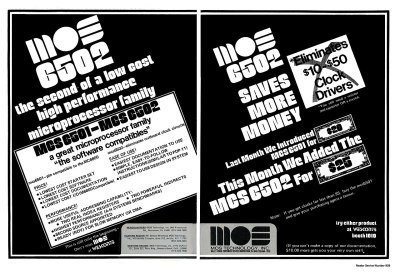
"The advert that started it all." (MOS Technology, Public Domain)
Architecture Wars: Pipelining vs. Clock Speed
In the 1980s, schoolyards became battlegrounds for processor supremacy. Z80 enthusiasts (Sinclair ZX Spectrum) touted higher clock speeds, while 6502 loyalists (Commodore, Apple, Acorn) praised its pipelined architecture—executing instructions in overlapping stages for greater efficiency. Decades later, engineers acknowledge the 6502’s design superiority:
- 4-phase clock system enabling zero-cycle register transfers
- Simplified 56-instruction set reducing silicon costs
- 8-bit data bus with 16-bit addressing
This efficiency made it the go-to chip for manufacturers seeking performance at consumer-friendly prices. At its peak, the 6502 powered over a billion devices.
The Unkillable Chip: Who Still Uses the 6502 in 2025?
While the Z80 ceased production in 2024, the W65C02 soldiers on. Its resilience stems from:
- Embedded systems in medical devices, industrial controllers, and automotive systems
- Legacy maintenance for aerospace and defense equipment
- Retro-computing renaissance with kits like the Ben Eater 6502 project
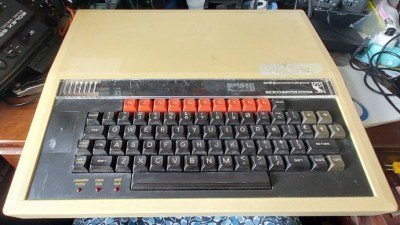
"My 6502-powered Beeb may be showing its age, but it remains one of the most comprehensively specified computers for its time I have ever used."
The Enduring Lesson: Beyond Architecture
For those who grew up with 8-bit machines, the 6502 wasn’t just silicon—it was a teacher. As the author recalls, hand-assembling Z80 code on a Sinclair paled next to the BBC Micro’s built-in assembler. Yet the true revelation was this: Great computing isn’t defined by instruction sets or clock speeds, but by what creators build with them. The 6502’s legacy lives on not just in retro emulators, but in the ethos that accessibility fuels innovation—a principle that still shapes open-source hardware today.
Header image: Dirk Oppelt, CC BY-SA 3.0.
Source: Hackaday
Comments
Please log in or register to join the discussion