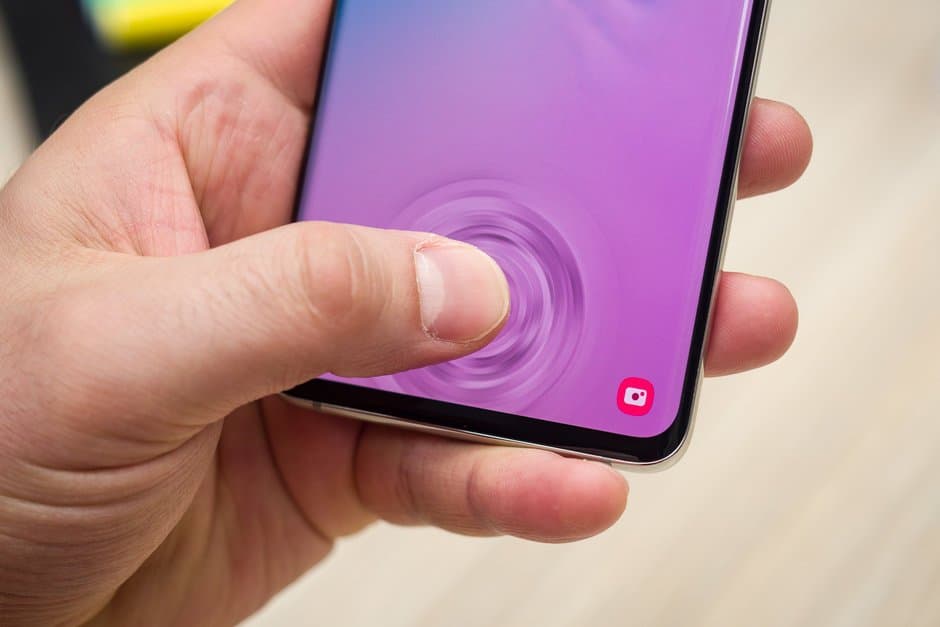
Optical fingerprint scanners remain common in phones between $300-700 despite ultrasonic alternatives costing just $8-10 more per unit, creating a frustrating user experience that manufacturers can easily solve.
Every time I press my thumb against the glowing circle of glass on one of Samsung's mid-range phones, and it takes a while or a few attempts to unlock, I'm reminded this unlocking method should've been scrapped a while ago.
But here we are in 2026, and optical fingerprint scanners are still the norm - at least if you buy an affordable phone in Europe, the US, or South America. I did some digging - as it turns out, the reported cost-per-unit for ultrasonic fingerprint sensors hovers around $8-10, whereas optical scanners are closer to $2 per unit. Again, take this with a grain of salt - I can't really get my hands on a quote for smartphone components to give you exact numbers. Not to mention, they always depend on "who is buying", and how much.
The point is that we're talking about a single-digit difference on devices that retail for anywhere between $300 and $800. And as someone who's used both fingerprint standards (Galaxy A55, Galaxy S24 Ultra, Pixel Fold, etc.), I can confidently say I'd easily splurge and pay $10 more for the reliability of the ultrasonic variety of the ubiquitous fingerprint scanner.
What's $10 for a phone that's already not cheap?
Xiaomi sells a $300 phone with an ultrasonic scanner, flagship chip, 9,000 mAh battery - what is Samsung and Google's excuse?
For context, Xiaomi is out there putting ultrasonic sensors into phones like the Xiaomi Redmi Turbo 5 Max - a $300 phone (converted price) that packs a 9,000 mAh battery and a flagship-grade Dimensity 9500s chip. Yet it still manages to include a premium biometric solution.
That makes it hard (if not impossible) to justify why Google and Samsung's $400-700 phones give you a less premium experience literally every single time you pick up (and unlock) your phone.
Plenty of examples out there, but I can't skip the $500 Pixel 10a, which just launched with an optical fingerprint scanner (similar to the one on my 2019 Huawei P30 Pro). Or better yet, the Android market leader Samsung - a company that can easily absorb the price difference.
Samsung is also a company synonymous with "Android" - seriously, many people say "I got a Samsung over the iPhone" even if they mean "I bought an Android". The price difference per unit should hardly be the reason Samsung holds back from "innovating".
Yet here we are, with phones like the Galaxy S25 FE (originally $700) shipping with an optical scanner in 2026, which you can't use if your thumb/screen is wet.
Ironically, Apple doesn't even bother with fingerprint scanners, which means the more "affordable" iPhone 16e (or the upcoming iPhone 17e) get the same Face ID tech as the iPhone 17 Pro series. Love it or hate it, Face ID performs consistently - unlike an optical scanner.
Can Google push the smartphone market forward with iPhone-level Face ID tech?
But I have some good news for you - at least if the rumors are true. Google is now rumored to be working on "iPhone-level" face unlock for the Pixel 11 series - potentially secure and affordable enough to expand to Chromebooks. If true, this would certainly challenge the likes of Samsung, Motorola, and Nothing to step it up, and get rid of optical scanners sooner.
Not everyone prefers face unlocking. Some people want a fingerprint sensor, period. Personally, I don't mind either method - as long as it works consistently.
And at this point of the story, it goes without saying that I'd rather have a side-mounted fingerprint sensor than an optical one embedded into the display (especially if it's placed on the bottom and hard to reach). Both side-mounted and ultrasonic scanners are faster, more accurate with wet fingers, and more reliable in bad lighting or awkward angles.
Really, optical scanners should've stayed in 2020. At $400-700, compromise shouldn't be part of the equation when it comes to such a basic feature - one you run into every single time you reach for your phone.
Written on my MacBook Pro after unlocking it via the optical fingerprint scanner. But it's not the same! Come on now.
Source(s) Personal experience
Related Articles
Expert Reviews and News on Laptops, Smartphones and Tech Innovations News > News Archive > Newsarchive 2026 02 > It's time to kill slow fingerprint scanners on all phones over $300
Martin Filipov, 2026-02-24 (Update: 2026-02-24)
Comments
Please log in or register to join the discussion