Just as alchemy evolved into chemistry by discovering fundamental entities and rules, modern tech fields like AI must move beyond surface-level descriptions to uncover true mechanistic models. This deep dive explores how defining entities, properties, and rules transforms immature sciences—and why psychology remains stuck in its 'alchemy phase' while biology inches closer to maturity.
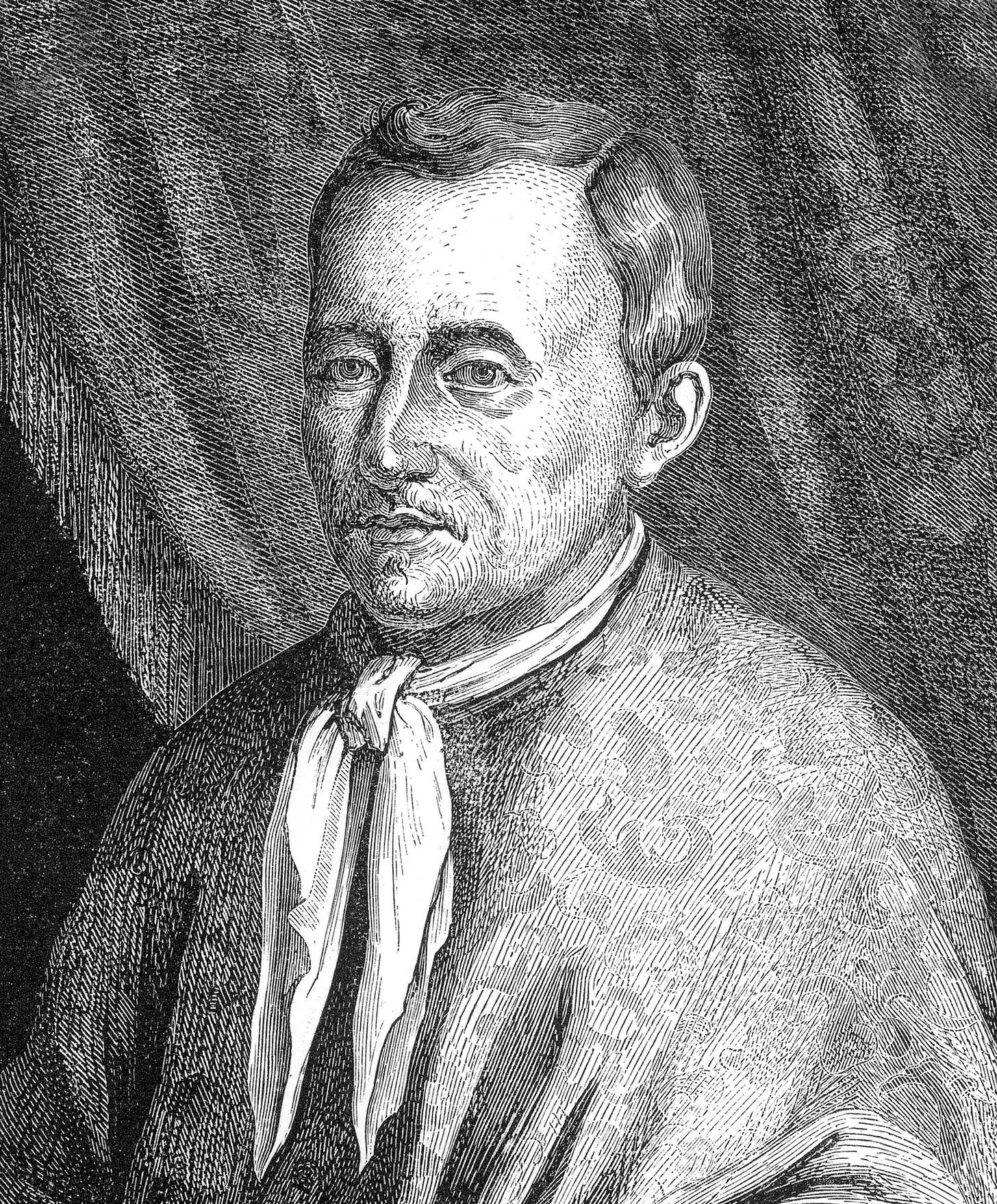
In the early 1600s, alchemist Jan Baptist van Helmont planted a willow sapling in 200 pounds of soil. After five years of meticulous watering, the tree weighed 169 pounds, while the soil had lost mere ounces. His conclusion? Water transformed into wood. Despite his brilliance (he coined the term "gas"), van Helmont missed the truth: the tree's mass came largely from carbon dioxide in the air. This flawed reasoning epitomizes immature science—relying on surface observations without grasping underlying mechanisms.
Beyond Flowcharts: The Triad of Mature Science
Mature sciences like chemistry didn't emerge by simply adding more boxes to flowcharts. True maturity arrives when a field defines:
- Entities: The fundamental "nuts and bolts" (e.g., protons, electrons, DNA base pairs).
- Properties: The measurable characteristics of entities (e.g., atomic mass, nucleotide sequence).
- Rules: The predictable interactions governing entities (e.g., chemical bonding, natural selection).
This framework moves beyond descriptive "alchemy" (e.g., "opium causes sleep because it contains a somniferous property") to predictive power. Chemistry’s breakthrough came when it reduced matter’s complexity to 118 elements and later to protons, neutrons, and electrons—a finite set of entities enabling precise modeling.
Biology's Uneven Maturity: From Taxonomy to Genetic Blueprints
Biology illustrates partial maturation. While early naturalists classified species (a descriptive endeavor), the discovery of cells and DNA introduced mechanistic entities. Yet progress is uneven:
- Cells: An initial entity candidate, but cell types remain fuzzy and context-dependent—far from chemistry's periodic table.
- Genes & Nucleotides: A stronger foundation. With just 5 nucleotide bases (A, C, G, T, U) and 22 core amino acids, genetics provides enumerable entities.
Cancer’s Mechanistic Shift: This genetic lens revolutionized oncology. Classifying cancers by organ (lung, breast) proved superficial. Cancers originating in the same organ often have different genetic mutations (e.g., BRAF V600), requiring distinct treatments. Conversely, tumors in different organs with the same mutation may respond to identical therapies. Understanding the broken genetic "rules" proved more valuable than tracking where the failure occurred.
Psychology: Trapped in Alchemy’s Shadow
Psychology remains overwhelmingly impressionistic. It identifies phenomena ("recency bias," "the Big Five personality traits") but lacks fundamental entities and rules. Explanations often circle tautologies:
"The problem with this approach is that it gets you tangled up in things that don’t actually exist. What is 'zest for life'? It is literally 'how you respond to the Zest for Life Scale.' And what does the Zest for Life Scale measure? It measures … zest for life."
Potential paths to maturity include:
- Control Systems/Governors: Modeling drives (hunger, social status) as feedback loops maintaining set points (e.g., a salt-level "governor"). Hierarchical control systems can replicate complex behaviors.
- Artificial Neural Networks (ANNs): Offer entities (neurons, weights) and rules (backpropagation). While not biologically precise, their ability to replicate complex outputs (image recognition, language) suggests potential parallels. However, mimicking output ≠ revealing the brain's true mechanisms.
- Simulation Models (e.g., The Sims): Crude but illustrative. Their failure to handle edge cases mirrors real science's challenges.
The Dwarf Fortress Lesson: Embracing Mechanistic Chaos
The game Dwarf Fortress exemplifies the power and peril of mechanistic modeling. Unlike abstract games using "hit points," it simulates injuries to specific body parts (pancreas, right lower leg) and complex interactions. One infamous bug saw cats entering taverns, stepping in spilled beer, licking their paws, consuming a "full dose" of alcohol coded for a dwarf, and dying of intoxication.
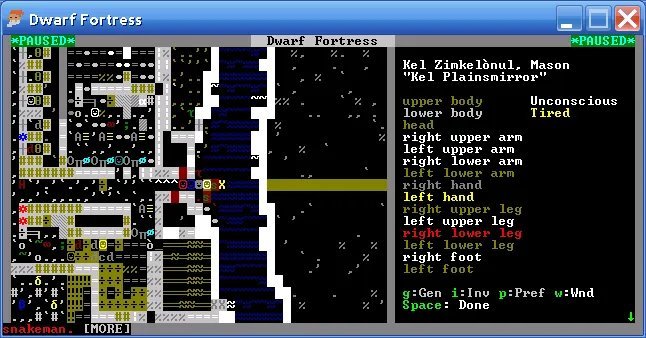
"In an abstract world, cats don’t die from licking beer off their paws. This kind of unforeseen coincidence wouldn’t happen in the first place... It can only happen in a mechanical world."
This highlights why tech fields like AI development resist deep simulation—unpredictable emergent behaviors abound. Yet, as with the vomiting cats, these chaotic outputs reveal the system's true structure and force refinement of entities and rules.
The Path Forward for Tech and Science
Mature sciences and robust technologies share a core requirement: moving beyond naming phenomena to defining the constituent parts and governing principles. For AI, this means probing whether neural networks reflect cognitive entities or are merely powerful function approximators. For biology, it demands tools revealing deeper genetic/protein interactions. Psychology's transformation hinges on finding its "base pairs of the mind"—whether they number 5, 118, or 10,000. The journey from alchemy to chemistry wasn't swift, but its destination—a universe explained by knowable parts—remains the gold standard for understanding complex systems, biological or digital.
Cite: Slime Mold Time Mold. “What Makes a Mature Science.” Asimov Press (2025). https://doi.org/10.62211/26jw-08ok
Comments
Please log in or register to join the discussion