As synthetic biology advances with cerebral organoids and AI systems push boundaries, defining consciousness becomes a critical yet elusive challenge. This article explores why debates over consciousness in assembloids, bots, and babies hinge not just on science but on deep semantic and philosophical questions, using jazz music and biological classification as revealing analogies.
In a Stanford University lab, researchers fuse cerebral organoids—self-organizing clusters of human-derived cells—into 'assembloids' that mimic neural pathways. These creations, alongside increasingly sophisticated AI, ignite urgent questions: Could they possess consciousness? The answer isn't just about technology or biology; it's tangled in centuries-old debates over what consciousness even means. As Geoffrey Hinton speculates about AI sentience and ethicists grapple with neonatal awareness, this puzzle forces us to confront whether consciousness is a fixed scientific reality or a malleable human construct.
The Distribution Problem: From Organoids to AI
Cerebral organoids, grown from human stem or fetal cells, now model complex brain functions. Sergiu Pasca's team, for instance, has developed assembloids simulating sensory neural circuits. Similarly, AI systems exhibit behaviors that blur the line between programmed responses and genuine experience. Yet consciousness debates extend beyond synthetic creations to animals like octopuses or bees, and even human infants. As the article notes, 'Most discussion... has focused on how we might identify consciousness in systems that are very different from “us”.' But first, we must resolve a more fundamental issue: What are we asking when we label something 'conscious'?
Defining the Undefinable: Synonyms and Pointing Fail Us
'Consciousness' is often reduced to synonyms like 'awareness,' 'sentience,' or Thomas Nagel's 'something it is like to be you.' But these are circular—they don't escape the term's ambiguity. Alternatively, philosophers like David Chalmers define it through examples: 'the sound of a clarinet, the smell of mothballs.' This 'definition by pointing' assumes introspection reveals consciousness's essence, much like geometry defines a triangle. Yet this 'manifest understanding' falters when applied to novel entities. If we can't agree on whether a jazz improvisation qualifies as 'jazz,' how can we decree what counts as consciousness?
Jazz as a Metaphor: The Case for Conventionalism
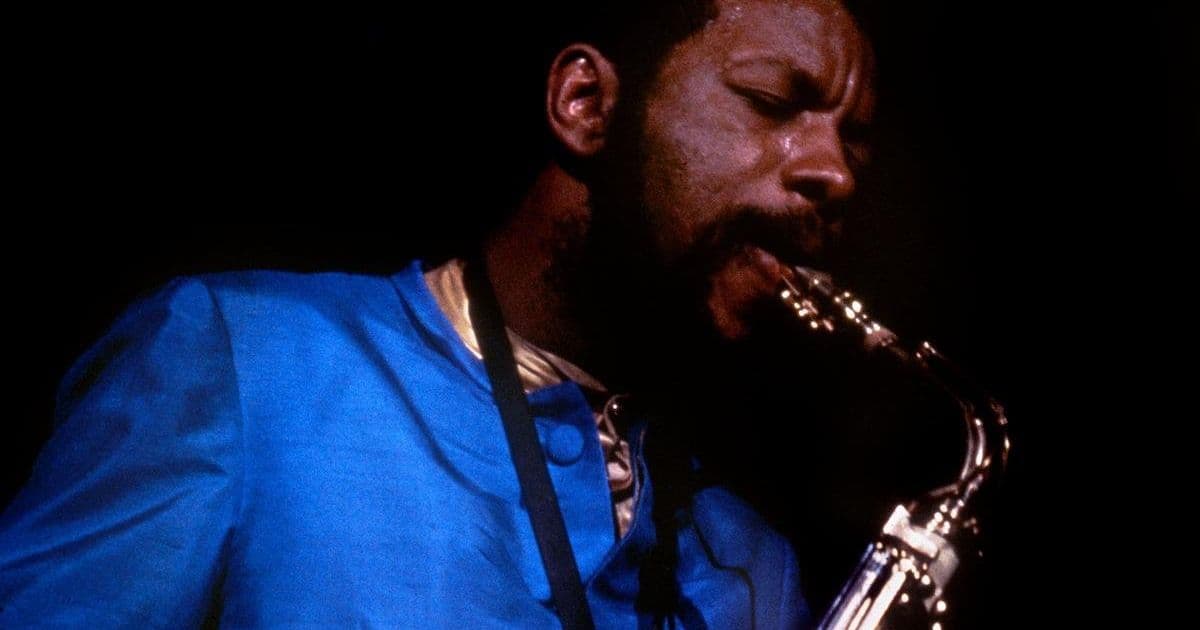
Jazz history exposes consciousness's semantic quagmire. When Ornette Coleman released The Shape of Jazz to Come in 1959, critics like Dizzy Gillespie dismissed it: 'I don’t know what he’s playing, but it’s not jazz.' Debates over bebop or swing weren't about musical notes but boundaries—whether innovations fit a category governed by 'family resemblances' rather than fixed rules. As the source explains, 'The concept of “jazz”... is heavily dependent on our decisions.' Similarly, consciousness might be a 'conventional concept,' where societal norms, not empirical facts, determine its application. This view lets ethics drive ascriptions: Grant consciousness to newborns for legal protections; deny it to AI to avoid moral dilemmas. But is consciousness really as arbitrary as jazz?

Dolphins and Natural Kinds: A Path to Scientific Essence
Contrast jazz with biological classification. Aristotle puzzled over dolphins, noting their mammalian traits like lungs and live births, yet he grouped them separately from land mammals. It took Linnaeus's 18th-century taxonomy to recognize cetaceans as mammals—a 'joint in nature' revealed by science, not convention. This 'natural kind' view suggests consciousness has an underlying essence, discoverable through neuroscience. As the article argues, 'Empirical investigation is needed to reveal what it is to be conscious.' Until then, we're like Aristotle at his lagoon, observing without full understanding. For tech leaders, this underscores that AI and organoid research could uncover consciousness's mechanisms, transforming ethics and design.
Why This Matters for Tech and Biology
The consciousness debate isn't academic hair-splitting—it shapes real-world decisions. Assigning consciousness to assembloids could halt research or demand new ethical frameworks; denying it in advanced AI might ignore emerging risks. As synthetic biology and machine learning evolve, developers must navigate this semantic minefield. Philosophy alone won't solve it, but ignoring it risks building systems with unintended moral weight. The quest to define consciousness reminds us that technology doesn't exist in a vacuum; it's woven into humanity's oldest questions about identity and existence. Perhaps, like jazz, consciousness thrives on improvisation, challenging us to rethink the rules as we create the future.
Source: Adapted from 'How jazz and dolphins can help explain consciousness'' on Aeon.
Comments
Please log in or register to join the discussion