A sonnet about the Apollo Guidance Computer code reveals a profound tension between technological permanence and human impermanence, where a single line of temporary code outlasts the civilization that created it.
The Codeless Code presents a haunting meditation on technological legacy through Case 234: Ozymandias. The nun Hwídah's sonnet, inspired by the actual Apollo Guidance Computer code for Apollo 11, transforms a technical artifact into a philosophical statement about the nature of what we build and what endures.
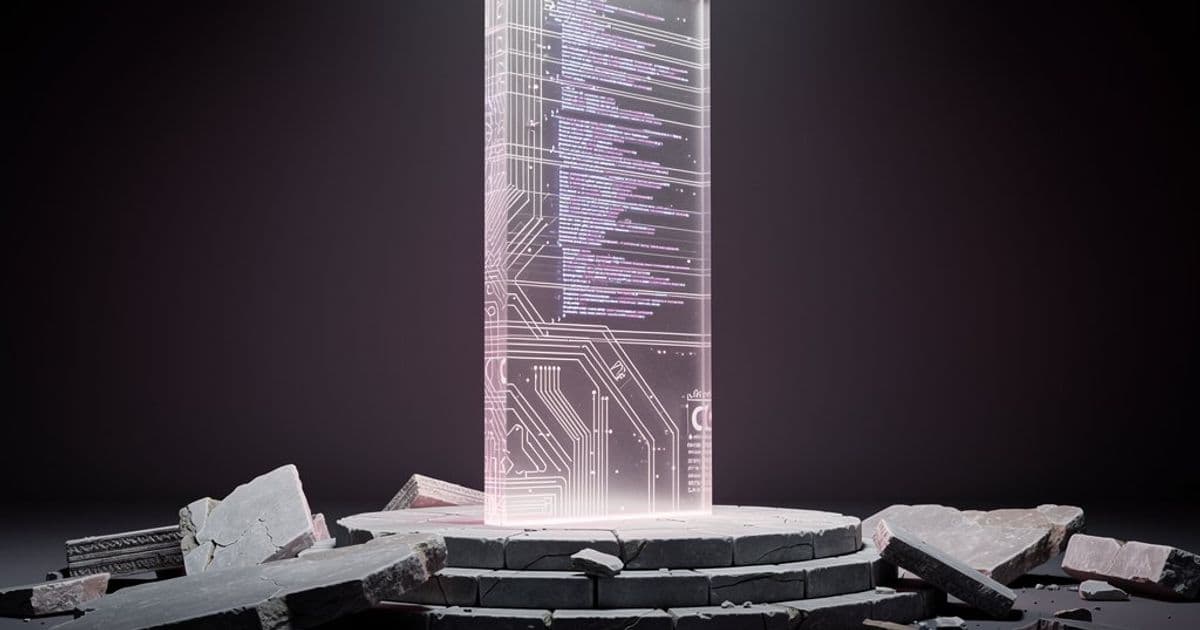
The poem's central image—a "stack of printouts, tall as any man" containing "ten thousand crumbling pages"—immediately establishes the scale and fragility of this digital monument. The code that "steered a ship through blackness to the moon" now exists only in decaying printouts, its original hardware long since ruined. This physical decay mirrors the obsolescence of the language itself, which is "unused in this late year." Yet within this vast, forgotten system, one line persists: # TEMPORARY, I HOPE HOPE HOPE. The comment, meant to be temporary, has become the most permanent artifact of all—outlasting the mission, the hardware, and even the programming language itself.
This paradox speaks to a fundamental truth about software development: our most temporary solutions often become our most enduring legacies. The Apollo Guidance Computer, which guided humanity to the moon, contained approximately 145,000 lines of code written in assembly language. Much of it was meticulously crafted, reviewed, and tested. Yet what the poem highlights is not the triumphant final code, but a single comment expressing doubt about a temporary fix. This # TEMPORARY marker represents the countless compromises, workarounds, and "kludges" that permeate every complex system—those moments when engineers must choose between perfect solutions and practical deadlines.
The sonnet's structure mirrors this tension between permanence and impermanence. It follows Shelley's unusual rhyme scheme (ABABACDCEDEFEF) but deliberately breaks it in the penultimate line, just as the code breaks its own promise of temporariness. The final image—"a vacant moon flies past"—suggests that while the moon remains, the human endeavor that reached it has faded. The code that once navigated space now navigates only memory.
What makes this reflection particularly poignant is its connection to real historical artifacts. The actual Apollo Guidance Computer code, preserved in repositories like the Virtual AGC Project, contains similar comments and temporary fixes. The code that landed Apollo 11 on the moon included emergency patches, workarounds for hardware limitations, and yes, comments expressing uncertainty about their longevity. These weren't bugs or failures; they were necessary adaptations in an environment where perfection was impossible and deadlines were absolute.
The poem's title, referencing Shelley's "Ozymandias," invites us to consider technological hubris. The ancient king's boast—"Look on my Works, ye Mighty, and despair!"—finds its echo in the temporary comment that outlasted the Works themselves. Yet unlike Shelley's poem, which emphasizes the complete erasure of the tyrant's legacy, Hwídah's sonnet suggests a different kind of immortality. The code doesn't disappear; it transforms. It becomes folklore, a story told to new generations of engineers about the nature of their craft.
This transformation reveals something crucial about how we preserve technological knowledge. The Apollo Guidance Computer code survives not because it was perfect, but because it was significant. It represents a moment when humanity extended its reach beyond Earth. The temporary comment survives because it captures the human element—the doubt, the hope, the acknowledgment that even our greatest achievements are built on imperfect foundations.
For contemporary software developers, this sonnet serves as both warning and comfort. It warns that our most careful architectural decisions may be forgotten, while our quick fixes may become legendary. It comforts by suggesting that imperfection is not failure but humanity. The # TEMPORARY comment isn't a flaw in the code's legacy; it's the most authentic expression of its creation.
The poem also speaks to the broader question of what we choose to preserve. We save the code that worked, the systems that succeeded, the elegant solutions. But we also preserve the comments that express doubt, the temporary fixes that became permanent, the kludges that saved the day. These artifacts tell a richer story than the clean, final version ever could. They reveal the process, not just the product—the human struggle behind the technological triumph.
In an age where software is increasingly ephemeral—deployed, updated, and replaced in cycles measured in weeks rather than decades—the Apollo Guidance Computer code stands as a reminder that some digital artifacts can achieve a kind of permanence. Not because they were designed to last, but because they mattered. The temporary comment that became permanent serves as a monument not to human perfection, but to human persistence.
The sonnet's final image—the vacant moon flying past—suggests that the moon itself is indifferent to our achievements. It doesn't remember the code that brought us there. But we do. And in remembering, we acknowledge that our technological legacy is not built on flawless code, but on the collective hope that our temporary solutions might, against all odds, become something that endures.
The Codeless Code's Case 234 thus becomes more than a poem about old code. It becomes a meditation on the nature of creation itself—the understanding that everything we build is temporary, yet we build anyway. The comment # TEMPORARY, I HOPE HOPE HOPE is not just a note in a program; it's a prayer to the future, a hope that what we create might matter, even if only for a moment. And sometimes, against all logic, that moment becomes permanent.
Comments
Please log in or register to join the discussion