Java's journey from a small embedded systems project to one of the world's most influential programming languages, shaped by key innovations and strategic decisions.
Java's story begins in 1991 at Sun Microsystems, where James Gosling and his team embarked on a project initially named Oak (after an oak tree outside Gosling's office). The original goal was pragmatic: create a language for embedded systems that could run reliably across different hardware platforms.

The Birth of WORA
The breakthrough came with the Java Virtual Machine (JVM), which enabled the revolutionary "Write Once, Run Anywhere" (WORA) concept. This wasn't just marketing hype—it solved a real problem. Developers could write code once and deploy it anywhere with a JVM, eliminating the painful platform-specific adaptations that plagued software development.
When Java officially launched in 1995, it arrived at a pivotal moment. The web was exploding, and Java's ability to run in browsers through applets made it immediately relevant. But Java's ambitions extended far beyond client-side animations.
Platform Evolution
The late 1990s saw Java mature into a comprehensive ecosystem. Sun introduced three distinct platforms:
- J2SE (Java 2 Standard Edition): For desktop and server applications
- J2EE (Java 2 Enterprise Edition): For large-scale enterprise systems
- J2ME (Java 2 Micro Edition): For mobile and embedded devices
This strategic segmentation allowed Java to target everything from enterprise banking systems to mobile games, establishing its versatility.
Enterprise Domination
Java's rise in enterprise computing was no accident. Its combination of platform independence, strong typing, and robust libraries made it ideal for mission-critical applications. Banking systems, e-commerce platforms, and large-scale web applications adopted Java en masse.
The language's object-oriented design, automatic memory management, and extensive standard library reduced development complexity while maintaining performance through innovations like the Just-In-Time (JIT) compiler.
The Android Pivot
When Google chose Java as the foundation for Android development, it seemed like Java's dominance would continue indefinitely. The Android SDK used Java syntax and concepts, bringing Java to billions of mobile devices. This decision cemented Java's relevance in the mobile era, even as native mobile development evolved.
Oracle Era and Beyond
In 2010, Oracle's acquisition of Sun Microsystems marked a new chapter. Oracle took over Java's stewardship, introducing a new release cadence and licensing model that sparked controversy but also brought more frequent updates.
Modern Java releases follow a six-month schedule, with Long-Term Support (LTS) versions like Java 8, 11, and 17 providing stability for enterprise users. Features like lambda expressions (Java 8), the module system (Java 9), and pattern matching (Java 17) demonstrate Java's continued evolution.
Core Strengths That Endure
Java's longevity stems from several fundamental characteristics:
Platform Independence: The JVM abstraction remains powerful, allowing Java to run on everything from mainframes to microcontrollers.
Object-Oriented Design: Java's class-based OOP model provides structure for large applications while remaining accessible to newcomers.
Security and Robustness: Built-in security features, strong typing, and exception handling make Java suitable for sensitive applications.
Multithreading: Native support for concurrent programming helps Java handle modern multi-core processors effectively.
Performance: While not the fastest language, JIT compilation and runtime optimizations provide excellent performance for most workloads.
The Ecosystem Factor
Java's success isn't just about the language—it's about the ecosystem. The Java Community Process (JCP) allows community input on standards. Frameworks like Spring, Hibernate, and Apache projects provide battle-tested solutions. The vast library ecosystem means developers rarely need to reinvent wheels.
Looking Forward
Java faces challenges from newer languages like Go, Rust, and Kotlin (which runs on the JVM). However, Java's enterprise entrenchment, massive talent pool, and continuous improvement suggest it will remain relevant for decades.
The language that began as Oak for embedded systems has become the backbone of enterprise computing, mobile development, and countless other domains. Its journey from 1991 to today illustrates how technical excellence, strategic positioning, and ecosystem development can create lasting technological impact.
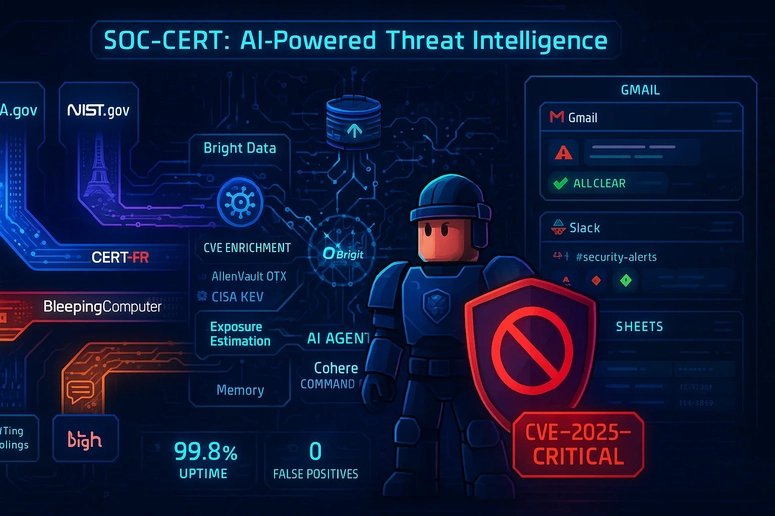
Bright Data and n8n have partnered on an AI Agents Challenge, showcasing modern automation possibilities that build on the foundations Java helped establish.
Comments
Please log in or register to join the discussion