
As the Trump administration prepares to unveil its AI Action Plan, a comprehensive timeline reveals a dramatic shift from safety-focused governance to unfettered innovation. With sweeping reversals of Biden-era protections, military contracts with AI giants, and a $92 billion infrastructure investment, the U.S. is betting big on AI dominance—but at what cost to responsible development?
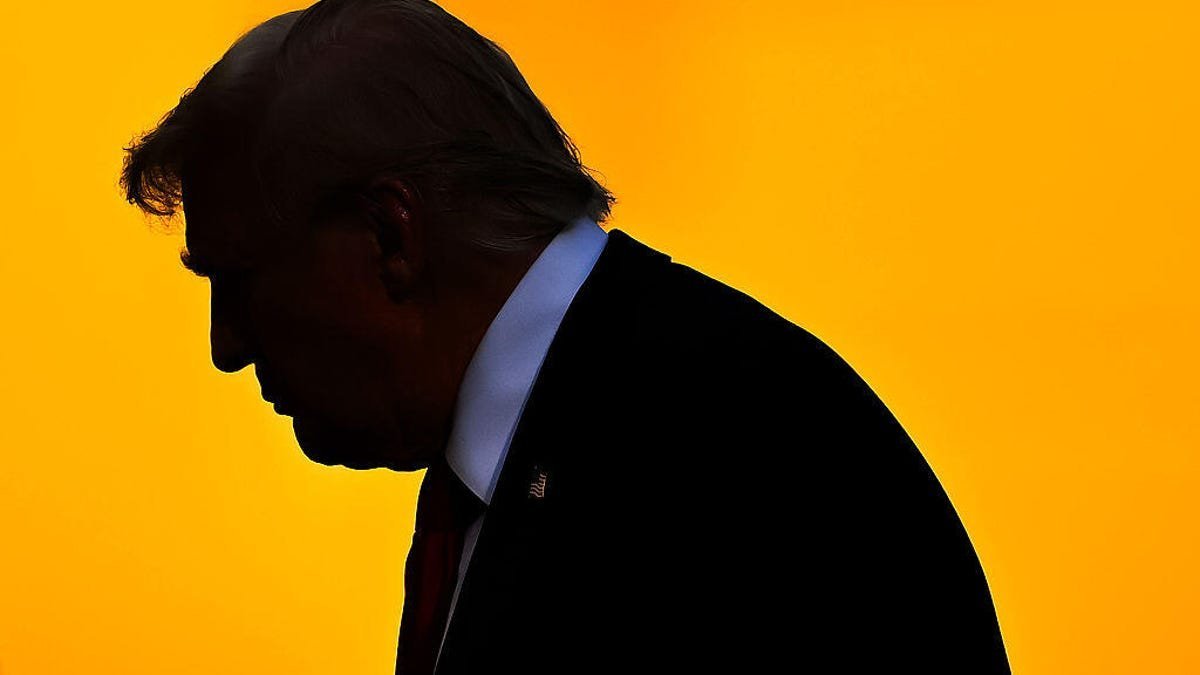
Main article image: David Ramos / Getty Images
When the Trump administration unveils its AI Action Plan this Wednesday, it will cap a whirlwind seven months that have fundamentally reshaped America's approach to artificial intelligence. This isn't merely a policy adjustment—it's a philosophical earthquake that prioritizes breakneck innovation over safeguards, setting the stage for a high-stakes technological arms race with global implications.
The Safety-to-Speed Pivot
The tectonic plates began shifting on day one of Trump's second term, when he scrapped President Biden's AI executive order—a comprehensive framework emphasizing safety, privacy, and ethical guardrails. In its place emerged an executive directive with conspicuous omissions: terms like "safety," "consumer protection," and "privacy" vanished from the lexicon. As Peter Slattery of MIT's FutureTech team warned ZDNET at the time, this rollback risked creating conditions for a catastrophic "Chernobyl moment" in AI that could erode public trust.
This philosophical pivot manifested in concrete actions:
- Dismantling oversight infrastructure: Staff and grant funding were slashed at the US AI Safety Institute (later rebranded as the "pro-innovation" Center for AI Standards and Innovation)
- Military embrace: $200M Department of Defense contracts were fast-tracked with OpenAI, Google, Anthropic, and xAI
- Talent pipeline erosion: University AI research grants were cut despite rhetoric about workforce development
"For far too long, censorship and regulations have been used under the guise of national security. Innovators will no longer be limited by these standards," declared Commerce Secretary Howard Lutnick during the safety institute's rebranding—a statement that encapsulates the administration's deregulatory zeal.
The Global Chessboard
The administration's actions reveal a singular focus: outpacing China in the AI race at all costs. The abrupt reversal of Nvidia's chip ban to China, allowing advanced semiconductors to flow to competitors like DeepSeek, epitomizes this strategy. As a senior White House advisor explained to ZDNET, the calculus is simple: Chinese market revenue fuels R&D that maintains U.S. technological supremacy.
This geopolitical maneuvering extends to diplomatic channels. When Vice President JD Vance attended France's AI Action Summit in February, he notably excluded safety institute representatives and instead advocated for dismantling international safeguards—positioning America as the defiant champion of unfettered innovation.
Developer Dilemmas in the New Landscape
For technologists, this policy shift creates paradoxical realities:
- Upskilling emphasis without support: While executive orders promoted AI apprenticeships and education, simultaneous cuts to related grants created what University of Pennsylvania's Danaë Metaxa called "something especially offensive"—rhetoric disconnected from resource allocation
- Regulatory fragmentation: Failed attempts to preempt state-level AI laws (like New York's RAISE Act) leave developers navigating a potential patchwork of regulations
- Self-policing pressure: With government safety oversight diminished, researchers from leading AI firms recently formed ad hoc coalitions to preserve critical monitoring practices like chain-of-thought analysis
The $92 Billion Bet
The administration's most concrete commitment came in July: a $92 billion investment in Pennsylvania's AI and energy infrastructure. This massive bet aims to solve the dual challenges of computational demand and power consumption that threaten to throttle AI's growth—a physical manifestation of the "America First" AI strategy.
The Unanswered Questions
As Wednesday's policy announcement looms, the tech community watches for resolution on critical issues:
- Will the federal government move to permanently preempt state AI regulations?
- How will military-civilian AI collaboration boundaries be defined?
- Can innovation-centric policies address documented risks like workforce displacement and critical thinking erosion?
The administration has made its priorities clear: dominance over deliberation, velocity over vigilance. In this high-stakes experiment, America isn't just betting on technological leadership—it's gambling that progress won't outpace our ability to manage its consequences. The silicon chips are down, and the world is watching.
Comments
Please log in or register to join the discussion