Markdown evolves from a simple writing tool to a web standard as Cloudflare, Vercel, and Laravel embrace it for AI efficiency, echoing RSS's legacy while avoiding AMP's pitfalls.
In 2004, John Gruber created Markdown as a lightweight alternative to HTML for web writers. Two decades later, this unassuming markup language is experiencing an unexpected renaissance that echoes RSS's early promise. What began as a tool for bloggers formatting simple documents is now being positioned as the antidote to AI's voracious appetite for web content.
The catalyst emerged in early 2026 when Cloudflare announced "Markdown for Agents," a system allowing websites to serve simplified Markdown versions of pages through content negotiation headers. Within days, Laravel Cloud and Vercel followed suit. Vercel's case was particularly compelling: "A typical blog post weighs 500KB with all the HTML, CSS, and JavaScript. However, the same content as Markdown is only 2KB. That's a 99.6% reduction in payload size."

This addresses a critical pain point. As AI agents crawl websites at unprecedented scale, many publishers face what Cloudflare engineer Robin Marx described as "the AI-generated hug of death." Legacy PHP forums and content management systems buckle under the weight of dynamic page requests. Markdown offers refuge—static files that bypass resource-intensive rendering while preserving semantic meaning.
Critics like SEO veteran Jon Henshaw initially drew parallels to Google's failed AMP initiative: "It feels like AMP all over again." Yet key differences emerged. Unlike AMP's proprietary constraints, Markdown leverages existing HTTP standards (the Accept header) and requires no new infrastructure. As WordPress founder Matt Mullenweg noted while advocating for its adoption: "It's literally using negotiation headers web servers already support, not forcing folks to learn something new."
The implications extend beyond AI optimization. Markdown inherently resists the modern web's complexity creep. Where contemporary pages bury content under layers of JavaScript and tracking scripts, Markdown enforces semantic purity. This isn't merely machine-friendly—it's human-friendly. Visually impaired users have long benefited from Markdown's clean structure, and the format naturally adapts to emerging technologies like the AT Protocol.
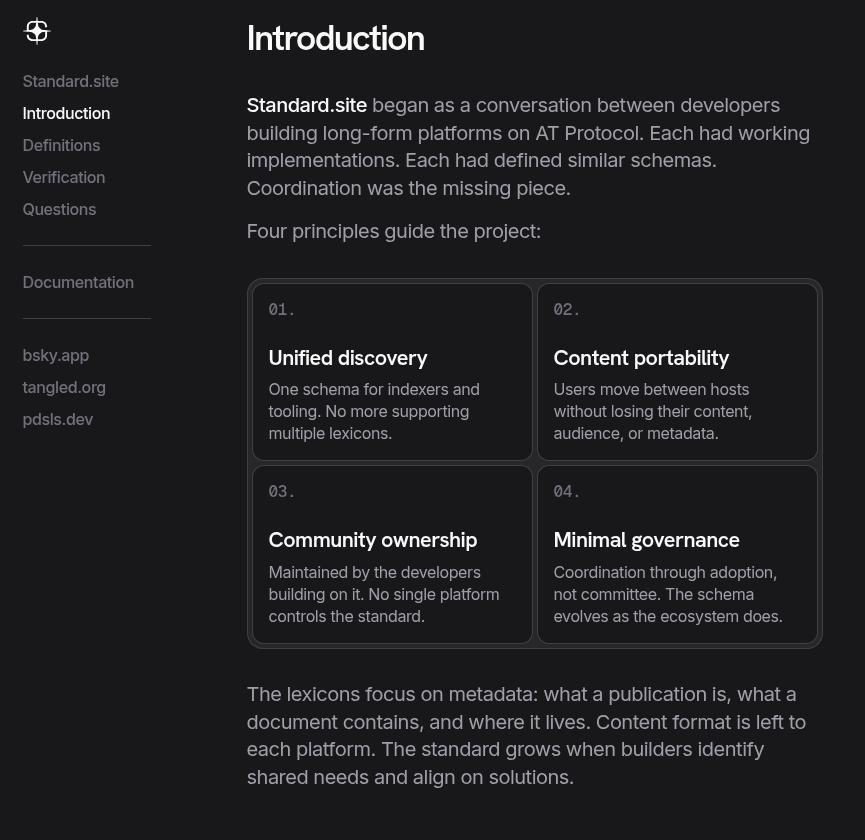
Evidence of this broader potential appears in projects like Standard.site, which uses Markdown as foundational glue for the AT Protocol's decentralized content network. Developer tools like Sequoia demonstrate how static Markdown sites can integrate with next-generation social platforms. "Genuinely cool to see this kind of collab happening," remarked Bluesky engineer Sarah Wang while demonstrating a 1,300-page Tedium archive migration.
Historically, Markdown's success stemmed from solving real problems: journalists needing rapid publishing, developers writing documentation, bloggers escaping WYSIWYG editors. Its 2026 resurgence solves new ones—server sustainability against AI traffic and content portability across evolving protocols. As Gruber reflected in a recent interview: "We built it to make writing for the web easier. That it might make reading the web easier twenty years later? That's the beautiful part."
The parallel to RSS is instructive. Both began as pragmatic solutions that grew into movements. Where RSS faltered under platform consolidation, Markdown thrives through adaptability. It requires no syndication ecosystem, just a commitment to cleaner content. In an era of AI abstraction layers, Markdown becomes the textual equivalent of a circuit diagram—showing the wiring beneath the decorative facade.
For publishers, the choice isn't binary. As Cloudflare's documentation emphasizes, Markdown versions complement rather than replace traditional sites. But the economic argument is compelling: serving static Markdown to AI agents could save publishers thousands in unwarranted hosting fees. More profoundly, it suggests a web where content outlives presentation—a return to the document-centric vision that shaped the early internet.
Markdown's second act proves that good tools find new purposes. What began as John Gruber's weekend project now shoulders the weight of AI's demands while quietly advancing a more accessible, portable, and efficient web. In 2026, we're not just writing in Markdown—we're rebuilding the internet with it.
Comments
Please log in or register to join the discussion