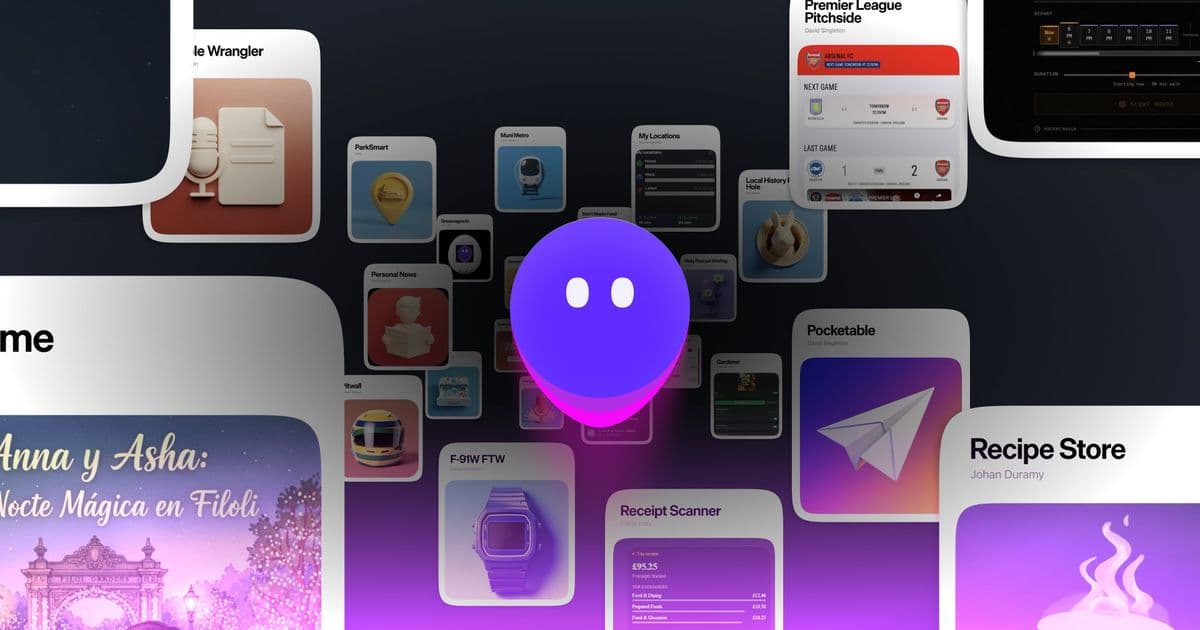
David Singleton's Dreamer launches in beta, promising to enable both developers and non-technical users to build complex agentic AI applications through visual workflows and managed infrastructure.
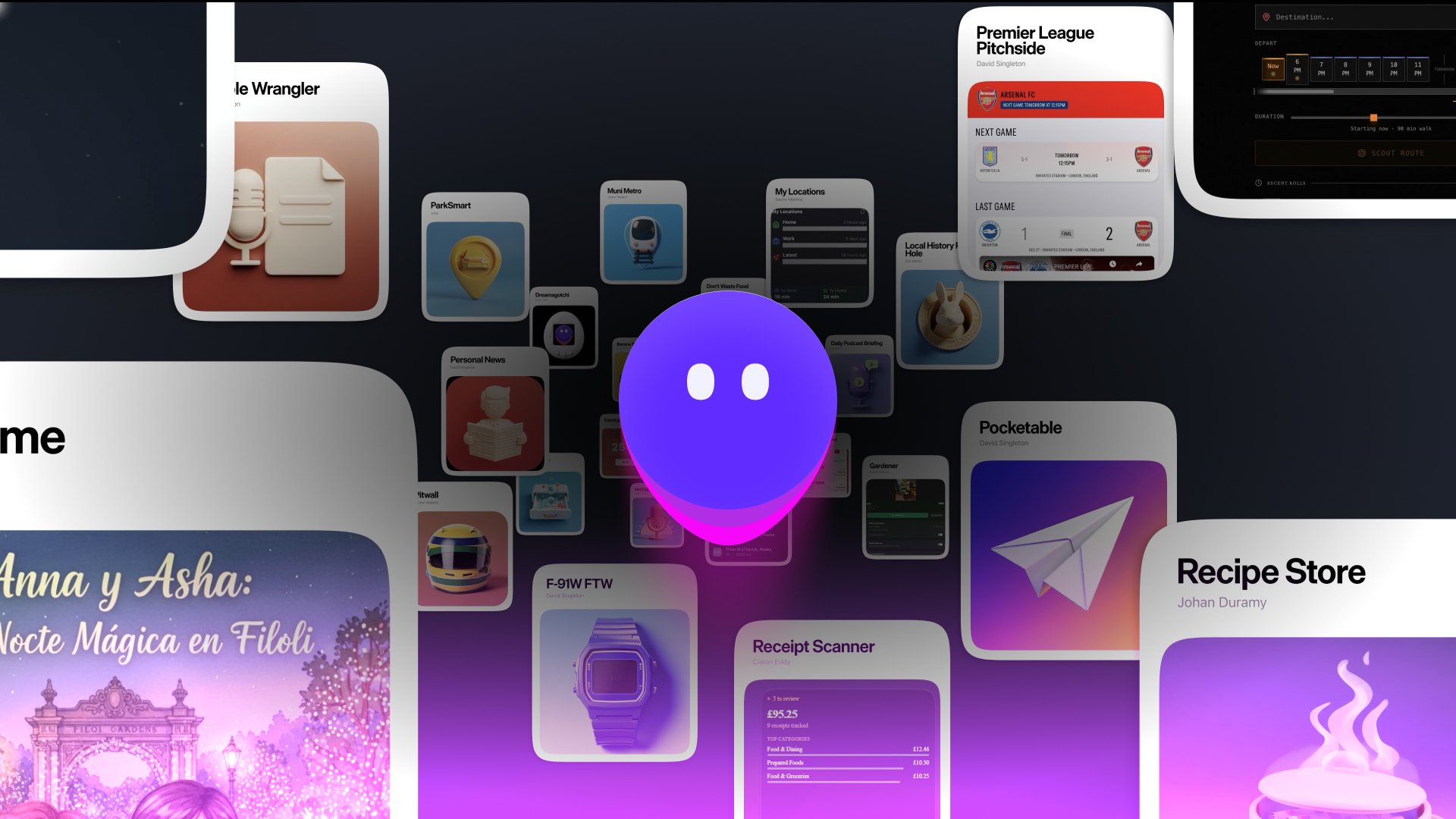
Dreamer, a new platform founded by former Stripe CTO David Singleton and ex-Facebook/Oculus executive Hugo Barra, has launched in public beta. The startup aims to simplify creation of agentic AI applications – systems where multiple AI agents collaborate dynamically to solve complex tasks. According to Singleton's blog post, Dreamer targets "technical and non-technical users alike," positioning itself against specialized tools like LangChain or Microsoft Autogen.
What Dreamer Claims
Dreamer's core proposition centers on abstracting away infrastructure complexity. Key features include:
- Visual Agent Canvas: A drag-and-drop interface for designing agent workflows without code
- Prebuilt Agents: Templates for research, coding, data analysis, and content generation
- Managed Orchestration: Automatic handling of agent state, memory, and tool invocation
- Multi-Modal Support: Integration with vision, text, and code models (initially OpenAI and Anthropic)
The platform promises real-time collaboration features reminiscent of Figma, allowing teams to co-build agent systems. As Barra noted: "We’re eliminating the scaffolding work so creators focus on agent behavior."
Technical Substance Behind the Hype
Dreamer’s architecture introduces two notable technical approaches:
- Stateful Agent Containers: Each agent runs in an isolated environment with persistent memory, addressing the statelessness limitations of traditional LLM APIs. This enables long-running tasks like multi-step research.
- Unified Tool Protocol: A standardized interface for connecting agents to databases, APIs, and custom tools, reducing integration boilerplate.
However, the platform stops short of true "no-code" functionality. Non-technical users still need basic logic understanding to design effective workflows, as evidenced by the beta’s Python SDK for advanced customization. Singleton acknowledges this in his post: "You'll hit limitations quickly without some scripting knowledge."
Practical Limitations and Trade-offs
Early testing reveals several constraints:
- Cost Scaling: Complex workflows with multiple agents quickly consume computational resources. Singleton admits pricing is "not finalized" but hints at usage-based billing.
- Debugging Complexity: When agents fail or produce unexpected outputs, tracing errors through visual workflows proves challenging compared to code-based stacks.
- Model Agnosticism Gaps: Current integrations favor commercial APIs (OpenAI/Anthropic), with limited support for open-source models like Llama 3.
Benchmarks provided show Dreamer outperforming vanilla AutoGPT on coding tasks but lagging behind customized LangChain implementations in accuracy:
| Task | Dreamer Success Rate | LangChain Success Rate |
|---|---|---|
| Research + Summarize | 78% | 92% |
| API Integration | 65% | 89% |
| Multi-Agent Coding | 82% | 76% |
Market Context
Dreamer enters a crowded agent-framework space dominated by:
- Developer tools (LangChain, LlamaIndex)
- Enterprise platforms (Microsoft Autogen, Google Vertex AI Agents)
- Open-source alternatives (AutoGPT)
Its differentiation lies in accessibility – but this advantage may erode as competitors improve UX. Anthropic’s new Agent Hub and OpenAI’s upcoming workflow tools suggest major players are converging on similar abstractions.
Realistic Assessment
Dreamer delivers legitimate innovation in agent orchestration, particularly its state management and collaboration features. For startups prototyping AI products, it could significantly accelerate development cycles. However, claims of enabling "non-technical" users appear overstated based on beta complexity. The platform’s success hinges on addressing debugging challenges and proving cost efficiency at scale.
As Singleton concedes: "We’re shipping early because agentic AI needs real-world testing." Developers can apply for beta access at dreamer.xyz.
Comments
Please log in or register to join the discussion