A stark contrast is emerging between organizations leveraging AI's full potential through advanced tooling and those limited by enterprise-grade solutions like Microsoft Copilot. The productivity gap reveals fundamental differences in technical infrastructure, API accessibility, and workflow design.
The AI adoption landscape is splitting into two distinct camps with dramatically different productivity outcomes. On one side: finance professionals using Claude Code to convert complex Excel models into Python scripts complete with Monte Carlo simulations. On the other: enterprise workers constrained to Microsoft Copilot's limited interface, struggling with basic spreadsheet tasks.
The Power User Advantage
Non-technical professionals in finance, operations, and analytics are achieving outsized results by combining:
- CLI-based AI tools like Claude Code (Anthropic's coding assistant)
- Local execution environments with Python/R/Julia
- API-connected workflows to internal systems
These users bypass traditional productivity software entirely, generating reports and analyses through natural language prompts to AI agents that interface directly with data sources. One finance executive converted a 30-sheet Excel model to a Python-based system with unit tests in just 2-3 prompts using Claude Code.
The Enterprise AI Trap
Microsoft's Copilot exemplifies why large organizations struggle:
- Locked-down environments prevent local script execution
- Legacy systems lack modern APIs for AI integration
- Security policies block sandboxed agent workflows
As Alderson notes: "Microsoft itself is rolling out Claude Code to internal teams, despite significant ownership of OpenAI." This reveals the limitations of enterprise-grade AI solutions constrained by:
- Aggressive resource limits (memory/CPU throttling)
- Poor code execution capabilities
- Lack of true agentic functionality
Infrastructure Divide
The technical chasm comes down to three key factors:
| Capability | Advanced Teams | Constrained Enterprises |
|---|---|---|
| Execution Environment | Local Python/R/Julia | Web-only Copilot/Gemini |
| System Integration | Modern APIs | Legacy GUI workflows |
| Security Model | Sandboxed dev environments | Total execution lockdown |
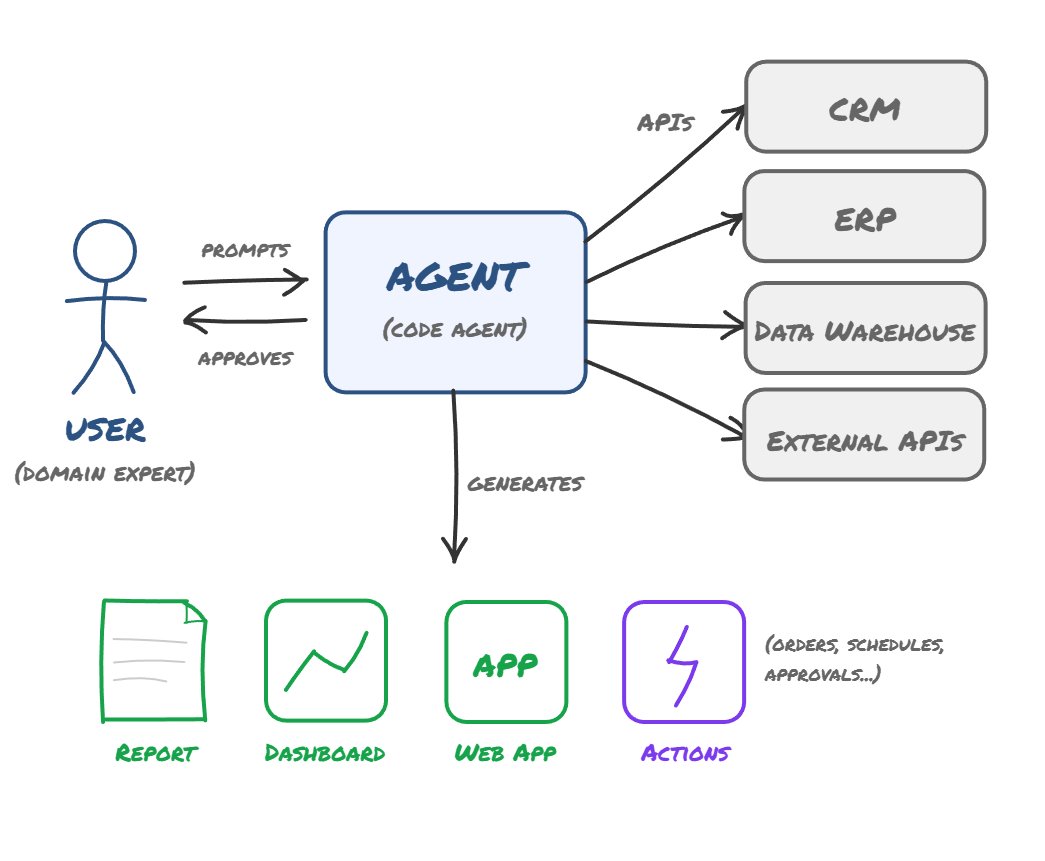
Path Forward for Enterprises
Organizations can bridge the gap by:
- Building internal APIs for core systems
- Deploying secure sandboxes (GitHub Codespaces-style)
- Training power users rather than relying on outsourced engineering
As Alderson observes: "The real leaps are being made organically by employees, not from top-down AI strategies."* Teams that understand their workflows can build more effective AI-assisted processes than external engineering teams.
The New Competitive Landscape
This divide creates unprecedented opportunities for agile organizations. A 10-person team with:
- API-connected systems
- Local execution capabilities
- AI power users
Can now outperform enterprises 100x their size still relying on Copilot-style interfaces. The future belongs to organizations that empower employees with proper tooling rather than restricting them with enterprise "solutions" that limit AI's potential.
Comments
Please log in or register to join the discussion