
A skeptical developer reluctantly tries an AI coding assistant and discovers unexpected productivity gains despite concerns about code quality and software bloat.
The relationship between software developers and AI coding assistants remains complex and emotionally charged. Julio Merino's personal experiment with Claude Code Pro provides a nuanced case study in how these tools shift development workflows, revealing both transformative potential and sobering limitations.

Merino, self-described as "grumpy" about AI coding trends, began his journey under organizational pressure. His initial skepticism stemmed from witnessing "vibe-coded PRs" filled with unnecessary features, code duplication, and superficial tests. Yet his week-long deep dive demonstrates how these tools excel at specific categories of work:
Domain Translation: When packaging software for NixOS (an unfamiliar ecosystem), Claude generated plausible nixpkgs configurations that Merino could refine using his packaging expertise from NetBSD and Fedora. This pattern repeated when creating an Emacs package for his ticket tool - Claude generated functional elisp code for a domain Merino understood conceptually but lacked implementation fluency in.
Mechanical Implementation: For his EndTRACKER project, Claude successfully implemented a comment deletion API and UI in Vue.js. More significantly, it handled the tedious process of replacing user agent strings with parsed metadata - a change requiring database migrations, new dependencies, and business logic updates.
Rapid Prototyping: At work, Merino used Claude to debunk a colleague's claim that an idea would require "6 months to implement" by generating a working 200-SLOC prototype in 30 minutes (20 for prompt crafting, 10 for generation).
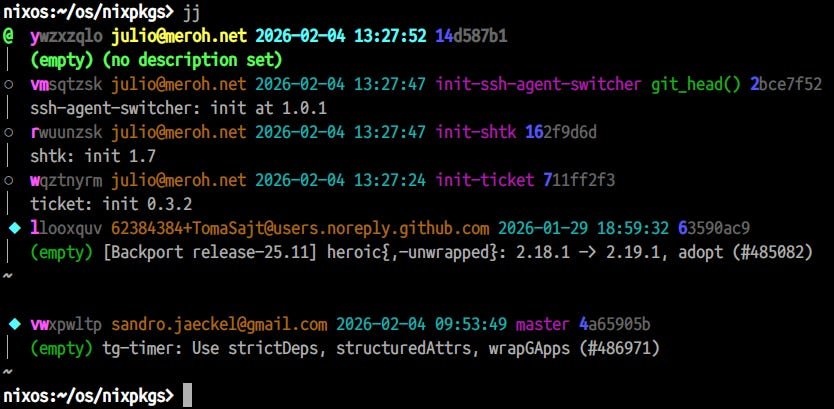
The workflow that emerged reveals AI's current sweet spot: Merino acted as architect and reviewer while Claude handled implementation drudgery. Particularly revealing was the 15-commit sequence for the user agent migration - Claude generated discrete steps that Merino then compressed into one coherent change after extensive iteration. This highlights AI's tendency toward fragmented solutions requiring human synthesis.
Three critical insights emerge from Merino's experiment:
The Energy Multiplier Effect Merino completed significant work during an energy-depleted week, noting that prompting Claude provided enough frictionless engagement to overcome motivational barriers. This "low-energy coding" capability suggests AI could fundamentally reshape when and how development occurs.
The Slop Factor Every successful implementation required substantial human refinement. Initial outputs consistently contained unnecessary features, misplaced logic, and inefficiencies. Merino observed that while Claude could generate functional systems like browsers or compilers, they invariably manifested severe bloat and performance issues when inspected closely.
Metric Distortion Danger The ease of generating numerous commits and PRs creates perverse incentives: "It'd have been trivial for me to inflate numbers at the expense of my reviewer's time and CI costs." This foreshadows organizational challenges where productivity metrics may become decoupled from actual value.
Merino concludes with cautious optimism, seeing Claude as a tool rather than a replacement. His experience suggests AI coding assistants thrive when:
- Applied to well-understood problems in unfamiliar domains
- Used for mechanical implementation of clear specifications
- Generating disposable code (prototypes/migrations)
- Supplementing low-energy work periods
Yet his grumpy core remains, warning that uncontrolled use will accelerate software bloat beyond current comprehension. The most significant takeaway might be that while AI changes what's possible, it doesn't change what's wise - all code still carries maintenance costs that require human judgment to evaluate. As Merino poignantly notes: "just because we now can create something doesn't mean we should."
Comments
Please log in or register to join the discussion