MIT researchers apply AI to decode the biomechanics of elite figure skating jumps, developing tools that could enable quintuple rotations while probing AI's potential for artistic evaluation.
Olympic figure skating embodies a paradox: performances must appear effortless while executing physics-defying feats. Athletes launch themselves upward, achieving rotational velocities exceeding 300 RPM before landing on a blade narrower than a pencil. At MIT's Sports Lab, researchers Jerry Lu and Anette "Peko" Hosoi are applying artificial intelligence to decode these biomechanical mysteries. Their work could push skating toward unprecedented five-rotation jumps while revealing how AI interprets human artistry.
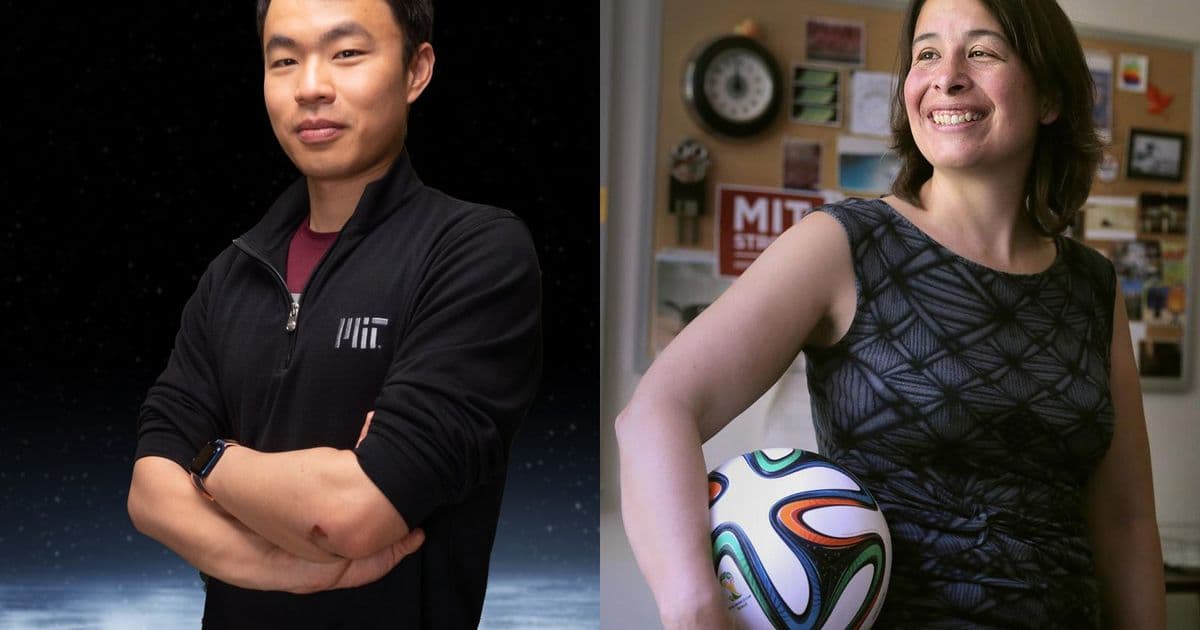
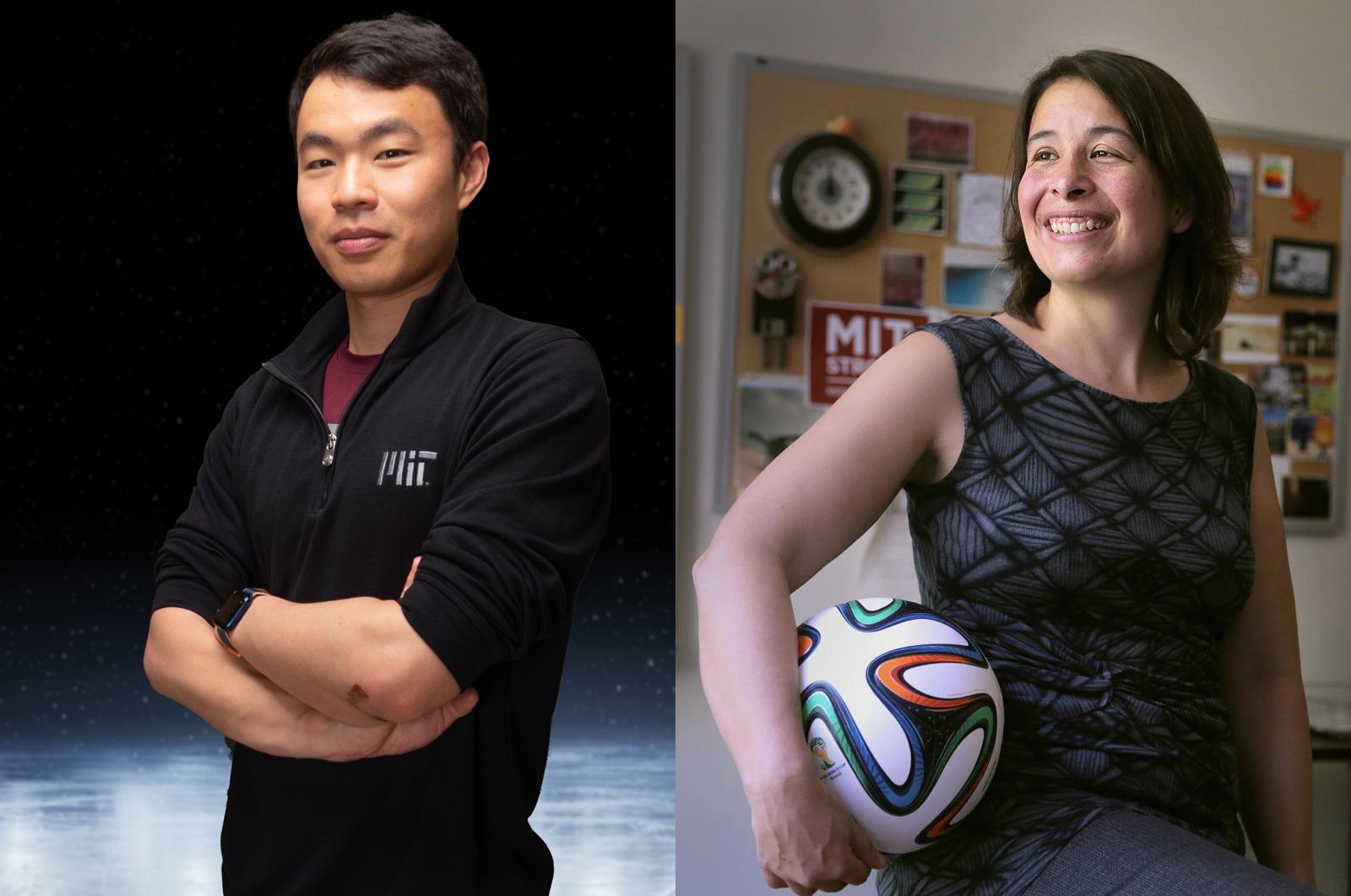
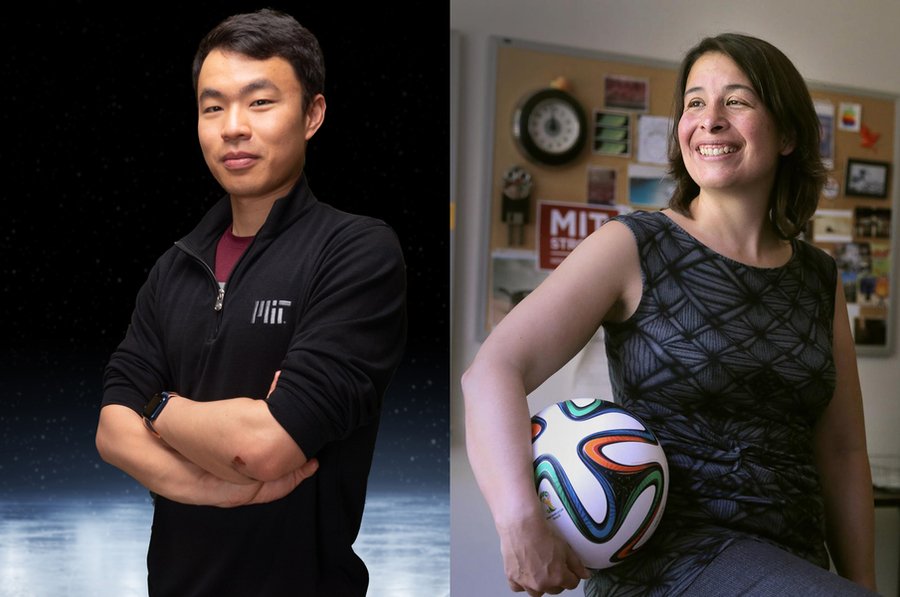 Jerry Lu (left) and Anette "Peko" Hosoi lead MIT's figure skating AI research.
Technical approach: Precision tracking without depth constraints Lu's OOFSkate system represents a specialized application of computer vision tailored to skating's unique demands. Unlike generic pose estimation tools that struggle with depth perception, OOFSkate focuses on quantifiable metrics unaffected by camera angles: jump height, rotation speed, and landing stability. The system processes standard video footage through convolutional neural networks trained on elite skater data, extracting key parameters:
- Rotation efficiency: Measures angular momentum conservation during flight
- Takeoff kinetics: Analyzes force application through ice contact
- Aerial trajectory: Calculates center-of-mass path and rotational axis
- Landing biomechanics: Assesses weight distribution and blade alignment
"Figure skating jumps present an ideal computer vision scenario," explains Hosoi, Professor of Mechanical Engineering. "Critical performance metrics—height, rotations, landing stability—require minimal depth data. This avoids the dimensionality penalty that plagues other sports analysis."
The system's mobile app generates immediate feedback, comparing a skater's metrics against historical data from Olympic champions. For example, it might reveal how adjusting knee flexion during takeoff could gain 5 degrees of rotation—potentially transforming quadruple attempts into landed quints.
 Lu demonstrates real-time analysis using tablet-based tools.
Real-world deployment: From training ice to broadcast booths Currently assisting Team USA skaters, OOFSkate's impact extends beyond practice sessions. Lu will implement the technology during NBC's 2026 Winter Olympics coverage to demystify scoring:
- Technical clarification: Visualizing why a jump received downgraded rotations
- Difficulty contextualization: Overlaying biomechanical data to show 40-inch jump heights
- Comparative analysis: Side-by-side metrics of current performances versus historic jumps
"Skaters battle perception bias," notes Lu. "The sport demands everything look easy, but our data reveals the extraordinary forces involved—up to 8 times body weight on landing. Broadcasting this helps audiences appreciate the athleticism behind the artistry."
The aesthetics frontier: Probing AI's artistic judgment Hosoi's new MIT Human Insight Collaborative research explores whether AI can meaningfully evaluate skating's artistic components. Using scoring data from international competitions, the team examines:
- Conceptual alignment: Do AI models use similar aesthetic frameworks as human judges?
- Expert-novice divergence: How do AI assessments compare to evaluations by judges versus casual viewers?
- Interpretability: Can AI articulate why a performance feels artistically compelling?
"We're testing whether AI merely mimics human judgments or develops genuine aesthetic understanding," Hosoi states. "Figure skating provides rare quantified artistic scores, letting us map reactions across expertise levels."
The quintuple horizon: Biomechanical boundaries Hosoi's calculations suggest five-rotation jumps are biomechanically achievable:
- Energy requirements: Quint rotations demand approximately 12% more vertical velocity than quads
- Rotation optimization: Tightening body position could reduce moment of inertia by 15%
- Landing tolerance: Requires perfect blade alignment within 2 degrees of ideal
"We'll see quints within this decade," Hosoi predicts. "Six rotations likely exceed human physical limits—the angular velocity needed would induce loss of consciousness. But five is within our biomechanical envelope."
As skating approaches this rotational frontier, MIT's work demonstrates how domain-specific AI systems can expand athletic potential while revealing unexpected insights about machine perception of human performance. The research continues at the MIT Sports Lab under Professor Hosoi's Mechanical Engineering leadership.
Comments
Please log in or register to join the discussion