Amateur Radio Direction Finding (ARDF) merges radio technology, orienteering, and athleticism into a competitive sport that's revitalizing amateur radio. This deep dive explores its technical foundations—from signal propagation to antenna design—and its role in nurturing future engineers and promoting STEM engagement globally.
In dense forests worldwide, competitors sprint between trees, ears tuned to faint radio signals, eyes scanning maps and compasses—all without GPS. This is Amateur Radio Direction Finding (ARDF), a dynamic sport where participants hunt hidden low-power transmitters using handheld receivers. Combining amateur radio expertise with orienteering and physical endurance, ARDF transforms abstract concepts like signal strength and antenna patterns into a visceral, high-stakes adventure. As one participant notes, it’s "an unforgettable experience to meet—when running from one hidden transmitter to another—a deer family or lonely hare."
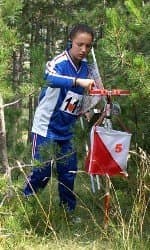
 An ARDF competitor locates a hidden 144 MHz transmitter, demonstrating real-time radio bearing techniques. (Source: IARU)
The Technical Engine Behind the Sport
At its core, ARDF is a masterclass in applied radio physics. Competitors deploy custom-built or modified receivers to detect transmitters operating on HF (e.g., 3.5 MHz) or VHF (e.g., 144 MHz) bands, often hidden across challenging terrain. Key technical skills include:
- Signal Propagation Analysis: Understanding how terrain and atmosphere affect HF/VHF waves to triangulate transmitter locations.
- Antenna Optimization: Using directional antennas (like Yagis) to measure signal strength and azimuth, turning abstract radiation patterns into actionable bearings.
- Morse Code Decoding: Transmitters often embed identifiers in Morse, requiring quick deciphering—a nod to radio’s analog roots.
"ARDF joins amateur radio skills like construction of transmitters and receivers, knowledge of HF and VHF propagation phenomena, and antenna patterns with orienteering and physical fitness," states the International Amateur Radio Union (IARU). This synergy demands rapid problem-solving akin to debugging code in real-time.
Beyond the Forest: ARDF’s Impact on Tech and Community
ARDF isn’t just a pastime—it’s a gateway to STEM. The sport attracts youth through local clubs and global championships, serving as a recruitment tool for amateur radio. Many seasoned engineers began as junior ARDF competitors, honing skills in signal processing and spatial reasoning that translate to careers in RF engineering, IoT development, or cybersecurity. For instance, the no-GPS rule emphasizes analog navigation, fostering resilience against jamming or system failures—a subtle lesson in robust system design.
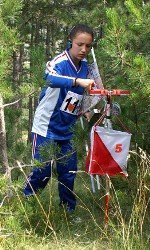
 A competitor uses a receiver tuned to 3.5 MHz, showcasing the sport’s reliance on lower-frequency bands for longer-range detection. (Source: IARU)
Globally, the IARU leverages ARDF to engage developing regions, promoting radio technology as both a hobby and a critical communication backbone during disasters. Events draw media coverage, demystifying amateur radio for the public and highlighting its innovation potential. In an era of digital abstraction, ARDF’s hands-on ethos—where theory meets mud, sweat, and antennas—reminds us that the most compelling tech experiences are often tactile, collaborative, and rooted in nature.
Comments
Please log in or register to join the discussion