The Trump administration is reportedly planning to exempt US hyperscalers from upcoming chip tariffs, with exemptions tied to TSMC's US investment commitments, according to Financial Times sources.
The Trump administration is preparing to shield major US technology companies from impending tariffs on semiconductor imports, with exemptions specifically tied to Taiwan Semiconductor Manufacturing Company's (TSMC) investment commitments in the United States, according to sources cited by the Financial Times.
The proposed policy represents a significant shift in the administration's approach to trade restrictions on critical technology components. Rather than imposing blanket tariffs on all chip imports, officials are considering a targeted exemption framework that would benefit companies like Amazon, Google, Microsoft, and Meta, provided they can demonstrate alignment with TSMC's US manufacturing expansion plans.
TSMC's US Investment as the Key Metric
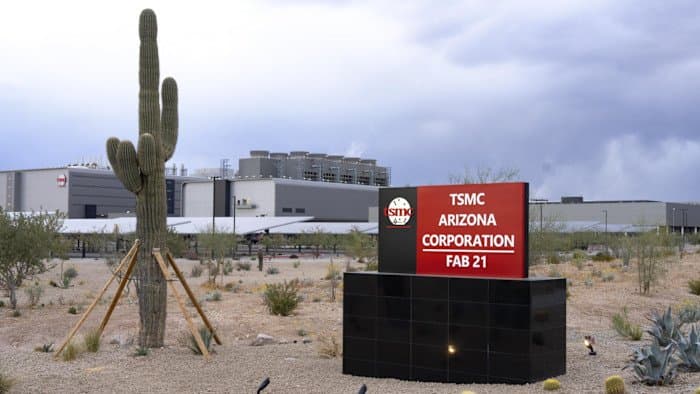
The exemption criteria would center on TSMC's substantial investments in American semiconductor manufacturing facilities. The Taiwanese chip giant has committed to building multiple fabrication plants in Arizona, with investments totaling billions of dollars. The administration appears to view these commitments as sufficient to ensure domestic chip production capacity, thereby reducing the need for protective tariffs.
This approach reflects a pragmatic recognition of the complex global semiconductor supply chain. Rather than attempting to force immediate reshoring of all chip production, which industry experts widely acknowledge would be impractical and economically disruptive, the administration is opting for a more nuanced strategy that rewards companies supporting domestic manufacturing expansion.
Industry Implications
For US hyperscalers, the potential exemptions could provide significant cost relief. These companies are among the largest consumers of advanced semiconductors, using them to power data centers, AI training clusters, and cloud computing infrastructure. Tariffs on imported chips would have substantially increased their operational costs and potentially slowed their AI development initiatives.
The policy also appears designed to strengthen US-Taiwan economic ties while simultaneously advancing domestic manufacturing goals. By linking tariff exemptions to TSMC's US investments, the administration creates a direct incentive structure that encourages further foreign direct investment in American semiconductor production.
Broader Trade Context
This development comes amid ongoing trade tensions and the administration's broader efforts to reduce US dependence on Asian semiconductor manufacturing. The policy represents a middle ground between protectionist measures and the economic realities of global supply chains.
Industry analysts note that the exemption framework could set a precedent for how the administration approaches other technology-related trade restrictions. Rather than categorical bans or tariffs, the government may increasingly adopt conditional exemption models tied to specific investment commitments or supply chain diversification efforts.
Market Reaction
Shares of major US technology companies showed positive movement following reports of the potential exemptions, reflecting investor relief at the prospect of avoiding additional cost pressures. The policy, if implemented, would remove a significant uncertainty that has been weighing on tech sector valuations.
However, some trade policy experts caution that the approach may face challenges in implementation, particularly in defining the precise criteria for exemption eligibility and ensuring that the policy achieves its intended goals of boosting domestic semiconductor production without creating new market distortions.
The administration's decision on this matter could have far-reaching implications for the technology sector, international trade relations, and the future of semiconductor manufacturing in the United States.
Comments
Please log in or register to join the discussion