A compelling analysis of how framing user research through three-act storytelling structures creates stakeholder alignment and drives user-centered design decisions.
The intersection of cinematic narrative and user experience research forms an unexpectedly potent framework for product development. At its core lies a provocative thesis: effective user research functions identically to classical storytelling, employing dramatic structure not merely as presentation technique but as fundamental methodology. This approach transforms raw user insights into compelling narratives that galvanize stakeholders toward user-centered solutions.
The foundational argument draws from Hollywood's three-act structure—setup, conflict, resolution—as organizational scaffolding for research phases. In Act One (Setup), researchers conduct foundational investigations through contextual inquiries or diary studies, mirroring cinematic exposition that establishes characters and challenges. Erika Hall's concept of minimum viable ethnography exemplifies this approach, demonstrating how even brief user interactions can reveal profound insights when researchers relinquish preconceptions and listen authentically. This phase constructs what Jared Spool terms the essential understanding of user contexts, forming the empathetic bedrock for subsequent design decisions.
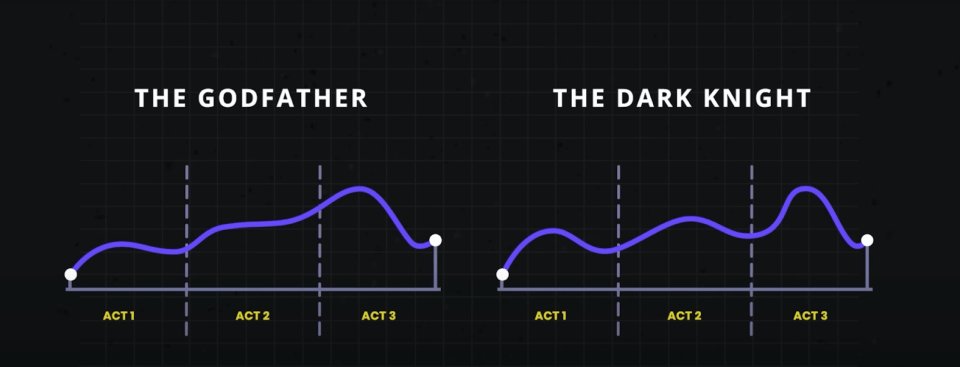
Act Two (Conflict) manifests through directional research where usability testing becomes the dramatic crucible. Here, Nielsen's principle of testing with five participants finds narrative justification—just as films focus on protagonist development, concentrated testing reveals core usability conflicts without redundant exposition. The article's theatrical metaphor extends to methodology: in-person sessions resemble live theater with rich environmental context, while remote testing functions like cinema, expanding audience reach at the cost of sensory depth. This phase's power emerges through unexpected user behaviors that reframe design assumptions, creating what the author terms narrative twists that redirect product strategy.
Critical to this framework is the interdependence between acts. Foundational research without directional validation risks solving imaginary problems, while usability testing without contextual understanding merely critiques surface interactions. The synthesis creates what might be termed narrative integrity—the assurance that solutions address authentic user needs revealed through structured investigation.
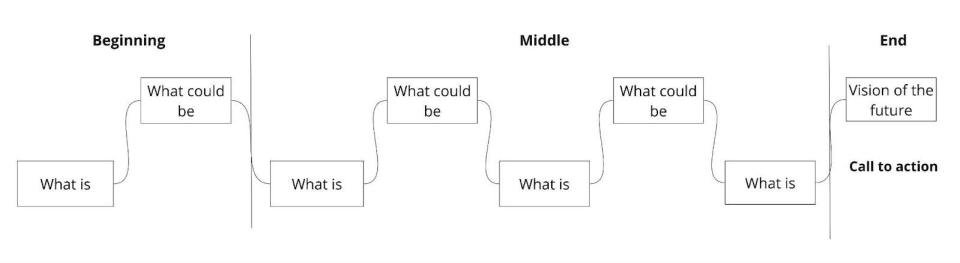
Act Three (Resolution) adopts Duarte's persuasive story pattern, contrasting current user struggles (what is) with proposed solutions (what could be). This resolution phase demands full stakeholder participation, transforming research findings into actionable strategy through what the article describes as narrative voiceover with audience participation. The researcher becomes director and narrator, employing competitive benchmarks and visual prototypes as narrative devices to motivate change. This culminates in what might be considered the denouement of user research: stakeholder commitment to specific, user-centered improvements.
Several implications emerge from this narrative framework. First, it elevates research from expendable activity to essential storytelling process, with each phase building dramatic momentum toward resolution. Second, it democratizes research through accessible methods like Hall's 15-minute ethnography while justifying deeper investment through narrative payoff. Third, it positions researchers as essential interpreters who translate user data into compelling business narratives.
Counter-perspectives warrant consideration. Practical constraints—tight timelines, limited budgets—may truncate the full narrative arc, potentially reducing research to fragmented vignettes. Some stakeholders may resist theatrical framing as incompatible with technical decision-making, while others might conflate narrative persuasion with manipulation. The approach also risks privileging dramatic user struggles over subtle but critical insights, potentially overlooking marginalized user needs that lack cinematic resonance.
Despite these considerations, the storytelling paradigm offers transformative potential. By structuring research as protagonist journey, teams develop deeper empathy while stakeholders gain visceral understanding of user challenges. The methodology transforms presentations from data dumps into motivational narratives where problems demand resolution. As products increasingly compete through experience quality rather than features, this narrative approach may prove essential for aligning organizational effort around authentic user needs—the ultimate resolution to the central conflict of modern product development.
Comments
Please log in or register to join the discussion