
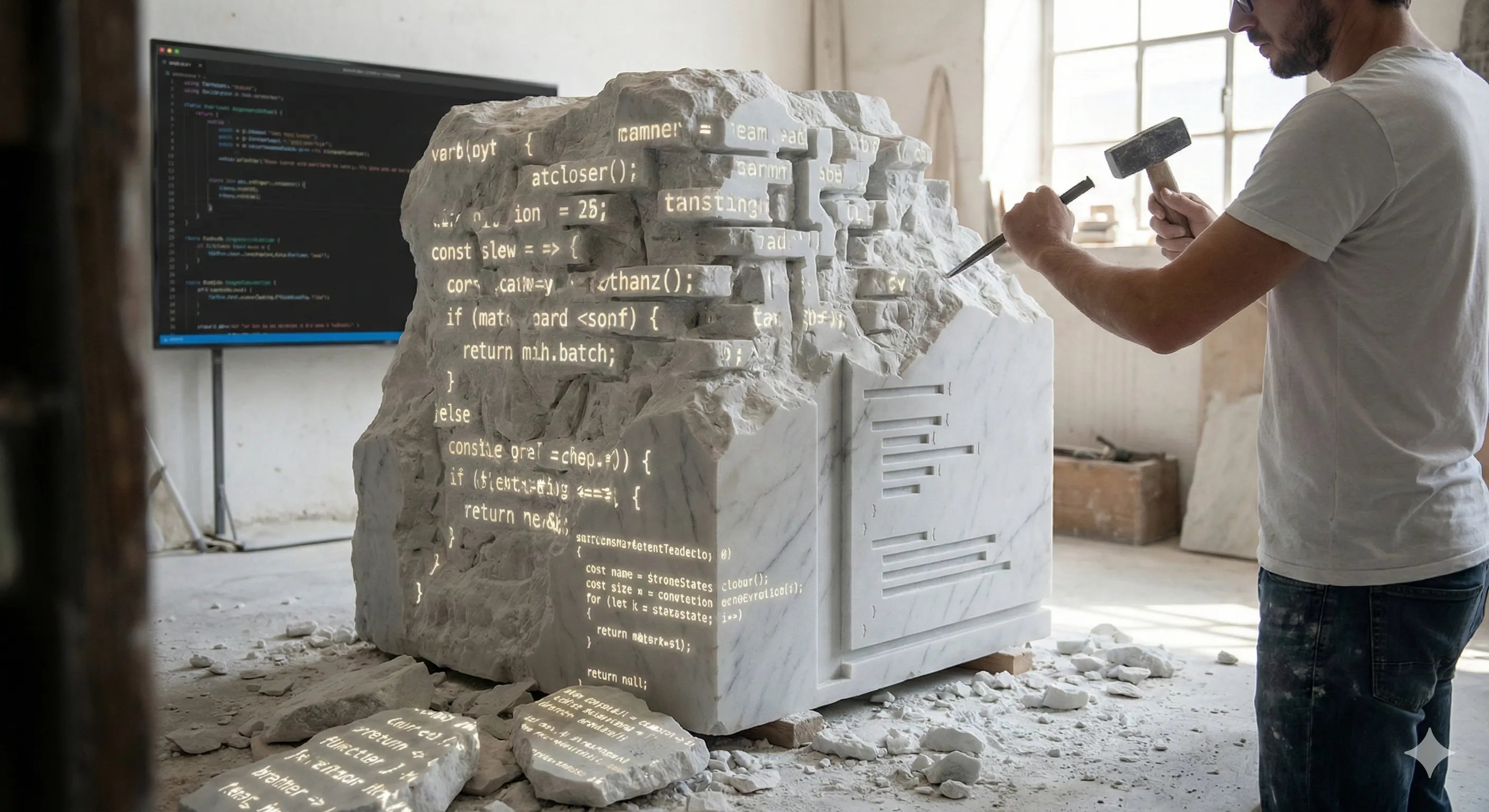
Developers increasingly describe their role as 'code sculptors' rather than writers, using AI assistants to generate initial implementations before refining outputs through deliberate editing, pattern optimization, and architectural refinement.

A quiet transformation is occurring in developer workflows: many programmers no longer describe their primary activity as "writing code" but rather as "sculpting" it. This shift represents a fundamental change in how software gets built in the age of AI coding assistants.
Developers using tools like Claude-Code report spending significantly less time typing original lines of code. Instead, they provide specifications through prompts, then meticulously refine the AI-generated output. This sculpting process involves several deliberate steps:
- Removing excess: Deleting redundant code, unnecessary comments, and boilerplate
- Structural refinement: Reorganizing components for readability and maintainability
- Pattern alignment: Ensuring consistency with existing architectural patterns
- Reusability sculpting: Extracting reusable components from generated code
- Intent verification: Comparing output against original specifications through diff analysis
As one developer explains: "Once the AI produces working code based on my prompts, I study the differences between what I imagined and what was generated. I consider how each piece fits into our system's architecture and whether this iteration moves us toward our goals."
The Limitations of Current AI Coders
Despite their utility, current AI coding assistants display consistent limitations that necessitate human oversight:
- Lack of creative vision: Models struggle with truly novel solutions or unconventional approaches
- Inability to challenge requirements: They rarely push back on flawed specifications or suggest alternative approaches
- Bloat accumulation: AI tends to add code without removing dead or redundant paths
- Critical judgment gap: Unable to identify subtle architectural flaws or long-term maintainability issues
These limitations mirror historical developer practices - much like how programmers have long relied on established libraries rather than implementing low-level algorithms. As one practitioner notes: "I wouldn't write my own sorting algorithm today, just as I don't write basic CRUD operations anymore. But unlike stable libraries, AI outputs require active shaping."
The Art of Digital Sculpture
This workflow shift raises important questions about developer responsibility. Without conscious sculpting, AI-generated code tends toward entropy - what one developer describes as "a bloated statue with no defining features." The sculptor's role becomes making purposeful choices about what to remove, what to emphasize, and what patterns to establish for future work.
As tools evolve, developers find themselves spending more time on higher-order concerns: designing coherent systems, establishing patterns, and making judgment calls about technical trade-offs. The craft hasn't disappeared - it's transformed from creation through accumulation to creation through subtraction and refinement.
The emerging role combines technical knowledge with aesthetic sensibilities about software design. Successful code sculptors understand both what the AI generated and what it should have generated but didn't. They recognize the difference between functional code and elegant solutions.
This evolution suggests we're entering an era where the most valuable developer skills may include critical editing, architectural foresight, and the ability to guide AI outputs toward sustainable solutions - skills more akin to an editor or architect than a traditional coder.
Comments
Please log in or register to join the discussion