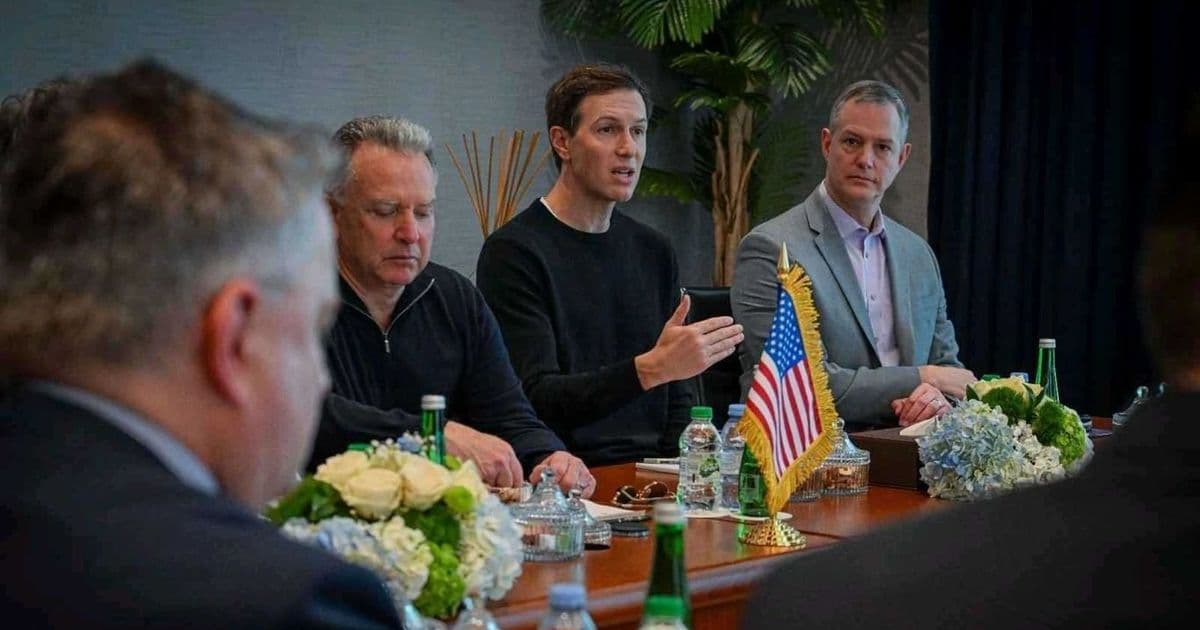
A rare trilateral meeting in the UAE between U.S., Russian, and Ukrainian officials yielded cautious optimism, with participants describing the talks as 'positive' and a step toward de-escalating the conflict.
The Ukrainian government has characterized recent trilateral talks in Abu Dhabi as "positive," signaling a potential, albeit fragile, diplomatic opening. The meeting, held on Saturday in the United Arab Emirates, brought together U.S. special envoy Steve Witkoff, senior advisor Jared Kushner, and U.S. Air Force General Alexus Grynkewich with Russian and Ukrainian counterparts. This marks one of the most direct high-level engagements between the warring parties since the full-scale invasion began, though the Ukrainian delegation emphasized the talks were exploratory and not a negotiation.

The context for these talks is a battlefield stalemate and mounting pressure on all sides. Russia's economy, while resilient, faces long-term strain from sanctions and military spending. Ukraine, heavily reliant on Western aid, is navigating a critical period ahead of potential shifts in U.S. political priorities. The UAE's role as a neutral host is strategic; it maintains economic ties with both Russia and the West, positioning it as a credible intermediary. The presence of a senior U.S. Air Force general, Alexus Grynkewich, underscores the military dimension of the discussions, likely focusing on de-escalation measures, prisoner exchanges, or potential security guarantees, rather than a comprehensive peace settlement.
For the tech and business sectors, the implications are indirect but significant. A sustained conflict continues to disrupt global supply chains, particularly for grains, energy, and critical minerals, affecting commodity markets and inflation. The talks, if they lead to even a localized ceasefire, could stabilize certain markets. However, the primary impact on technology is through the lens of sanctions and export controls. The U.S. has maintained stringent restrictions on advanced technology exports to Russia, affecting semiconductors, software, and hardware. Any diplomatic progress could, in theory, lead to a recalibration of these controls, though that remains unlikely in the near term. Conversely, the conflict has accelerated Europe's push for energy independence and digital sovereignty, driving investment in alternative energy technologies and cloud infrastructure within the EU.
Strategically, the "positive" label from Ukrainian officials is a calibrated signal. It aims to project diplomatic engagement without conceding ground, likely to maintain Western support while exploring any avenue for de-escalation. For the U.S., the talks serve to demonstrate active diplomacy, potentially to a domestic audience questioning the cost of continued support for Ukraine. The involvement of figures like Jared Kushner, known for his role in the Abraham Accords, suggests a potential model of transactional, bilateral deals rather than a grand peace conference. The business implications hinge on stability; markets prefer predictability. A prolonged stalemate favors defense and cybersecurity stocks, while a breakthrough could shift capital toward reconstruction and infrastructure in Eastern Europe, a multi-billion dollar opportunity for engineering and construction firms, though that horizon remains distant.
The talks themselves are not a breakthrough but a data point in a complex geopolitical calculus. The technical and operational details remain opaque, but the meeting's structure—a U.S. delegation with both diplomatic and military leadership—indicates a multi-track approach. The absence of a joint statement or immediate follow-up plan suggests these are initial confidence-building measures. For investors and business leaders, the key takeaway is that the diplomatic track is now active, albeit quietly. Monitoring the outcomes of these back-channel talks will be as important as monitoring battlefield developments, as any shift in the conflict's trajectory will have cascading effects on global markets, from energy prices to semiconductor supply chains.
Comments
Please log in or register to join the discussion