
A prolonged closure of the Strait of Hormuz could trigger a global economic crisis, with oil prices potentially doubling and triggering a recession.
The Strait of Hormuz, a narrow waterway between Iran and Oman, handles approximately 20% of the world's oil supply. This strategic chokepoint has become the center of escalating tensions as Iran threatens to close it in response to U.S. sanctions and military pressure.
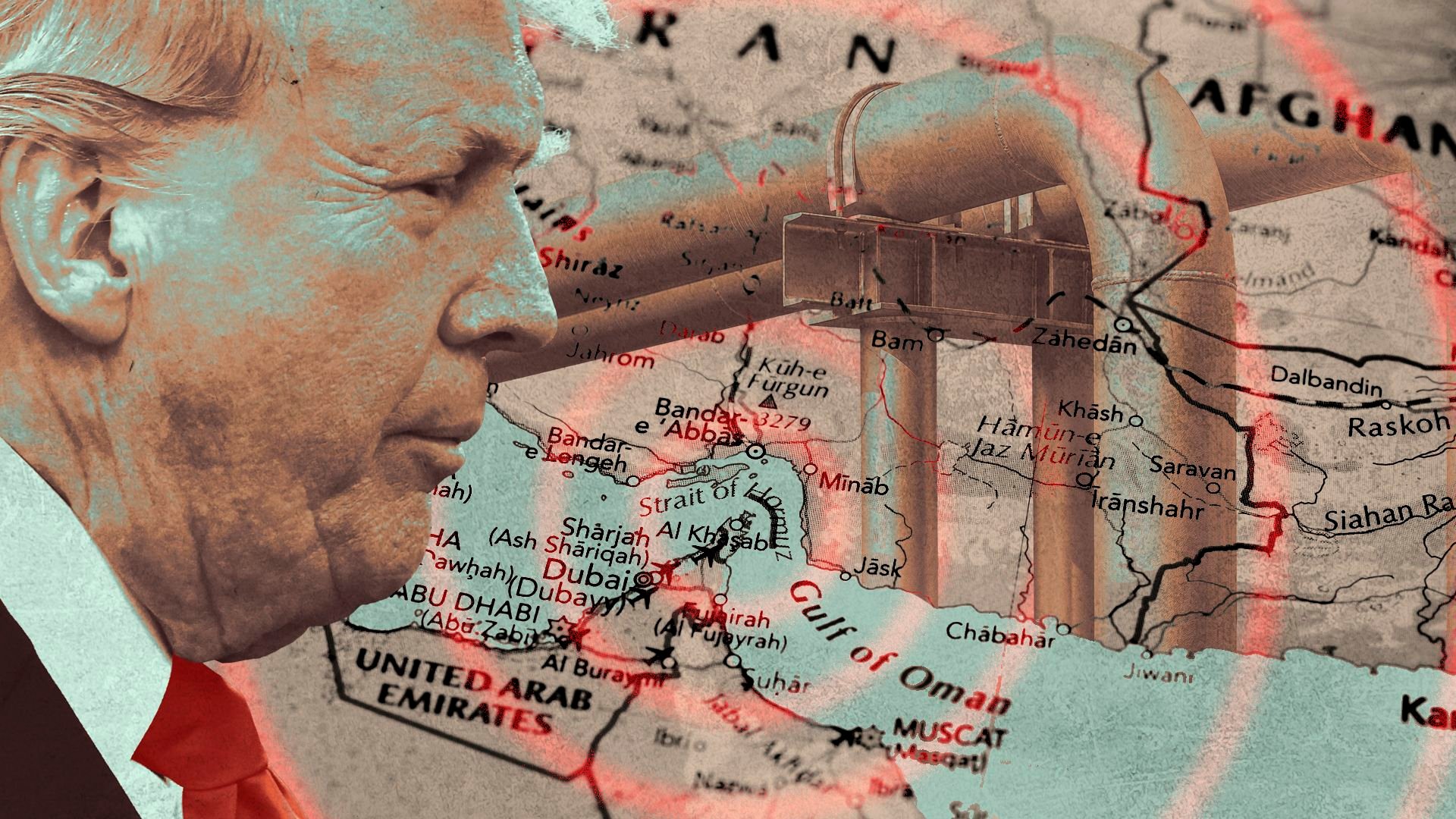
Photo illustration: Sarah Grillo/Axios. Photo: Beata Zawrzel/NurPhoto via Getty Images
The economic implications of a prolonged closure would be severe and far-reaching. Current global oil production stands at roughly 100 million barrels per day, with about 20 million barrels flowing through the Strait of Hormuz daily. A complete shutdown would immediately remove this supply from global markets.
Immediate price shock
Oil prices would likely surge dramatically. Brent crude, currently trading around $60-70 per barrel, could easily double to $120-140 per barrel within days of a closure. West Texas Intermediate (WTI) crude would see similar spikes. This price shock would ripple through the entire global economy.
Transportation costs would increase across all sectors. Airlines would face immediate fuel surcharges, potentially raising ticket prices by 20-30%. Shipping companies would pass on higher fuel costs to manufacturers and retailers. The trucking industry, which moves 71% of America's freight by weight, would see diesel prices spike, affecting everything from grocery deliveries to Amazon packages.
Economic recession risks
Historical data shows that oil price spikes have preceded most U.S. recessions since World War II. The 1973 oil embargo, 1979 Iranian revolution, and 1990 Gulf War all triggered economic downturns. A sustained $100+ oil price would likely push the U.S. economy into recession within 6-12 months.
Higher energy costs act as a tax on consumers and businesses. Americans would face higher gasoline prices, potentially reaching $4-5 per gallon nationwide. This would reduce disposable income for other purchases, slowing consumer spending which accounts for 70% of U.S. economic activity.
Global supply chain disruption
Beyond direct energy costs, a Hormuz closure would disrupt global supply chains. Many Asian economies depend on Gulf oil imports. China imports about 47% of its oil from the Middle East, while Japan and South Korea import nearly all their oil from the region. Manufacturing slowdowns in these countries would affect global production of electronics, automobiles, and other goods.
European economies would also suffer. The EU imports about 90% of its oil, with much coming through the Strait of Hormuz. Higher energy costs would compound existing inflationary pressures from supply chain issues and energy transition policies.
Financial market volatility
Stock markets would likely experience severe volatility. Energy stocks might initially benefit from higher prices, but the broader market would suffer from recession fears. The S&P 500 could decline 15-25% in a sustained crisis scenario. Bond yields would likely fall as investors seek safe havens, potentially inverting the yield curve - a classic recession indicator.
Emerging market currencies would face pressure, particularly those of oil-importing nations. Countries like India, which imports 80% of its oil, would see their trade deficits widen and currencies weaken. This could trigger capital outflows from emerging markets.
Duration matters
The length of any closure would determine the severity of economic damage. A one-week disruption might cause temporary price spikes but could be managed through strategic petroleum reserves. The U.S., along with other IEA countries, holds about 1.5 billion barrels in emergency reserves - roughly 90 days of net imports.
However, a closure lasting more than a month would exhaust these reserves and cause lasting damage. The 1973 oil embargo lasted only five months but triggered a severe recession and years of economic adjustment. A longer disruption today would be even more damaging given global economic interdependence.
Geopolitical escalation
A Hormuz closure would likely trigger military escalation. The U.S. Navy would attempt to secure the waterway, potentially leading to direct conflict with Iran. This could expand into a wider regional war involving Saudi Arabia, Israel, and other Gulf states.
Such escalation would further disrupt oil markets and create additional economic uncertainty. Insurance rates for tankers in the region would skyrocket, and shipping companies might avoid the area entirely even if technically open.
Economic resilience factors
The global economy is somewhat more resilient to oil shocks than in the 1970s. Energy efficiency has improved significantly - the U.S. economy now requires about half as much energy per dollar of GDP as it did in 1973. Renewable energy also provides some buffer, though it cannot quickly replace oil in transportation.
However, high debt levels and low interest rates leave less room for monetary policy responses to a recession. Central banks have less ammunition to stimulate economies than they did in previous crises. Fiscal stimulus would require increased government borrowing at a time when many nations already face high debt levels.
Sector winners and losers
Energy companies and oil-producing nations would benefit from higher prices. Saudi Arabia, Russia, and other OPEC producers would see windfall profits. U.S. shale producers might increase output, though they cannot quickly scale up production.
Conversely, transportation companies, manufacturing firms, and consumer-facing businesses would suffer. Airlines, trucking companies, and delivery services would face immediate margin pressure. Automakers might see demand shift away from trucks and SUVs toward more fuel-efficient vehicles.
Long-term economic restructuring
A prolonged Hormuz closure would accelerate existing economic trends. Companies would accelerate investments in energy efficiency and alternative energy sources. Supply chains would be restructured to reduce dependence on vulnerable shipping routes. Remote work and virtual meetings might increase as companies seek to reduce travel costs.
The crisis would also likely accelerate deglobalization trends, as companies seek to reduce dependence on complex, vulnerable global supply chains. This could lead to more regional production networks but at the cost of economic efficiency.
Historical parallels
The closest historical parallel is the 1973-74 oil crisis, when OPEC's embargo caused oil prices to quadruple. That crisis led to stagflation - simultaneous inflation and economic stagnation - in many developed economies. Unemployment rose while prices increased, creating a challenging policy environment.
More recent oil price spikes in 2008 and 2011 also demonstrated the economic sensitivity to energy costs. The 2008 spike contributed to the financial crisis by increasing costs for consumers and businesses already struggling with debt.
Policy responses
Governments would likely implement various emergency measures. These might include releasing strategic reserves, imposing fuel rationing, or implementing price controls. The U.S. might also increase diplomatic pressure on Iran while seeking alternative supply sources from other producers.
International coordination would be crucial but challenging. The IEA would coordinate emergency measures among member countries, but disagreements over strategy could hamper effectiveness. Some nations might pursue unilateral actions, further complicating the crisis.
Bottom line
A prolonged closure of the Strait of Hormuz represents a severe economic threat that could trigger a global recession. The combination of direct energy cost increases, supply chain disruptions, and financial market volatility would create a perfect storm of economic challenges. While the global economy has some resilience to oil shocks, the high debt levels and limited policy tools available today make a Hormuz crisis particularly dangerous.
The situation underscores the strategic importance of energy security and the vulnerability of global economic interdependence. Whether through military conflict, diplomatic resolution, or economic adaptation, the world will need to address this fundamental vulnerability in the global economic system.
Comments
Please log in or register to join the discussion